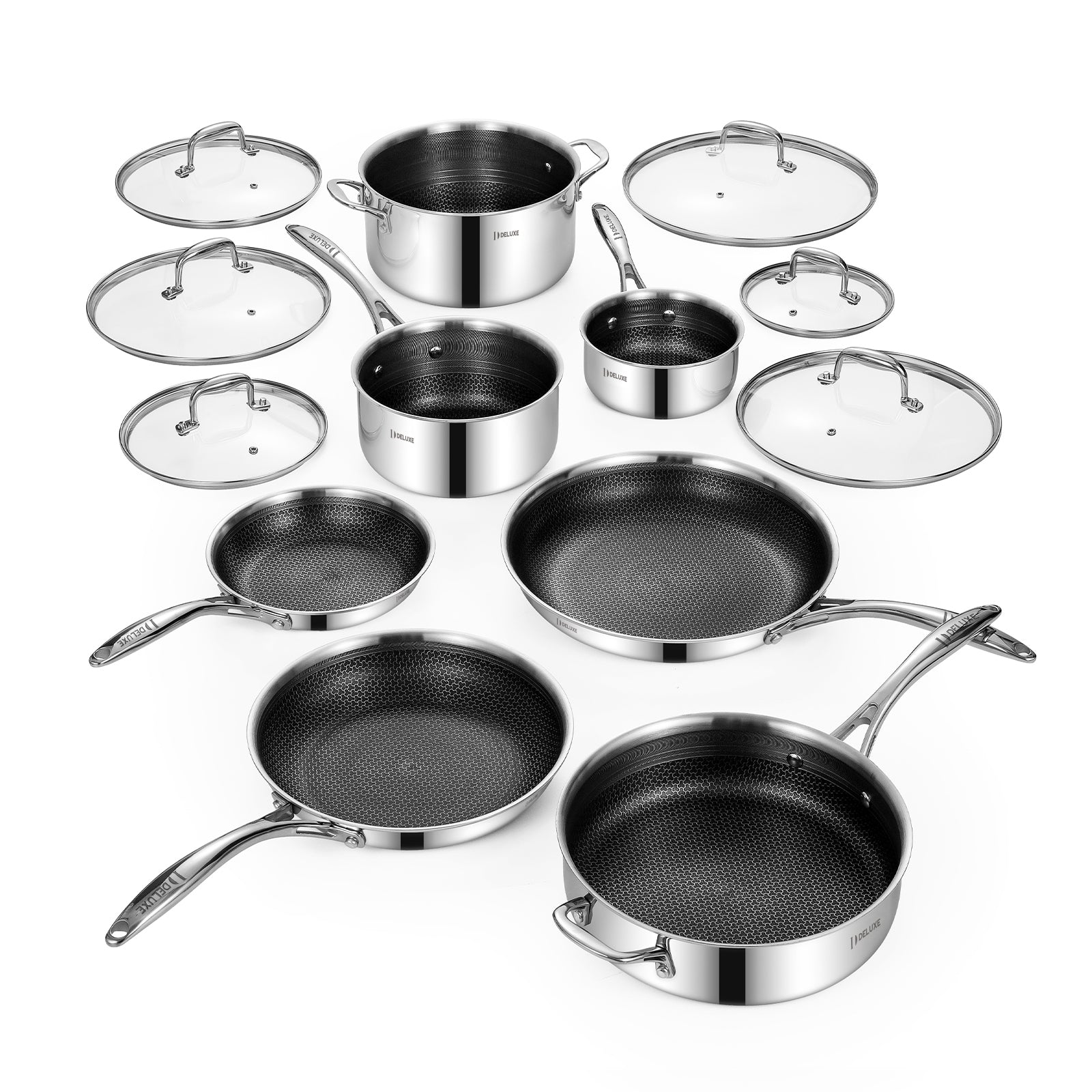
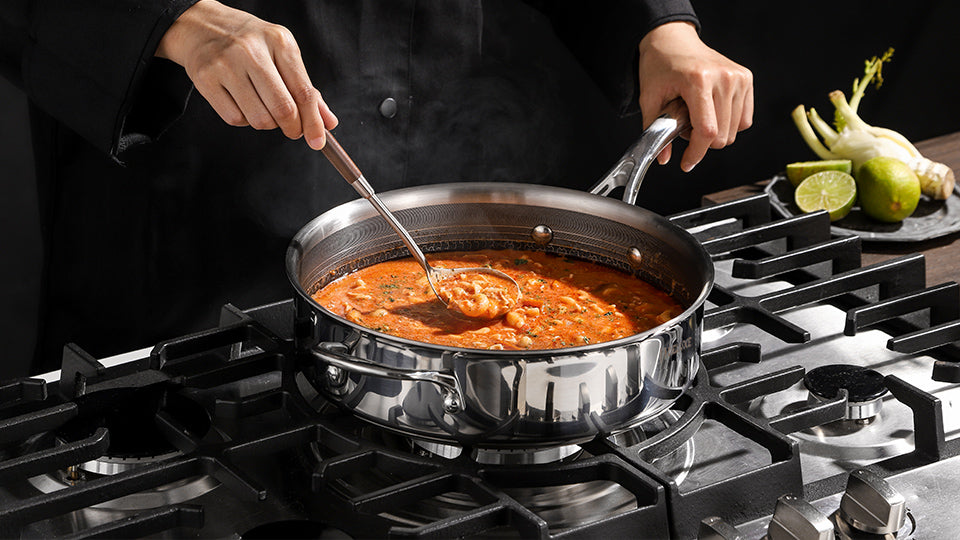
What Is a Sauté Pan and Do You Really Need One?
If you already own a stainless steel frying pan and an enameled braiser, you may wonder whether a sauté pan is worth buying.
The short answer: yes, a sauté pan can be worth it if you often cook chicken thighs, saucy pasta, vegetables, shallow-fried foods, small braises, or one-pan dinners. But if you mostly cook eggs, pancakes, or do quick dry searing, you may use a frying pan or nonstick pan more often.
What Is a Sauté Pan?
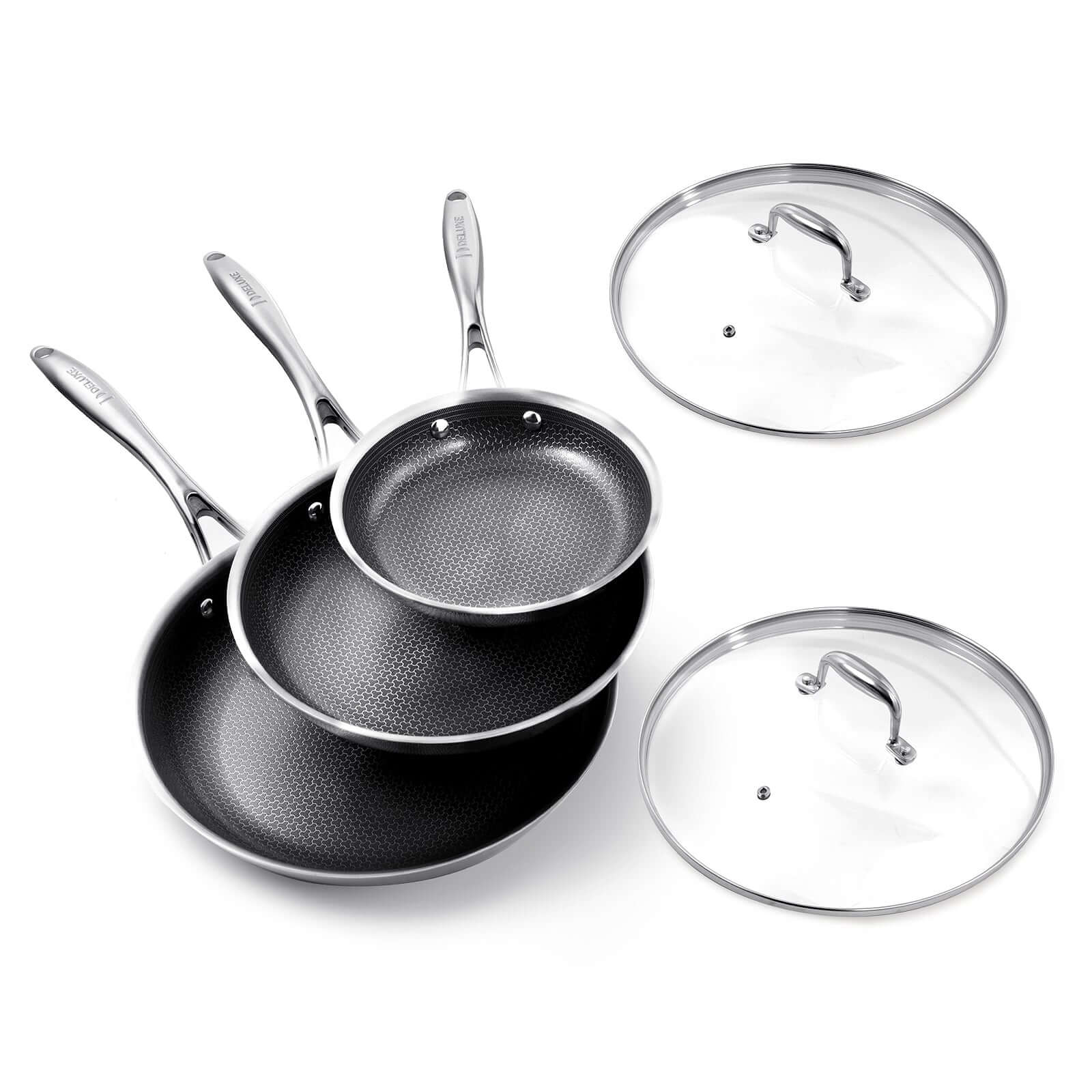
A sauté pan is a cooking pan with a broad flat base, straight sides, and a relatively large cooking surface.
Most sauté pans come with a lid. Many are made from stainless steel, aluminum, ceramic-coated materials, or hybrid cookware.
The straight sides are the main feature.
They help hold more food, more oil, and more sauce than a regular skillet or frying pan.
What Does “Sauté” Mean?
To sauté means to cook food quickly in a small amount of fat over medium to medium-high heat.
But a sauté pan is not limited to sautéing.
In real home cooking, people use sauté pans for shallow frying, braising, simmering, pan sauces, pasta dishes, and smaller one-pot meals.
That is why many cooks reach for their sauté pan more often than their frying pans.
What Does a Sauté Pan Look Like?
A sauté pan usually has these features:
A wide flat bottom.
Straight vertical sides.
A long handle.
Sometimes a helper handle.
A matching lid.
A larger capacity than a frying pan of similar diameter.
The flat bottom gives you room to brown food.
The higher sides keep liquid and oil inside the pan.
The lid lets you steam, simmer, and braise.

What Can You Cook in a Sauté Pan?
A sauté pan is one of the most flexible cooking pans in a kitchen.
It is especially helpful when a frying pan feels too shallow, but a pot feels too tall.
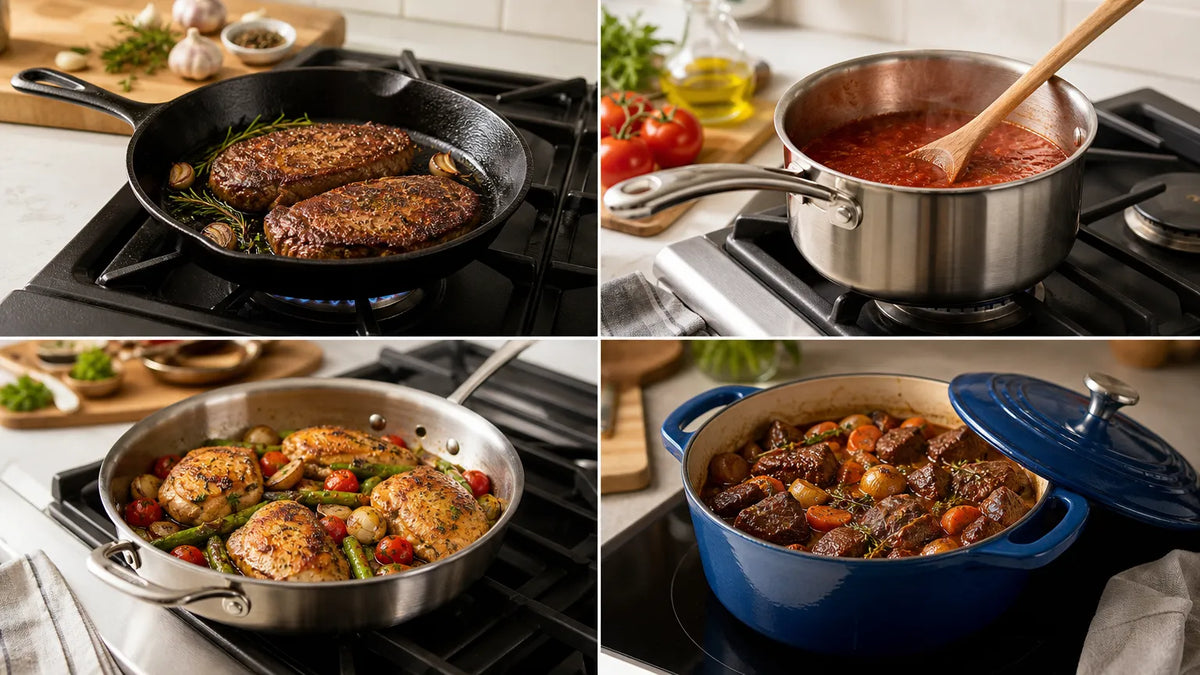
Shallow-Fried Chicken Thighs
This is one of the best uses for a sauté pan.
The high sidewalls reduce grease splatter.
The wide base gives the chicken room to brown.
A simple method:
Season four chicken thighs with salt, black pepper, garlic powder, onion powder, and smoked paprika.
Heat avocado oil in the sauté pan.
Add the chicken skin-side down if using skin-on thighs.
Cook until browned.
Flip and continue cooking until done.
Use a thermometer to check the internal temperature.
Rest before serving.
This is simple, but it works.
A stainless steel sauté pan is especially good here because it can brown the chicken well and handle higher heat.
Saucy Pasta
A sauté pan is excellent for finishing pasta.
Cook pasta in a separate large stainless steel pot.
Move the pasta into the sauté pan with sauce and a little pasta water.
Toss until the sauce clings to the noodles.
This works for garlic butter pasta, tomato pasta, creamy mushroom pasta, sausage pasta, and lemon chicken pasta.
Small Braises
A sauté pan with a lid can handle smaller braises.
Try chicken thighs, meatballs, pork chops, sausages, small beef cuts, or vegetables.
Brown the food first.
Add broth, wine, tomato sauce, or coconut milk.
Cover and simmer gently.
This is where a sauté pan becomes more useful than a basic frying pan.
Vegetables With Sauce
A sauté pan is great for vegetables that need both browning and steaming.
Try green beans, mushrooms, carrots, zucchini, cabbage, asparagus, or Brussels sprouts.
Start uncovered to brown. Add a splash of water or broth. Cover briefly.
Remove the lid and reduce the liquid.
This gives you tender vegetables without making them watery.
One-Pan Dinners
A sauté pan is useful for smaller one-pot meals.
You can cook chicken and rice, sausage and peppers, shrimp and orzo, meatballs and sauce, or beans and greens.
The straight sides help hold liquid.
The wide base helps ingredients cook evenly.
Pan Sauces
A sauté pan is great for pan sauces because it gives you surface area.
After cooking meat, remove it from the pan.
Add shallots, garlic, wine, broth, cream, or butter.
Scrape up the browned bits.
Simmer until slightly thickened.
This is harder in a deep stockpot and messier in a shallow frying pan.
Why Do Some Cooks Love Sauté Pans?
Many home cooks love sauté pans because they feel like a bridge between a frying pan and a pot.
They can fry, simmer, braise, and reduce.
They also hold more volume than a skillet.
More Capacity Than a Frying Pan
The straight sides let you cook more food without spilling.
This is useful for vegetables, pasta, sauces, and chicken pieces.
Less Grease Splatter
When shallow frying, higher sides help keep oil in the pan.
This does not eliminate splatter completely, but it reduces mess compared with a low frying pan.
Better for Liquid-Based Cooking
If your meal involves broth, wine, tomato sauce, cream, or pasta water, a sauté pan is usually easier to use than a skillet.
More Surface Area Than a Saucepan
A saucepan is deep and narrow.
A sauté pan is wide.
That means sauces reduce faster and foods brown better.

What Are the Downsides of a Sauté Pan?
A sauté pan is useful, but it is not perfect.
It Is Not as Easy for Flipping
The straight sides make flipping food harder than in a sloped frying pan.
If you like tossing omelets or flipping pancakes, use a dedicated omelet pan, ceramic cookware, or nonstick cookware instead.
It May Trap More Steam
Compared with a frying pan, a sauté pan’s higher sides can hold slightly more steam.
For a hard sear, a stainless steel frying pan may evaporate moisture faster.
That said, the final searing result can still be very close if the sauté pan is properly preheated and not overcrowded.
It Takes Up Storage Space
If you already own many pots and pans, a sauté pan may feel like an extra piece.
Before buying one, think about what you cook most often.
If you rarely make saucy food, shallow-fried food, or small braises, you may not need it.

What Size Sauté Pan Should You Buy?
The best size depends on how many people you typically cook for.
2- to 3-Quart Sauté Pan
A 2- to 3-quart sauté pan is good for one to two people.
It works for small portions, vegetables, sauces, and two chicken breasts or four smaller chicken thighs.
This size is easy to store and easy to wash.
3- to 4-Quart Sauté Pan
A 3.7-quart sauté pan is the best everyday size for many homes.
It works for pasta dishes, chicken thighs, meatballs, vegetables, and one-pan meals.
5-Quart Sauté Pan
A 5-quart sauté pan is better for families or batch cooking.
It gives you more room, but it is heavier and takes up more storage space.
Is a Stainless Steel Sauté Pan Worth It?
A stainless steel sauté pan is worth it if you cook meals that start with browning and end with liquid.
Examples include chicken with sauce, pasta dishes, meatballs, small braises, vegetables with broth, and shallow-fried foods.
It may not be worth it if you mostly cook eggs or very simple fried foods.
For eggs, the best nonstick pans, ceramic nonstick pans, or dedicated egg pans will be easier.
When You Should Buy One
Buy a sauté pan if you want one pan that can fry, simmer, braise, and make sauces.
It is especially useful if your current frying pan feels too shallow.
When You Can Skip It
Skip it if you already have a braiser you use often and do not mind the weight.
Also skip it if you mostly use a skillet, wok, or nonstick frying pan and rarely cook with liquid.

What to Look for When Buying a Sauté Pan
A good sauté pan should feel practical, not just look impressive.
Even Heating
Look for a pan with a thick base or fully clad construction.
Even heating matters because you want food at the edge to cook properly, not just the food in the center.
Comfortable Handle
The handle should feel secure and balanced.
A helper handle is extremely useful on larger pans.
Lid
A lid makes the pan more versatile.
It lets you simmer, braise, steam, and finish cooking thicker foods.
Oven Safety
If you want to finish dishes in the oven, choose oven-safe cookware.
Check the lid and handle temperature limits too.
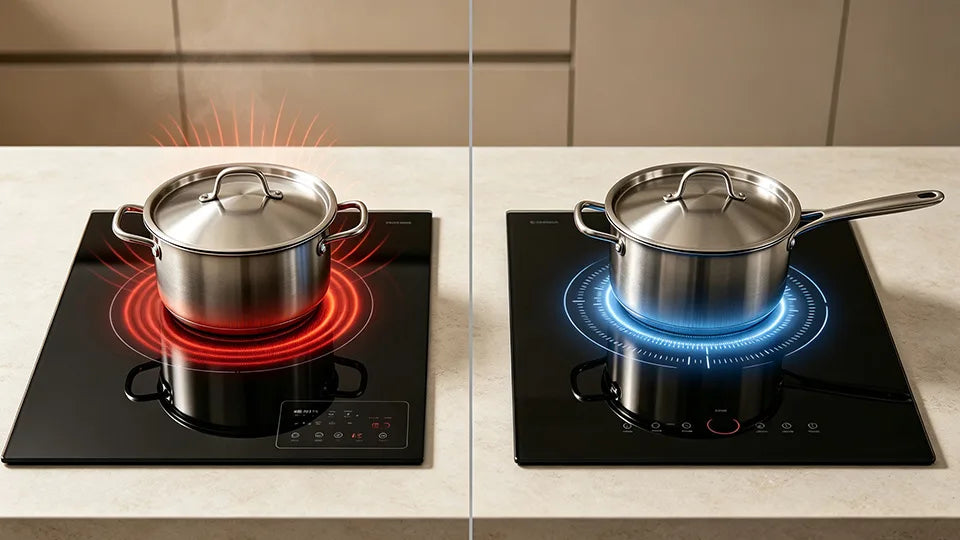
Cooktop Compatibility
For induction, choose induction-compatible cookware.
For glass top stoves, choose a smooth flat base.
Size
For most home cooks, a 3- to 4-quart sauté pan is the most useful size.
A 3-quart sauté pan can be excellent for smaller households, chicken thighs, sauces, and vegetables. A 5-quart pan is better for families.
Choose the Right Sauté Pan
A sauté pan is a wide, straight-sided pan that sits between a frying pan and a saucepan. If you already own a frying pan and a braiser, a sauté pan is not absolutely necessary. But it can still become one of your most-used pans because it is easier to handle than a braiser and holds more liquid than a frying pan.
For most home cooks, a stainless steel sauté pan with a lid is the most versatile choice. Choose the size and material based on your stove, your storage space, and the meals you actually cook.
FAQ About Sauté Pan Cooking
What is the main advantage of a sauté pan?
The main advantage is versatility. A sauté pan can brown food, hold liquid, reduce sauce, shallow fry, braise, and cook one-pan meals.
Can I cook eggs in a sauté pan?
You can, but it is not the easiest choice. For eggs, a ceramic pan, nonstick frying pan, or egg frying pan is usually better.
Is a sauté pan good for shallow frying?
Yes. A sauté pan is excellent for shallow frying because the higher sides reduce splatter and the flat base gives food plenty of room to brown.
Does food stick in a stainless steel sauté pan?
It can if the pan is not preheated, if there is not enough oil, or if food is moved too early. Proper preheating and deglazing help reduce sticking.
Is a nonstick sauté pan worth it?
A nonstick sauté pan is worth it if you cook delicate foods and want easy cleanup. It is less ideal for high-heat browning and shallow frying.