
Proper Use & Care
Quick Start Guide
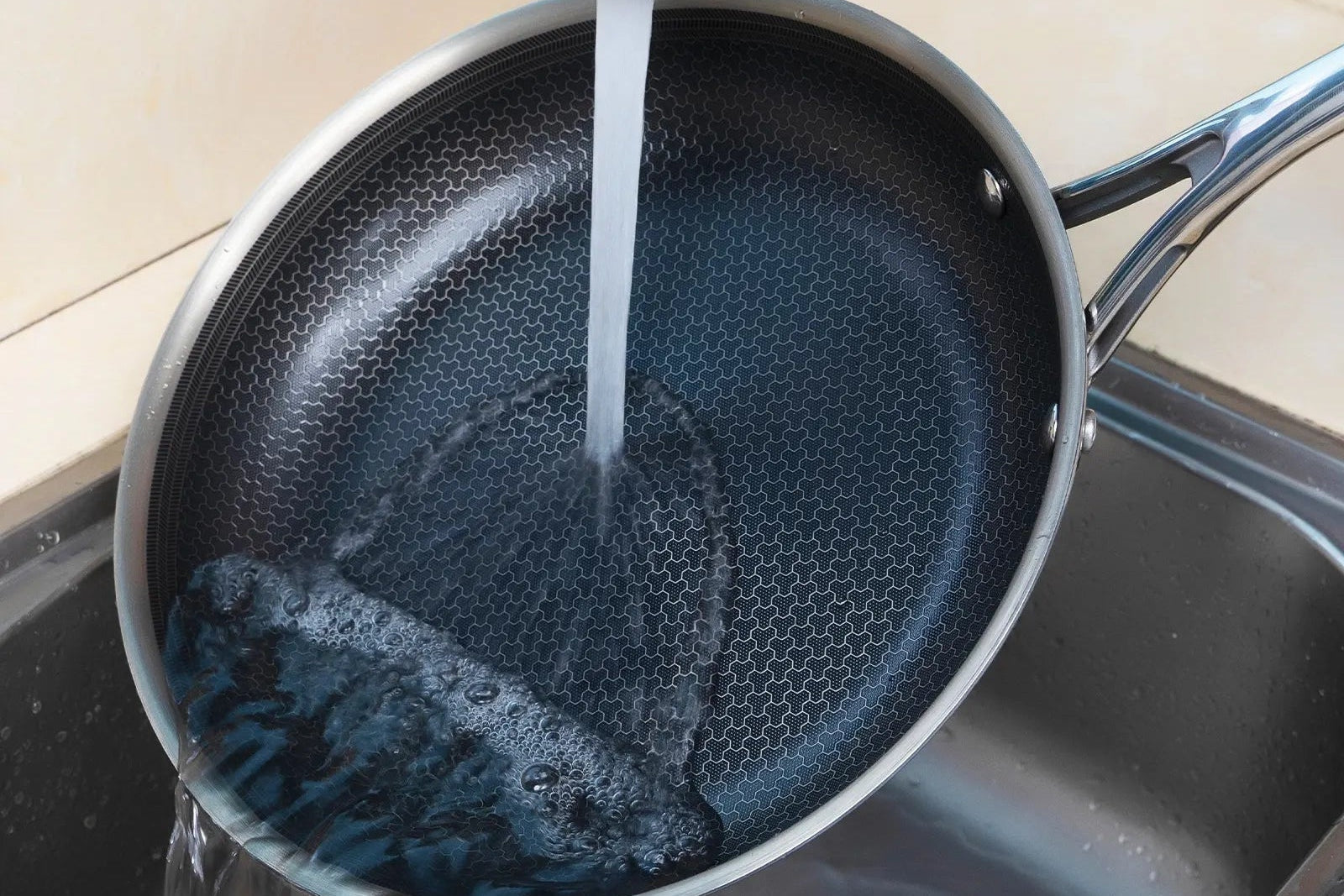
1. Wash Before Use
Before your first use, wash your cookware with warm, soapy water and dry thoroughly.
For future use, make sure the cookware is clean and completely dry before cooking. A quick wash or rinse can remove dust and any residue left from a previous meal. Carbonized oil or food buildup may create a sticky film on the cooking surface, which can cause food to stick and affect cooking performance.
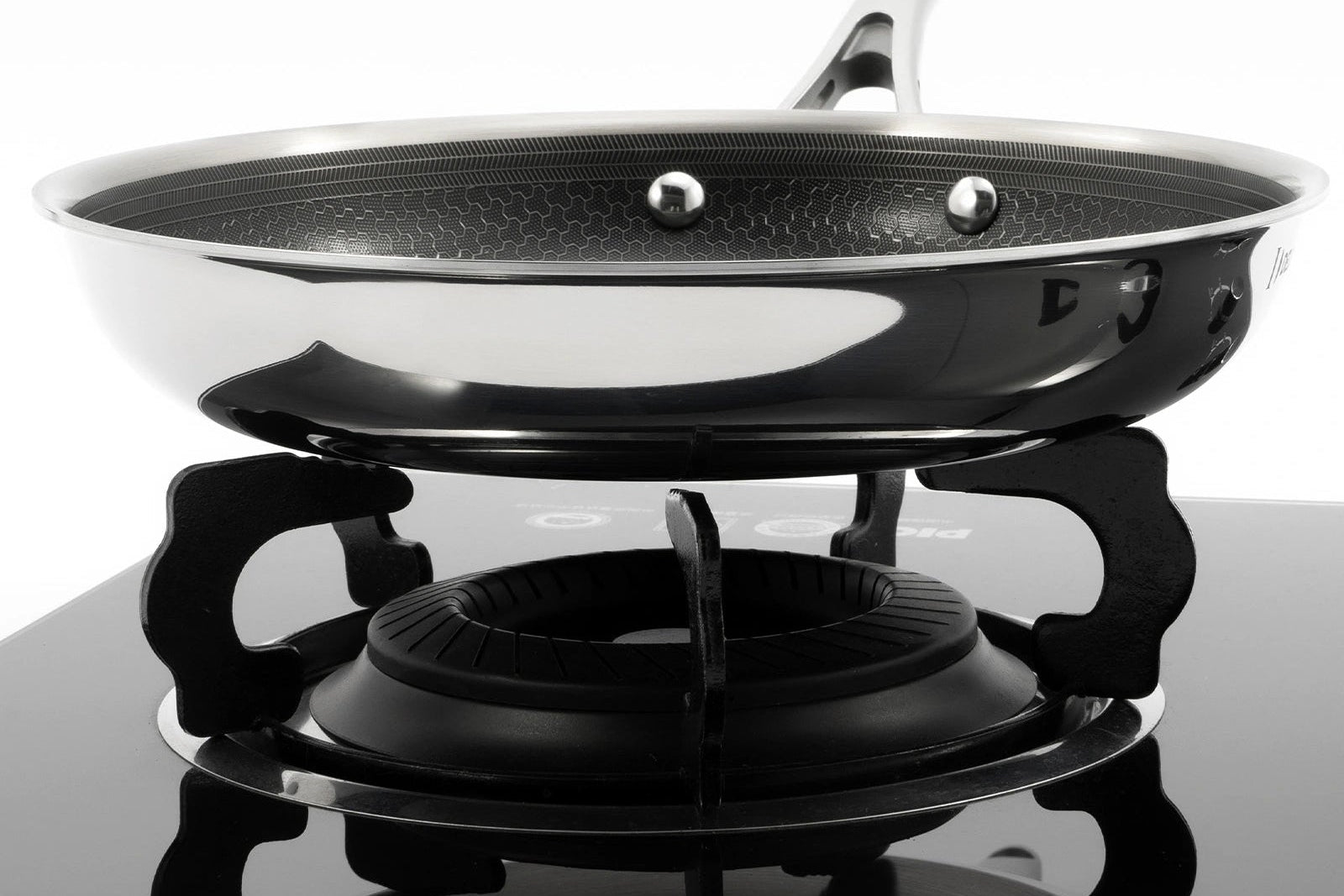
2. Use the Right Heat Level
Deluxe Hybrid Cookware is designed for fast and efficient heat distribution. Medium heat on Deluxe may perform like medium-high heat on traditional cookware.
For best results, start with low to medium heat and no high heat is needed.
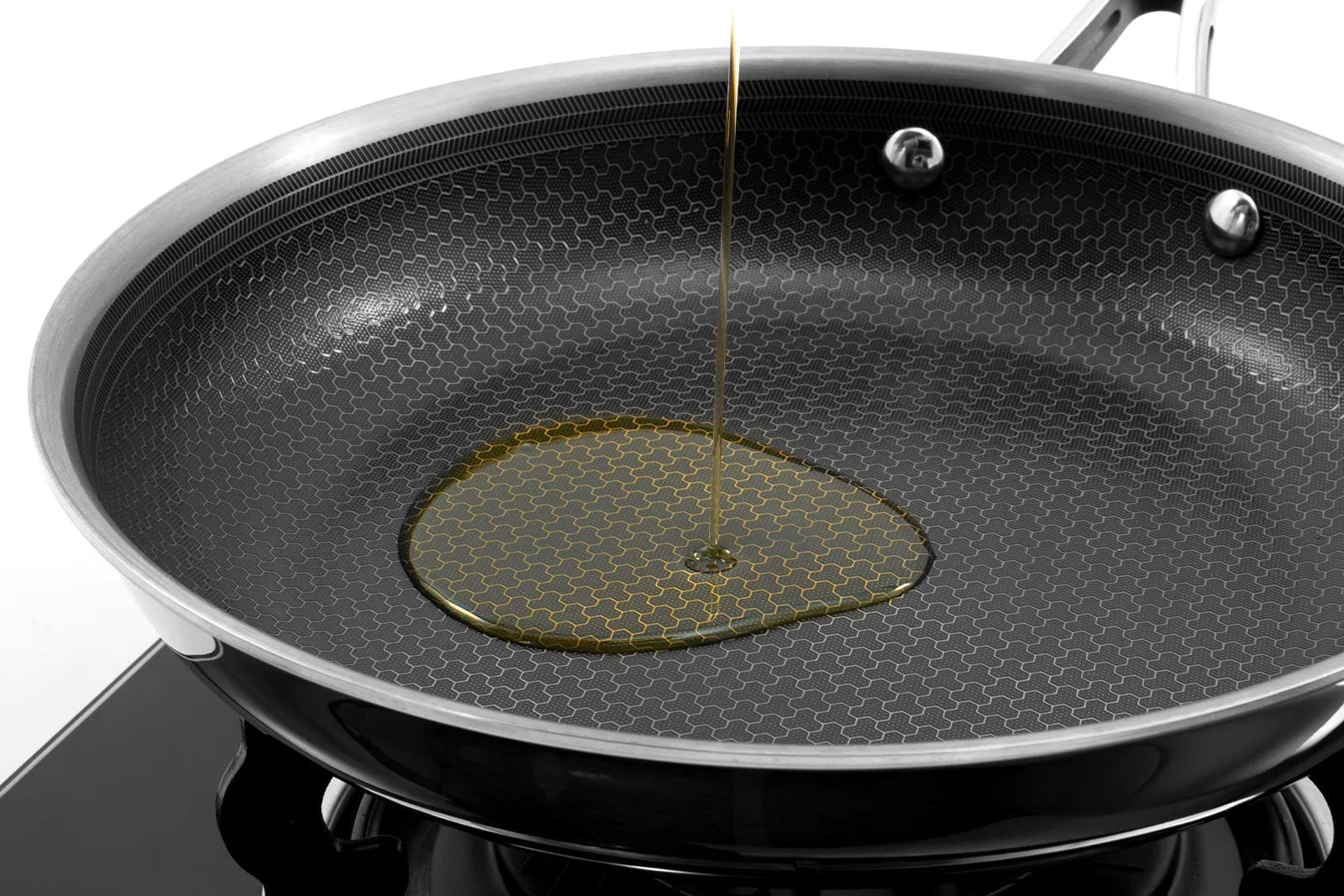
3. Add a Little Oil Before Cooking
Simply heat it over medium-low heat for 30 seconds, then add about 1-2 teaspoon of vegetable oil and spread it evenly across the cooking surface.
Your pan is now ready for cooking. For best results, use a small amount of oil whenever needed and cook over low to medium heat.
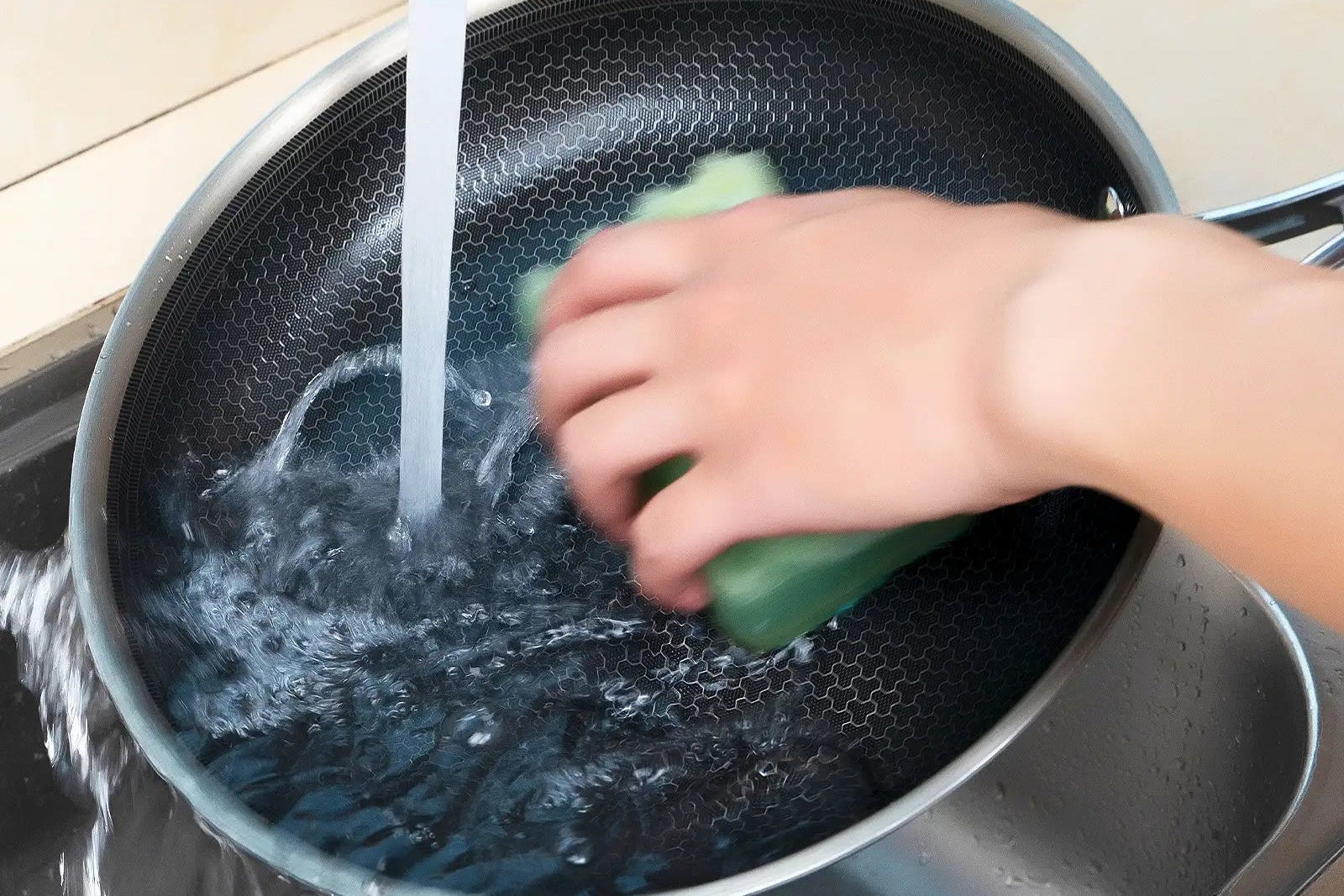
4. Clean After Each Use
Allow the pan to cool before washing. Clean with warm, soapy water and a soft sponge.
Because the cookware contains stainless steel, temporary staining may occur. For tougher stains, soak in warm, soapy water for 10–15 minutes, then gently scrub with a sponge.
Before, During & After Cooking Tips
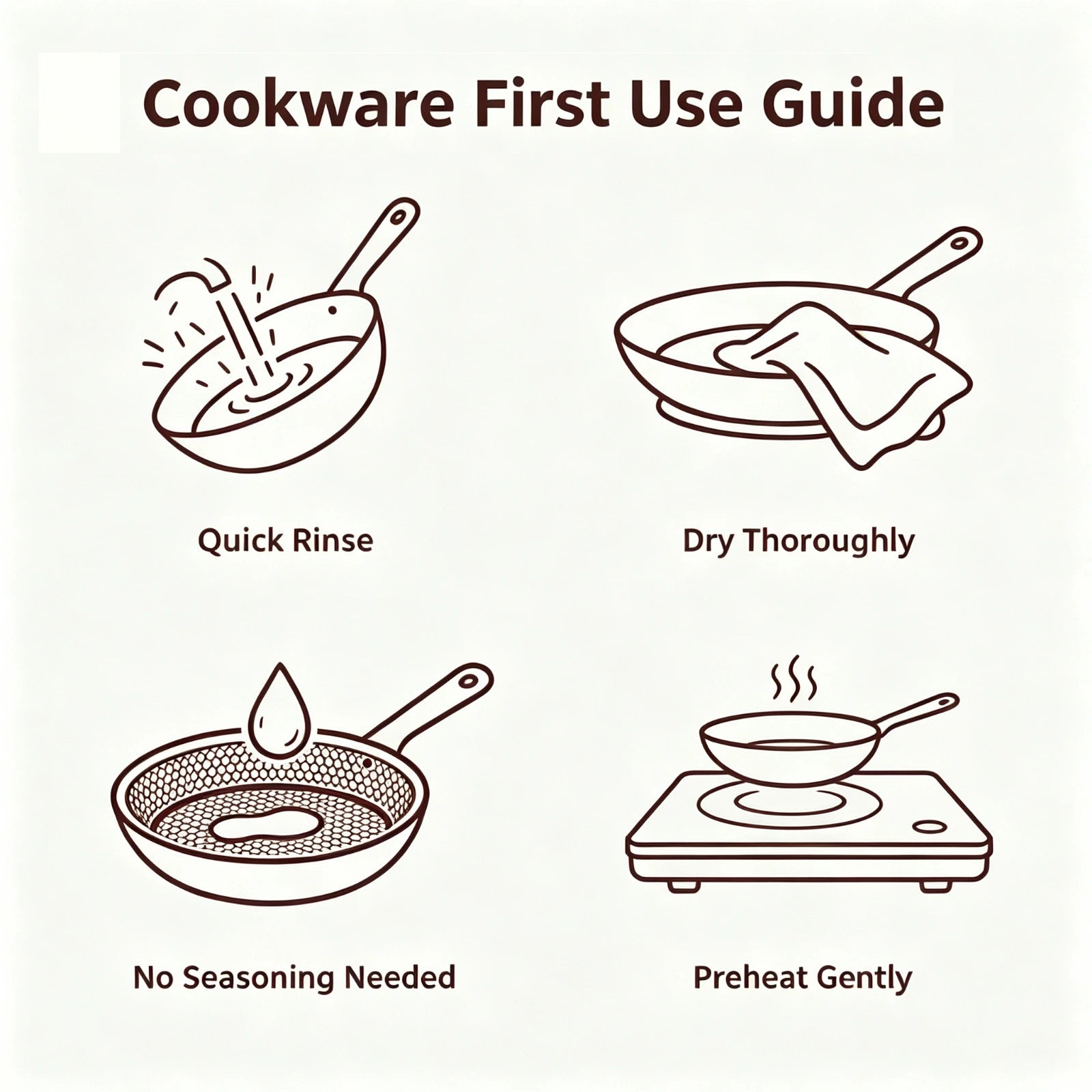
Before Cooking
1. Quick Rinse
Gently wash your pan with warm, soapy water to remove any dust or residue from manufacturing and shipping.
2. Dry Thoroughly
Use a soft, non-abrasive towel to dry completely. Make sure the base of the pan is fully dry before placing it on the stove.
3. No Seasoning Needed
Ceramic surfaces are naturally nonstick, so there’s no need for traditional seasoning—just a small amount of oil will do.
4. Preheat Gently
Preheat on low to medium heat for up to 30~60 seconds before adding oil. Avoid heating an empty pan on high heat.
During Cooking
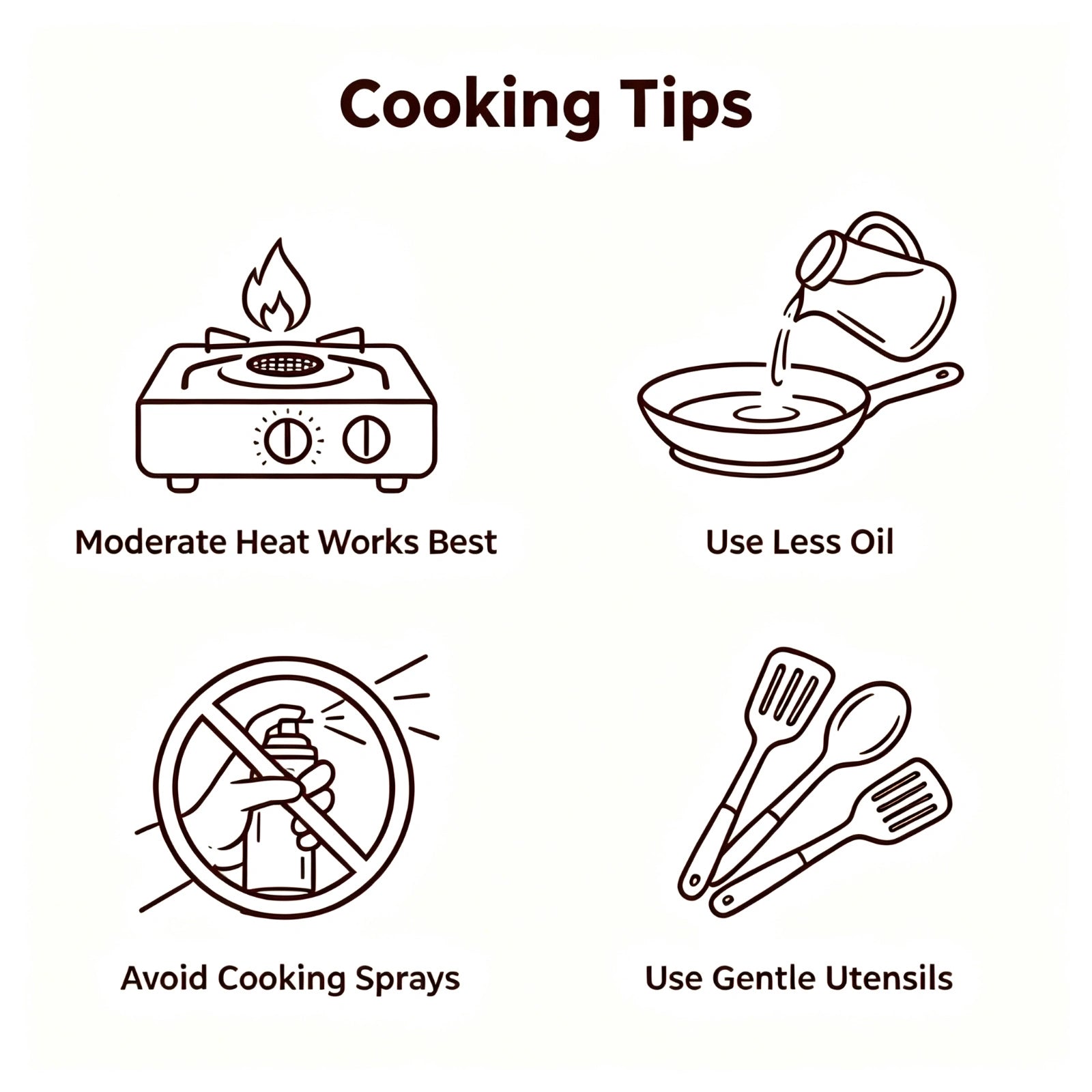
1. Moderate Heat Works Best
Hybrid cookware retains heat efficiently, so cooking on low to medium heat is recommended. Excessive heat may shorten the life of the nonstick surface.
2. Use Less Oil
Only a small amount of oil or butter is needed. About 1–2 tablespoons is enough to lightly coat the pan. Allow 20–30 seconds of preheating before adding food.
3. Avoid Cooking Sprays
Avoid aerosol cooking sprays, as lecithin and propellants can polymerize under heat, forming a stubborn residue that reduces nonstick performance over time.
4. Use Gentle Utensils
Avoid metal utensils with sharp or rough edges, as they may damage the coating. Opt for wood, silicone, or nylon tools.
After Cooking
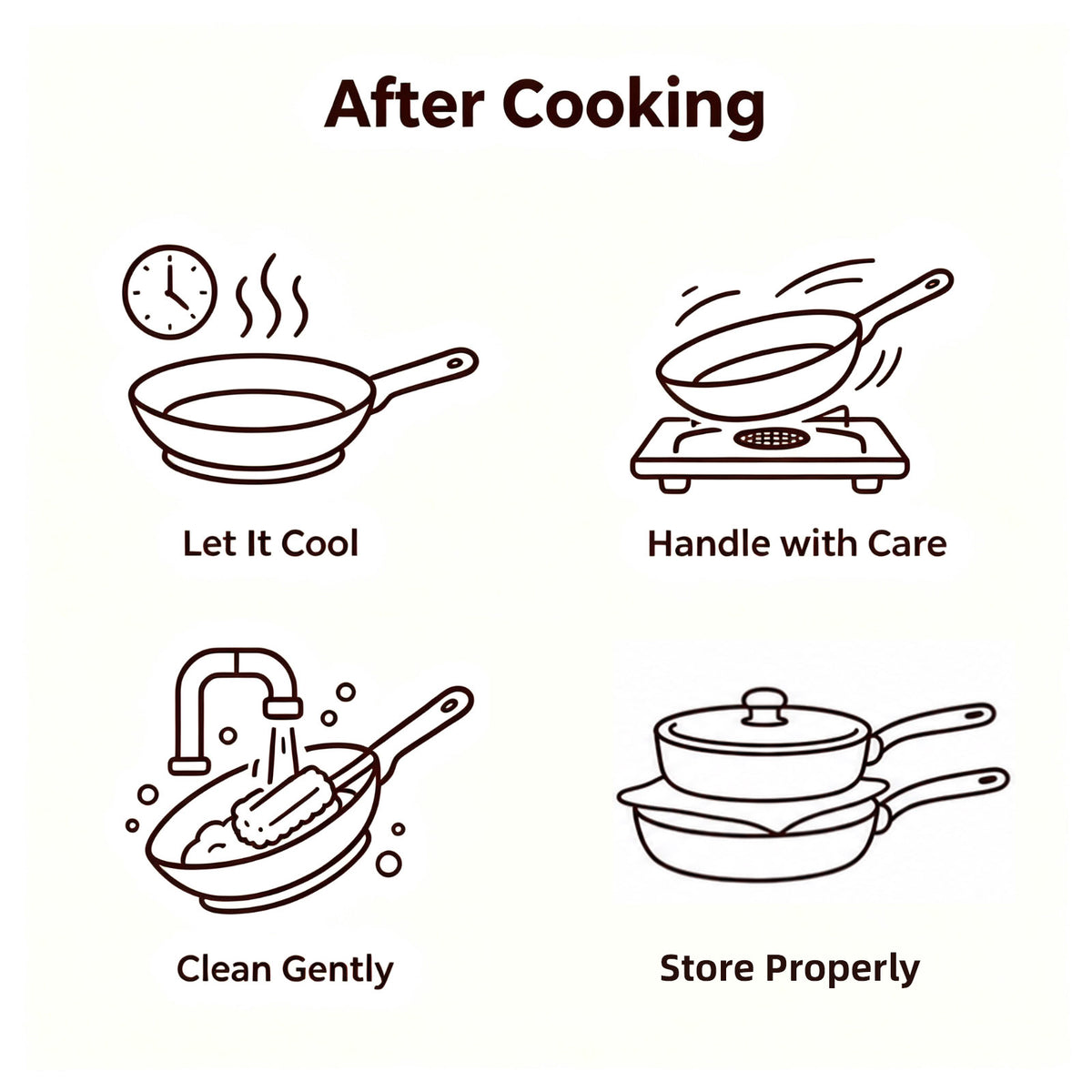
1. Let It Cool
Allow the pan to cool completely before rinsing with water. Sudden temperature changes may cause thermal shock and affect durability over time.
2. Handle with Care
Place and lift your pan carefully. Dragging it across stovetops, especially metal surfaces, may damage the base.
3. Clean Gently
Wash with warm, soapy water using a soft sponge or cloth. Ensure the surface is fully clean before storing.
4. Store Properly
Store the cookware in a clean, dry place after it has been washed and thoroughly dried. If stacking cookware, place a soft protector between pieces to help protect the cooking surface.
Video Guide

Waterdroplet Test
💦💦If you’re unsure whether the pan is preheated, you can try a small water droplet test—but avoid overheating the pan:
1. Preheating the pan over medium-low heat for 30 seconds
2. If water droplets evaporate immediately, the pan isn't hot enough.
3. When water droplets dance or bounce in the pan, it's preheated and ready for cooking.
⛔High heat is not recommended. Avoid overheating! Do not allow the cookware to boil dry.

Cleaning Method
💙🩵To rule out any residue that may be affecting performance, we recommend trying the following cleaning method:
1. Add warm water and a small amount of dish soap to the pan
2. Simmer on low heat for 5–10 minutes
3. Let it cool, then gently scrub with a soft sponge or nylon brush
4. For tough spots, simmer with a small amount of baking soda, lemon juice, and vinegar, then scrub lightly. (As the video shows)
No traditional seasoning is needed. Wash and dry the cookware before first use, then preheat gently and add a small amount of oil before cooking.
Low to medium heat is recommended for everyday cooking. The cookware is designed to distribute heat efficiently, so high heat is generally unnecessary.
For best long-term surface performance, we recommend using wood, silicone, or nylon utensils. Avoid sharp edges and forceful scraping.
Food sticking can result from overheating, insufficient oil, food buildup, or improper cleaning. Clean the surface thoroughly and follow the recommended low-to-medium heat and oil guidelines.
Soak the cookware in warm, soapy water for 10–15 minutes, then gently clean with a soft sponge or nylon brush. Avoid abrasive tools.