
How to Make a Pan Sauce Without a Recipe
A pan sauce is not a recipe. It is a ratio and a sequence.
Learn the five parts and the one rule that decides how much liquid to use, and you can make a sauce from whatever is in the pan without looking anything up.
Most pan sauce recipes look different from each other because they are solving different problems, not because they are teaching different sauces.
What a Pan Sauce Actually Is
Five parts, and most guides stop at four
Most pan sauce has the same five components, and most guides get to four of them.
lFond — the browned layer on the pan. This is the flavor base, and everything else is built on it.
lAromatics — shallot, garlic, herbs. They add a layer the fond cannot provide on its own.
lLiquid — wine, stock, water, vinegar. It dissolves the fond and sets how concentrated the finished sauce will be.
lFat — the oil you cooked in, plus butter or cream at the end. It carries flavor and gives the sauce body.
lAcid — lemon, vinegar, wine. It pulls the whole thing back from heavy.
The one that gets skipped most is acid. A sauce missing it tastes heavy and dull at the same time, which is a common complaint people have about their own cooking without knowing why.
Why the liquid amount varies by a factor of four
Published amounts run from half a cup to two cups for the same job. That is not a disagreement. It is two different products.
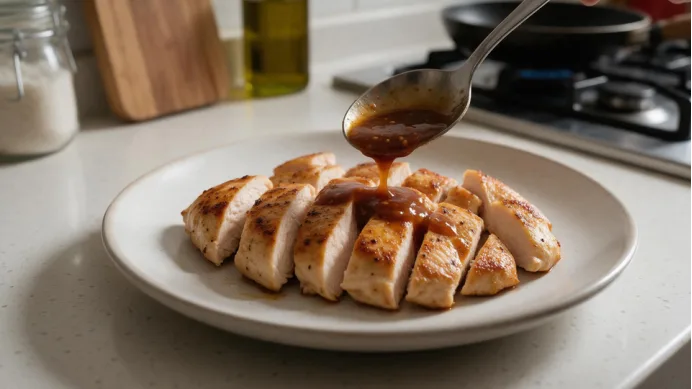
Reduce by half, lower the heat, whisk in cold butter, and you get a sauce — thick enough to coat the back of a spoon, thick enough to cling to the meat.
Reduce harder, skip the butter, skip any thickener, and you get a jus — smaller in volume, more intense, poured over the meat rather than built around it.
The rule that replaces every recipe: do you want the sauce to wrap the meat, or do you want the meat to speak for itself? First answer takes more liquid and a butter finish. Second takes less liquid and more reduction.

Fond: The Part Most Guides Only Name
What is actually in the brown bits
Fond is not burnt juice. It is what protein and sugars become when they meet a hot pan — the same browning reaction that gives bread crust and roast chicken their color.
What matters for sauce is that the result is not one thing. It contains flavor compounds that dissolve in water, and others that water cannot lift — some of which dissolve in fat, and more of which alcohol can reach.
That single fact explains something no recipe bothers to tell you: why wine and water produce different sauces from the same pan. Water lifts the water-soluble layer. Wine lifts that plus a second layer alcohol can reach. This is also why the no-wine version still works — it is not missing the sauce, it is missing one layer of it.
Burnt or browned, before the liquid goes in
One visual check, and it has to happen before you deglaze.
Amber, glossy, still slightly wet-looking — use it. Black, matte, edges starting to smoke — you have gone past fond into carbon, and the pan needs to be wiped out and started again.
There is no recovery from burnt fond. Adding liquid dissolves the bitterness into the sauce, and reducing makes it worse, not better. This is the real answer to why a pan sauce tastes bitter, and it is decided thirty seconds before most people start worrying about it.

Which Pan You Make It In
Four pans, three things that change
| Pan | Fond formed | Retained heat |
|---|---|---|
| Nonstick | Little | Medium |
| Stainless | Most | Medium |
| Cast iron | Good | High |
| Hybrid | Moderate | Medium |
Each row represents a real trade, not a ranking.
lStainless makes the most fond because the cooking surface is bare metal end to end. It also gives you the worst view of it — silver pan, silver-brown bits, and the difference between amber and black is genuinely hard to read under a range hood light.
lCast iron makes good fond and holds heat longer than anything else here, which is an advantage right up until the moment you add wine: if prolonged acid strips the seasoning you have spent months building. Use it for sauces built on stock with the acid added at the end.
lNonstick makes very little fond, because food does not have enough contact with reactive metal to brown onto it. That is not a flaw — it is the same property that makes it easy to cook on. It just means the sauce has less to work with.
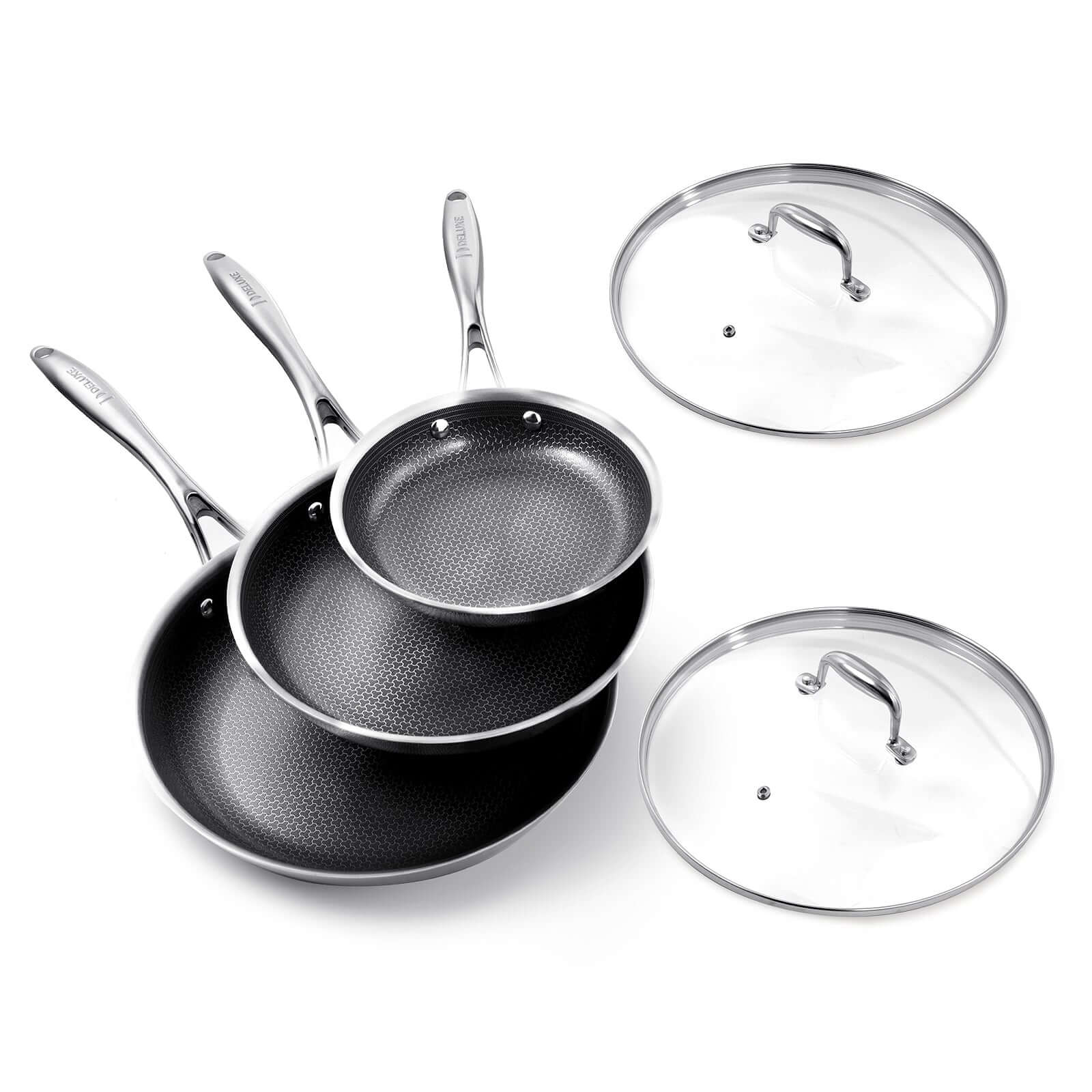
lHybrid sits between the two: an etched metal grid surrounded by coating, so it can support browning while making food release easier. Use a non-scratch utensil to loosen the fond gently.
While the Meat Rests
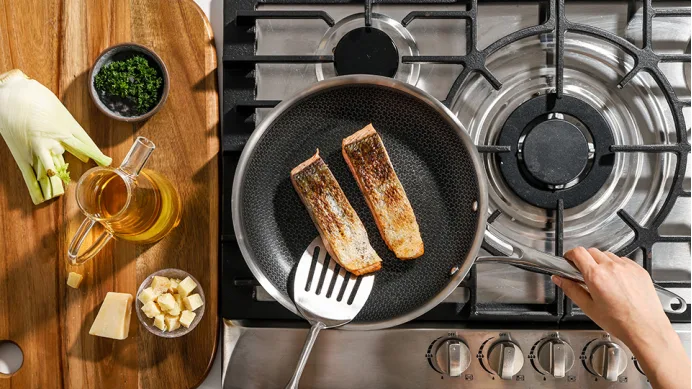
The meat comes out and goes onto a plate or a board to rest. The pan stays empty and still hot. Reduce the heat promptly and begin the sauce. Everything it needs happens inside that window: aromatics, deglaze, reduce, finish.
These two run in parallel. The meat needs time to rest, and the sauce needs the same stretch of time to come together, which is the reason this sequence works at all rather than being two separate jobs.

The Sequence, Without Numbers
Sear, then deal with the fat
Look at what is in the pan after the meat comes out. Pour off all but a thin film.
Too much oil and the aromatics boil in fat instead of frying in it, which costs you the flavor you were trying to add.
Then the aromatics: shallot, garlic, whatever the dish calls for. They go in now, while the pan is still on the heat, and they get a minute or two — enough to soften and smell like something, not enough to brown. This is the step that turns the fat you just left in the pan into a base.
Deglaze: scrape the fond loose
Heat. The pan needs to be hot enough to make the liquid hiss on contact, but not so hot that it smokes. If it is smoking, pull it off the burner for thirty seconds first.
Wine goes in off the heat. Alcohol over an open flame is a risk with no upside, and off-heat addition also gives you a moment to control the steam.
Water works. It is slower to build flavor than stock or wine, but it deglazes a pan perfectly well, and anyone telling you otherwise is selling something.
Once the liquid is in, set the pan back over the heat — both the scraping and the reduction need it.
Lift off the fond. Allow the warm liquid to loosen the fond without forceful scraping.
Reduce, then finish
The endpoint is a state, not a time. When the liquid coats the back of a spoon and a line dragged through it holds for a second, it is done. Watch that, not the clock.
Lower the heat before the butter. Excessive heat can destabilize the emulsion, so whisk in cold butter a few pieces at a time and avoid letting the sauce boil vigorously. One piece at a time, whisking each until it disappears.
Acid last, salt later still. Taste before you salt anything, because the fond and the stock have both brought salt with them.

When It Goes Wrong
It tastes bitter
The fond burnt before the liquid went in. Nothing in the pan will fix that now — the bitterness is dissolved and reduction concentrates it. Start the sauce in a clean pan with the next piece of meat, and make the color check earlier.
It is too thin
Two different causes. If the sauce simply has too much liquid, keep reducing. If you already reduced too far and added water to loosen it, whisk in a cold piece of butter over low heat — that thickens by emulsifying rather than by evaporation.
The butter broke and it looks oily
The sauce was too hot, or the butter went in too fast. Lower the heat, add a spoonful of cold water, and whisk hard. If it still will not come together, start with a fresh piece of cold butter in a clean pan and whisk the broken sauce into it a little at a time.
Conclusion
A pan sauce is a translation of what is already in the pan.
Every decision you make — which pan, how hard you scrape, when you lower the heat — is a decision about how much of that flavor reaches the plate. You know the five parts now. The recipe is yours to write.
Next time you sear something, do not wash the pan. Look at what is in it, decide whether it is amber or black, and start from there.
Frequently Asked Questions
Can you deglaze a nonstick pan?
Yes, and the sauce will be fine — just thinner in flavor, because there is less fond to dissolve. The limit is the scraping, not the deglazing. Use a soft tool and moderate heat, and expect less from the result rather than a failure.
What can I use if I don't have wine?
Stock, water, vinegar, cider, or a splash of soy and water. Stock gives you the most body, water the least. Vinegar deglazes well but is sharp, so so use a smaller amount and dilute it with stock or water as needed.
How much liquid should you use to deglaze?
Enough to cover the bottom of the pan by a quarter inch or so, then reduce to the consistency you want. The amount depends on the pan’s size, the number of servings, and the desired consistency.
What is the difference between deglazing and reducing?
Deglazing is adding liquid to lift the fond off the pan. Reducing is simmering that liquid down to concentrate it. Every pan sauce does the first; most do the second, but not all — a quick pan sauce finished with butter may barely reduce at all.

Leave a comment
This site is protected by hCaptcha and the hCaptcha Privacy Policy and Terms of Service apply.