What Is a Dutch Oven and What Can You Cook in It?
If you have ever wondered whether a Dutch oven is just a large pot, the short answer is: not exactly.
A large stainless steel pot is great for boiling pasta or making soup.
A Dutch oven can do that too, but it is heavier, more heat-stable, and better for low-and-slow cooking. It can move seamlessly from the stovetop to the oven, which makes it one of the most useful pieces of cookware in a home kitchen.
What Is a Dutch Oven?
Most Dutch ovens are made from cast iron, enameled cast iron, or stainless steel. The key feature is not just the material. It is the combination of weight, space, heat retention, and a lid that helps keep moisture inside.
It works especially well for recipes that start with browning and finish with slow cooking.
Basic Dutch Oven Features
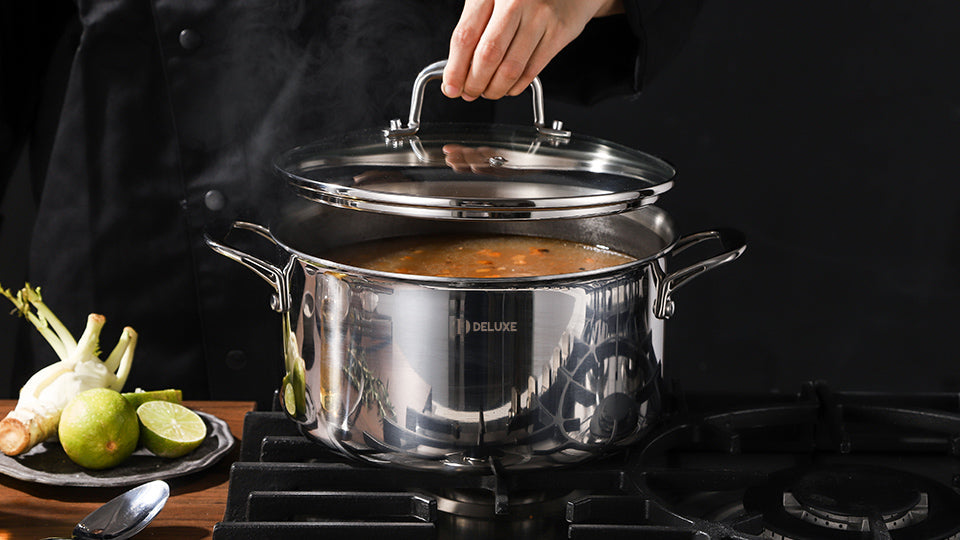
A Dutch oven usually has thick walls, a heavy base, two side handles, and a tight-fitting lid.
The thick base helps spread heat evenly.
The lid traps steam and moisture.
The depth gives you enough room for soups, sauces, roasts, beans, and large batches of food.
Common Dutch Oven Uses
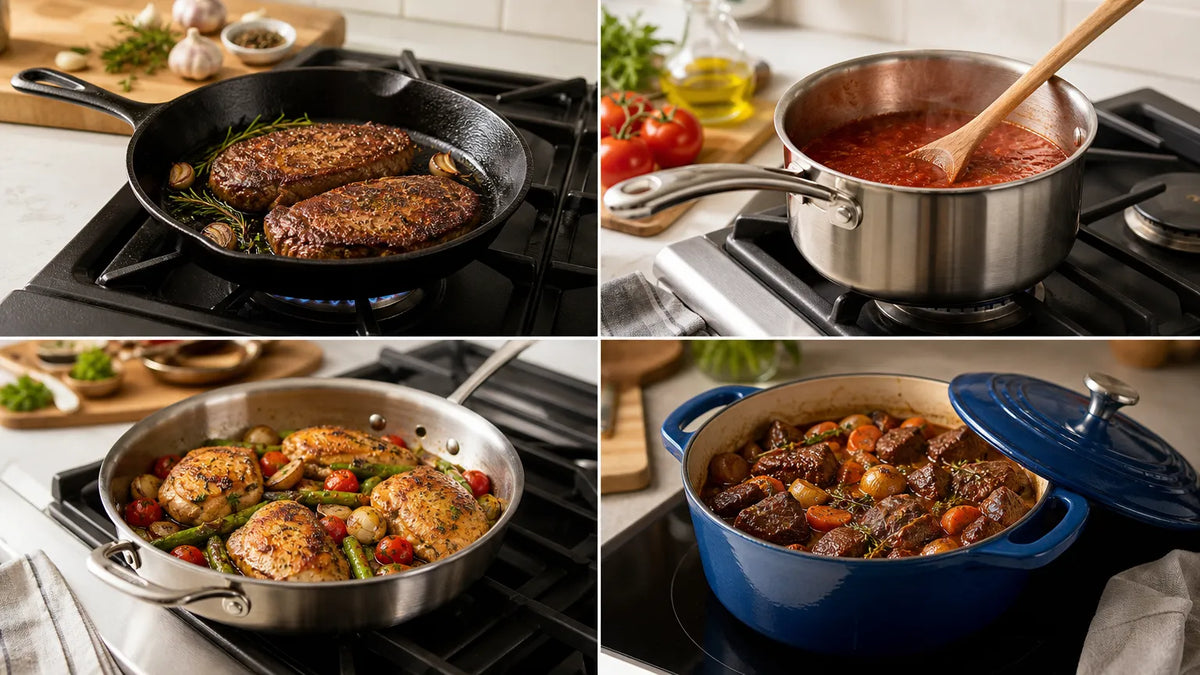
You can use a Dutch oven for soups, stews, braises, chili, beans, roasts, pulled pork, pasta sauce, casseroles, caramelized onions, and no-knead bread.
You can also use it for deep frying, simmering, boiling, and some desserts.
If a recipe works in a large pot or slow cooker, there is a good chance it can work in a Dutch oven too.

What Can You Cook in a Dutch Oven?
A Dutch oven is one of the best pots for comfort food.
It is practical, not just pretty.
Here are some of the best foods to cook in one.
Soups and Stews
Soups and stews are classic Dutch oven recipes.
The heavy pot keeps the heat steady, so ingredients simmer gently instead of boiling too aggressively.
Good options include beef stew, chicken soup, lentil soup, vegetable soup, minestrone, seafood stew, and potato soup.
A Dutch oven is also useful for French onion soup because you can caramelize the onions slowly in the same pot before adding the stock.
Braised Meat
Dutch ovens are excellent for braised meat.
Braising means you brown the meat first, then cook it slowly with a smaller amount of liquid.
This method works exceptionally well for tougher cuts because slow cooking helps break them down.
Good choices include short ribs, beef chuck, pork shoulder, lamb shanks, chicken thighs, and pot roast.
You can also make pulled pork or cochinita pibil-style pork in a Dutch oven.
No-Knead Bread
A Dutch oven is extremely popular for baking no-knead bread.
The pot traps steam as the bread bakes. That steam helps create a crisp, sturdy crust and a soft interior.
This is one reason many home bakers keep a Dutch oven even if they do not cook stews often.
The steady heat from the heavy pot works almost like a small brick bread oven.
Chili and Beans
Chili is one of the easiest Dutch oven meals.
You can brown the meat, soften the onions, add spices, stir in beans and tomatoes, and then let everything simmer.
Beans also cook beautifully in a Dutch oven because the heat stays stable. You can make black beans, pinto beans, white beans, baked beans, or bean stew.
Pasta Sauce
A Dutch oven is great for spaghetti sauce, meat sauce, tomato sauce, and slow-simmered ragù.
The wide base gives you space to sauté onions, garlic, and meat.
The thick walls help prevent hot spots during a long simmer.
If you make sauce in large batches, a Dutch oven can be significantly more useful than a small or medium saucepan.
Casseroles
Nearly any casserole that needs slow, even cooking can work in a Dutch oven.
You can make chicken and rice, baked pasta, vegetable casseroles, sausage and beans, or creamy potato dishes.
The main advantage is that you can start your ingredients on the stovetop and finish everything in the oven, all in the same pot.
Root Vegetables
Dutch ovens are great for hearty root vegetables.
Try carrots, parsnips, turnips, rutabagas, sweet potatoes, beets, onions, garlic, squash, and radishes.
You can roast them, braise them, or cook them under a large cut of meat.
Because the pot retains moisture, the vegetables become tender without drying out too quickly.
Ratatouille
Ratatouille works incredibly well in a Dutch oven because it benefits from slow cooking.
Eggplant, zucchini, peppers, tomatoes, onions, and garlic soften together into a rich vegetable dish.
You can cook it entirely on the stovetop, or start it on the stove and finish it in the oven.
Caramelized Onions
A Dutch oven is excellent for caramelized onions, especially if you need a large batch.
Slice enough onions to nearly fill the pot. Toss them with olive oil and salt. Cover the pot and place it in a 300°F oven for several hours.
Stir a few times during the cooking process.
The onions will reduce significantly, so do not be surprised when the final amount looks much smaller.
Once they are deeply caramelized, add beef stock to make French onion soup, or store the onions for sandwiches, sauces, burgers, and pasta.
Fruit Desserts and Pie Fillings
A Dutch oven can also help you prepare wonderful fruit desserts.
You can cook fruit with sugar, a little water, and cornstarch to make a pie filling. Raspberries, apples, cherries, cranberries, and mixed berries work perfectly.
Add a splash of lemon juice or orange juice for brightness.
For a shortcut dessert, spoon the fruit filling into a baking dish, top with crumble, and bake until golden.
Deep Frying
A Dutch oven can be used for deep frying because the tall sides help reduce splatter and the heavy material holds oil temperatures well.
You can fry chicken, doughnuts, fries, onion rings, or fritters.
Always use a thermometer and do not overfill the pot with oil.
For frying smaller foods, some people prefer a deep frying pan or a stainless steel skillet, but a Dutch oven is better when you need more depth.

Dutch Oven vs. Large Pot
A Dutch oven and a large pot can look similar, but they are not always used the same way.
A large stainless steel pot is usually lighter and better for boiling water, cooking pasta, making broth, or steaming large amounts of food.
A Dutch oven is heavier and better for recipes that need slow, steady heat.
Use a Dutch Oven For
Use a Dutch oven for braised meat, stew, chili, bread, casseroles, caramelized onions, pulled pork, and long-simmered sauces.
Use a Large Stainless Steel Pot For
Use a large stainless steel pot for boiling pasta, making stock, blanching vegetables, cooking seafood, or preparing large batches of soup.
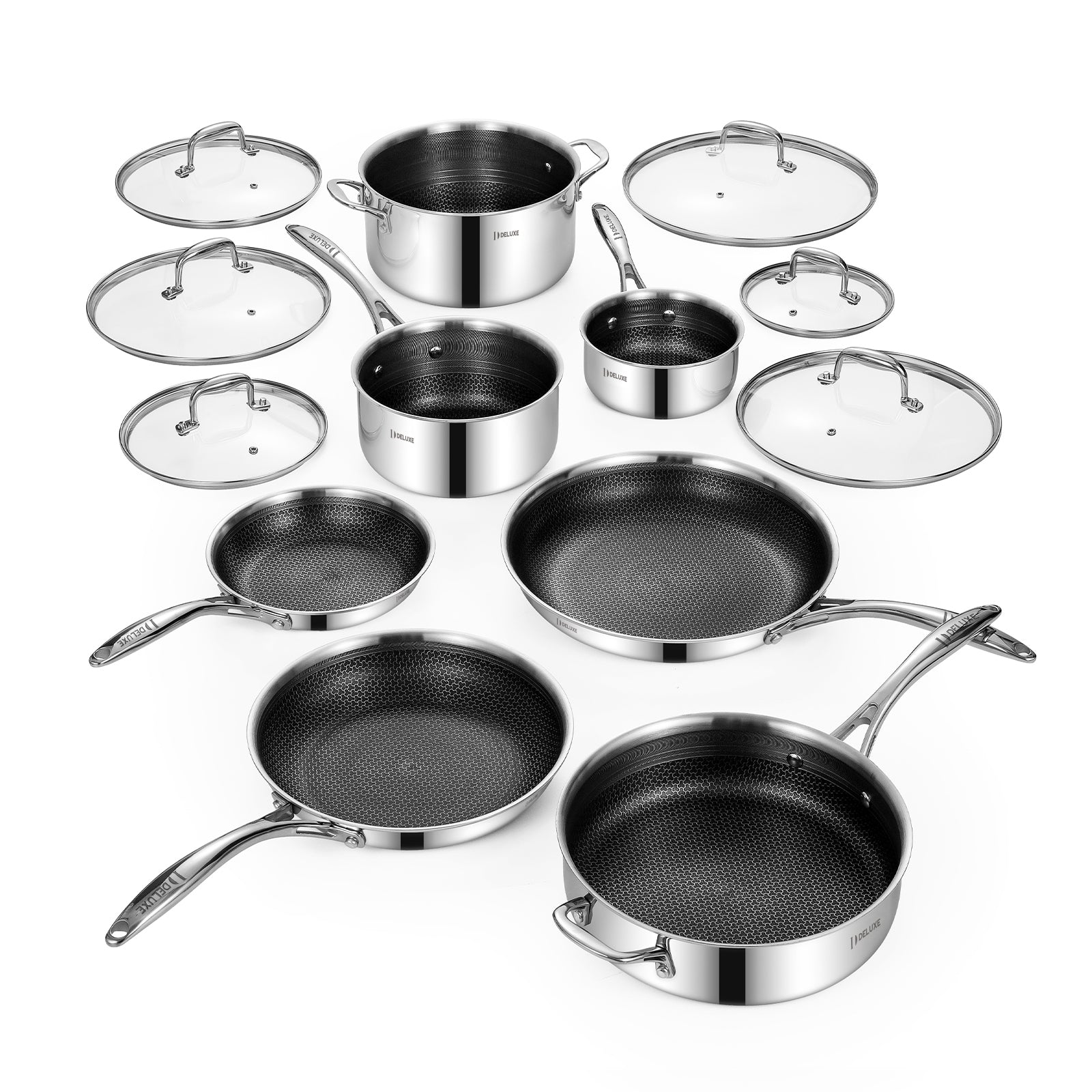
If you are building a pots and pans set, both pieces can be highly useful. A large pot handles boiling. A Dutch oven handles slow cooking.

What Size Dutch Oven Should You Buy?
The best size depends on how many people you typically cook for.
5-Quart Dutch Oven
A 5.4-quart Dutch oven is a great everyday size for many households.
It works for soups, stews, bread, chili, braised chicken, and smaller roasts.
It is large enough for family meals but not too heavy for regular daily use.
8-Quart Dutch Oven
An 8-quart Dutch oven is better for batch cooking.
Choose this size if you cook for a large family, make big soups, meal prep often, or want extra space for large roasts and stock.
The downside is the weight. A large Dutch oven can be quite heavy when full.
Which Size Is Best for Most People?
For most home cooks, a 5- to 6-quart Dutch oven is the most practical size.
It gives you enough room to cook comfortably without becoming too difficult to lift or store.

How to Cook With a Dutch Oven
A Dutch oven is simple to use, but a few small habits make it work much better.
Preheat Gradually
Do not blast an empty Dutch oven over very high heat.
Preheat it gradually, especially if you are using enameled cast iron.
This helps protect the enamel and provides more even heating.
Brown Ingredients First
For meat dishes, always start by browning the meat.
Remove the meat, sauté your onions or vegetables, then add liquid and scrape up the browned bits.
This builds incredible flavor.
Use the Lid When You Want Moisture
Use the lid for braising, simmering, and bread baking.
The lid traps steam and keeps your food perfectly moist.
Remove the Lid to Reduce Sauce
If your stew, sauce, or chili is too thin, remove the lid and simmer until it thickens.
This gives you ultimate control over the texture.
Move From Stovetop to Oven
Many Dutch oven recipes improve significantly in the oven because heat surrounds the pot evenly.
This is especially useful for braised meat, caramelized onions, casseroles, and no-knead bread.
What Not to Cook in a Dutch Oven
A Dutch oven is versatile, but it is not always the best choice for every meal.
Quick Eggs or Omelets
Use dedicated omelet cookware, a ceramic pan, or a nonstick frying pan instead.
A Dutch oven is too heavy and deep for quick eggs.
Very Delicate Fish
Delicate fish may be easier to cook and flip in a nonstick frying pan, ceramic-coated pan, or stainless steel skillet.
Small Sauces
For small sauces, use a 3-quart saucepan or another medium saucepan.
A full-size Dutch oven will simply be too large.
High-Heat Dry Cooking in Some Enamel Pots
Do not overheat an empty enameled Dutch oven.
Always follow the manufacturer’s care instructions to prevent cracking.
A Simple Dutch Oven Buying Note
If you are building a practical cookware set, think about how each piece solves a different kitchen problem.
- A Dutch oven handles slow cooking.
- A stainless steel frying pan handles searing.
- A ceramic nonstick pan handles eggs.
- A saucepan handles sauces and grains.
- A large stainless steel pot handles pasta and stock.
That kind of balanced cookware set is usually far more useful than buying every trendy pan you see.
If you are upgrading, look for high-quality, durable cookware and pieces that perfectly match your cooktop. For health-focused kitchens, you may also want PFAS-free cookware or non-toxic cookware for lower-oil everyday meals.

Discover What a Dutch Oven Does
A Dutch oven is a heavy, oven-safe cooking pot designed specifically for steady heat and moisture retention.
It is one of the best pots for soups, stews, braised meat, chili, beans, pasta sauce, no-knead bread, caramelized onions, casseroles, and slow-cooked comfort food.
If you want one piece of cookware that can move seamlessly from stovetop to oven and handle both everyday meals and weekend cooking projects, a Dutch oven is worth considering.
It will not replace every pan in your kitchen, but it can quickly become one of the most useful pieces in your entire collection.
FAQs About Dutch Ovens
Can a Dutch oven go in the oven?
Yes, most Dutch ovens are oven-safe, but you should always check the manufacturer’s temperature limit, especially for the lid knob and side handles.
Can you use a Dutch oven on the stovetop?
Yes. A Dutch oven can be used on the stovetop for browning meat, sautéing vegetables, boiling, simmering, and making rich sauces.
Can I bake bread in a Dutch oven?
Yes. Dutch ovens are excellent for no-knead bread because they naturally trap steam and provide steady heat, helping the bread develop a bakery-quality crust.
How do you clean a Dutch oven?
Let it cool, wash with warm water and mild soap, and use a soft sponge. For stuck-on food, soak briefly or use a baking soda paste. Avoid metal scrubbers on enamel surfaces.
What is the best cookware material for a Dutch oven?
Enameled cast iron is incredibly popular because it holds heat well and is easier to maintain than bare cast iron. Stainless steel can also be a fantastic option if you want something easier to clean and significantly less heavy.