How to Use Metal Utensils Safely With Cookware
You can safely use metal utensils with stainless steel and cast iron cookware, but you should avoid them on standard nonstick and ceramic surfaces. Stainless steel cookware is a durable alloy that handles metal spatulas well, whereas traditional coated pans can suffer permanent gouging. However, modern hybrid composite pans now exist that combine protective metal ridges with nonstick coatings, allowing you to use metal tools even on coated surfaces.
Can You Use Metal Utensils With Stainless Steel Cookware?
Yes, metal utensils are safe for stainless steel cookware because these pans are made of a durable metal alloy that lacks a delicate chemical coating. While metal-on-metal contact may cause light surface scratches, these are purely cosmetic and do not compromise the pan's safety or professional cooking performance.
Understand the Durability of Stainless Steel Pans
Professional chefs almost exclusively use stainless steel pans because they are built to withstand heavy-duty use. The surface is non-reactive and extremely hard, meaning a metal spatula can be used to scrape up "fond"—the flavorful browned bits left after searing meat. This mechanical action is necessary for making professional pan sauces and would be impossible with soft silicone or plastic tools.
Recognize the Alloy Structure
High-quality stainless steel cookware is usually "tri-ply" or "5-ply," meaning layers of steel are bonded to an aluminum or copper core. The exterior layers of steel are specifically chosen for their hardness and resistance to corrosion. Because there is no top "film" or "paint" to chip away, using a metal spoon to stir a stew or a metal turner to flip a burger will not release any harmful substances into your food.
Differentiate Between Cosmetic and Structural Damage
When you use metal utensils on cookware made of steel, you will eventually see "swirl marks" or light scratches. It is important to realize that these marks are a sign of a well-used kitchen and do not mean the pan is ruined. As long as you are not using a hammer or an industrial scraper, the structural integrity of your durable stainless steel pans remains intact for a lifetime of use.

Avoid Metal Utensils on Standard Coated Cookware
Never use metal utensils on traditional nonstick or ceramic-coated cookware; the hard metal will easily slice through the protective layer. Once a standard coating is scratched, its nonstick properties fail, leading to permanent food sticking and the risk of the coating flaking into your meals.
The Fragility of Traditional Ceramic Layers
While standard ceramic-coated cookware is often marketed as "scratch-resistant," it is still fundamentally a glass-like layer. Metal tools are significantly more abrasive than ceramic. If you use a metal fork in a standard ceramic pan, you will create microscopic fissures that trap oils and proteins, causing the pan to lose its nonstick effectiveness quickly.
The Hybrid Solution
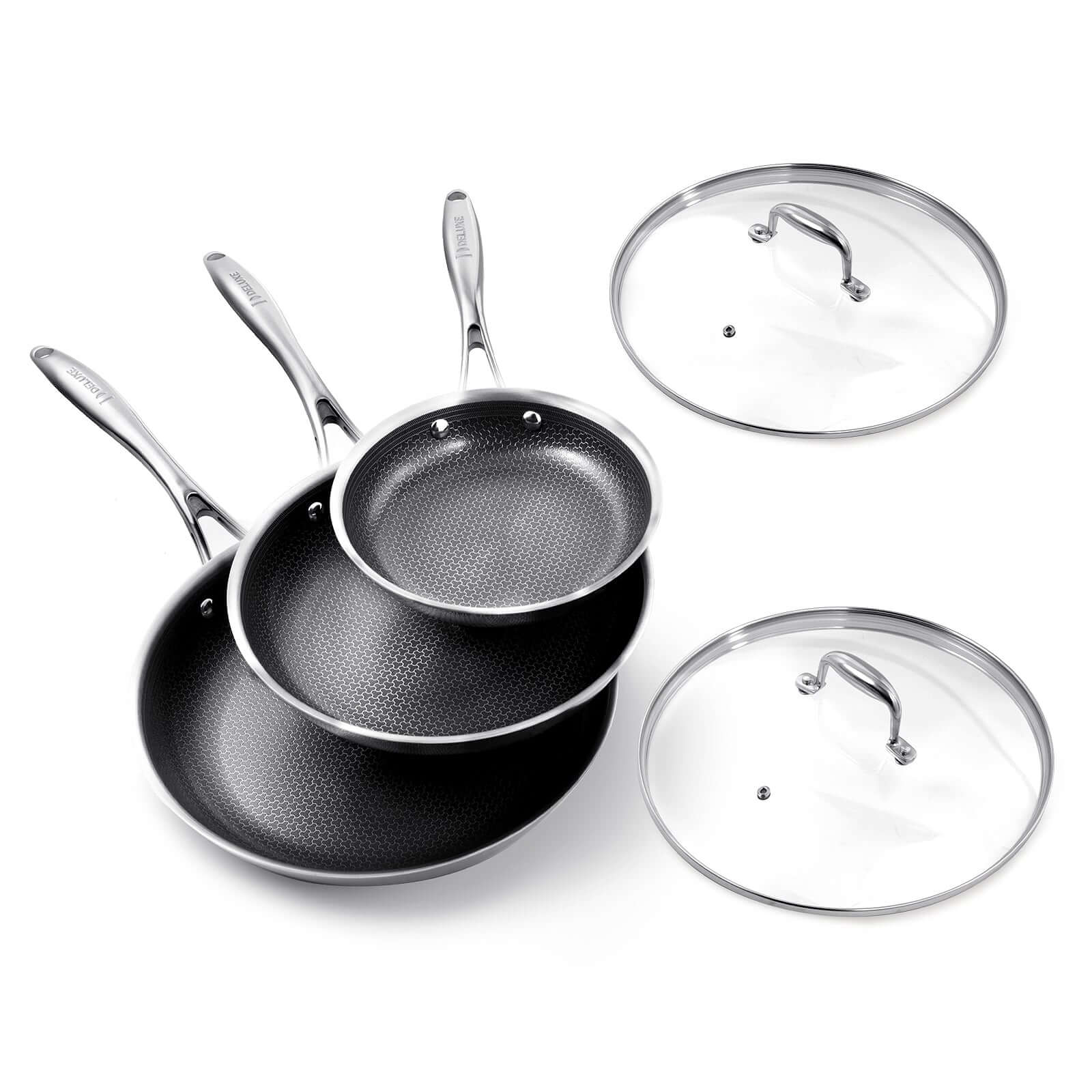
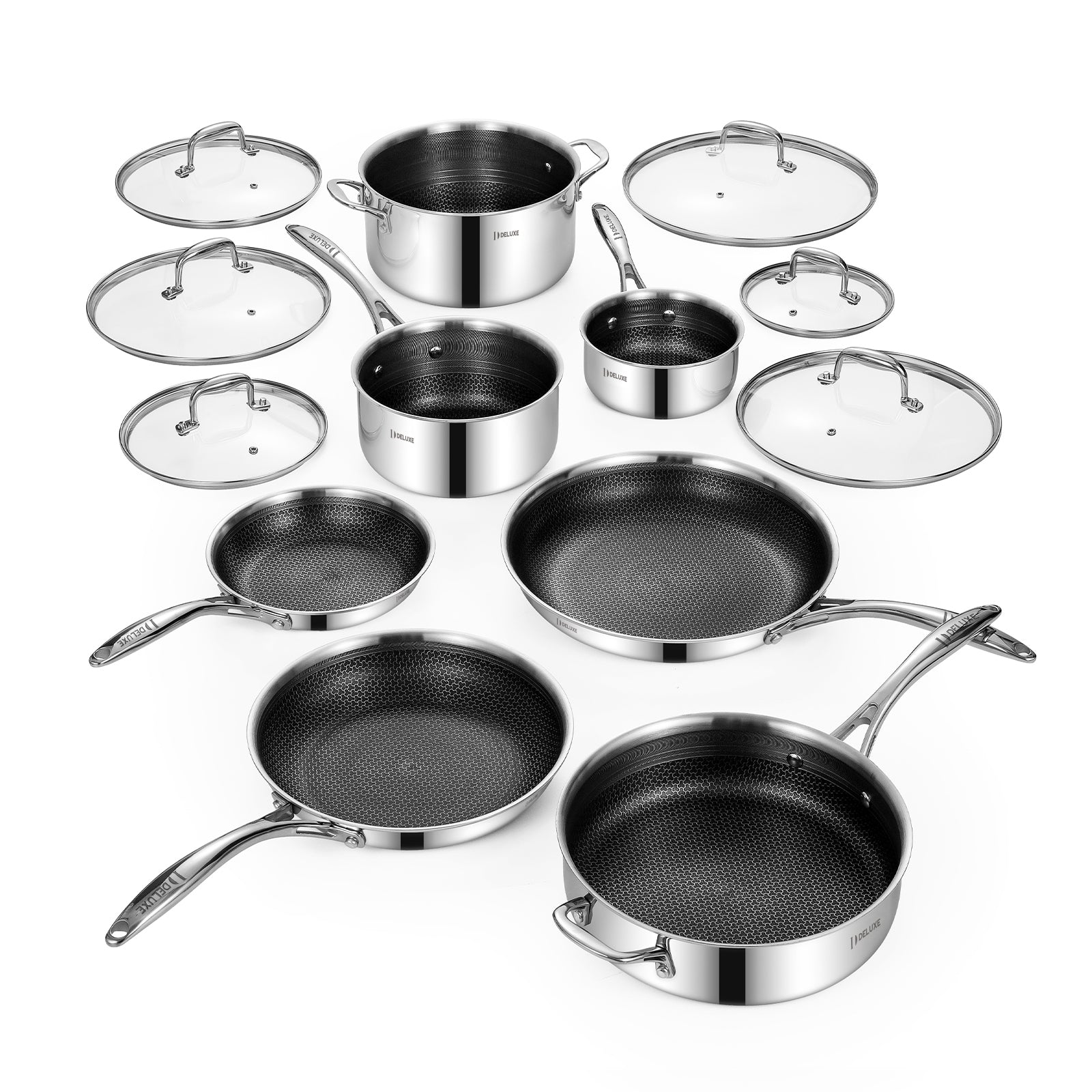
For the best of both worlds, hybrid composite pans feature raised stainless steel ridges that shield a recessed ceramic coating, providing a metal-utensil safe surface with effortless nonstick performance.
Health and Safety Concerns With Peeling
When you use metal utensils on cookware that has a standard nonstick coating, you risk the coating flaking off. Once the coating is compromised, the underlying aluminum or base metal is exposed. This base metal can react with acidic foods like lemon juice or tomato sauce, potentially altering the flavor and safety of your food.
Maintain the Nonstick Lifespan
The primary reason nonstick pans fail is the accidental use of metal. To extend the life of your investment, you should treat standard coated pans with a "no-metal" policy. Reserve your silicone, wood, or high-heat plastic tools for these delicate surfaces. This simple habit can double the lifespan of a pan compared to one that is regularly subjected to metal scrapers.

What Types of Metal Utensils Are Safer?
If you prefer metal, choose tools with thin, flexible blades and rounded corners to minimize the impact on your stainless steel frying pan. Flexible "detail" tools, such as fish spatulas, are much less aggressive than heavy, sharp-edged scrapers and are safer for your pan’s finish.
Use Flexible Fish Spatulas
A stainless steel fish spatula is arguably the best metal tool for a stainless steel frying pan. These spatulas feature very thin, offset blades that are designed to glide under delicate proteins. Because the blade is flexible, it bends when it hits the metal surface rather than digging in, keeping your durable stainless steel pans looking newer for longer.
Opt for Rounded Edges
When shopping for metal spoons or turners, look for those with polished, rounded edges rather than sharp, "stamped" edges. Cheaply made metal utensils often have rough "burrs" from the factory that act like a saw against your pan. High-quality utensils are polished and smooth, allowing them to slide across the steel without catching or prying.
Avoid Sharp-Tined Forks for Stirring
Using a standard dinner fork to stir pasta in stainless steel pans is a common mistake. The pointed tines apply a massive amount of pressure to a very small area, which is how deep pits are formed. If you must use a fork, use a specialized "pasta fork" with rounded wooden tines, or stick to a broad-surfaced metal spoon.
Use Gentle Technique Instead of Force
The key to safely using metal utensils on cookware is a "gliding" motion rather than aggressive prying. Instead of using a spatula as a chisel to force stuck food, maintain a shallow angle and allow the heat to release the food naturally.
Maintain a Shallow Angle
When you need to get under a seared steak, keep the handle of your spatula as low to the pan as possible. This creates a shallow angle that allows the metal blade to slide across the surface. If you hold the handle at a high angle, the leading edge of the spatula acts as a scraper, which is much more likely to leave deep marks on your stainless steel frying pan.
Let the Food Release Itself
If meat is sticking to your stainless steel pans, it usually means the searing is not yet complete. As the crust forms, the proteins naturally contract and pull away from the metal. Instead of prying it up, wait another 30 to 60 seconds. Once the sear is perfect, the food will "jump" off the pan with almost zero effort, protecting the surface from unnecessary friction.
The Role of Deglazing
If you have burnt bits stuck to the pan, do not try to scrape them off while the pan is dry. Instead, add a small amount of liquid to the hot pan. This deglazing process lifts the residue instantly, allowing you to stir safely with a metal spoon. The liquid acts as a lubricant, making the cleaning process safe for your stainless steel cookware.

Match Utensils to Your Cooking Task
A professional approach involves matching the utensil material to the specific cooking task. By switching between metal for searing and wood or silicone for stirring, you can utilize the strengths of each material while preserving the long-term finish of your stainless steel pans.
Metal spatulas are the superior choice for "smash burgers" or searing steaks on stainless steel pans. The thinness of metal allows you to get under the crust without breaking the meat apart. For these high-heat tasks, the durability of steel is essential, and minor surface scratches are a fair trade-off for professional results.
If you are making a risotto or a roux that requires 20 minutes of constant stirring, use a wooden spoon. Wood is naturally softer than steel and will not leave any marks even with thousands of rotations. Using wood for repetitive tasks keeps your durable stainless steel pans in pristine condition.
When you are making a delicate béchamel sauce or soft-scrambled eggs, a silicone-tipped tool is best. Silicone is completely non-abrasive and silent. By using silicone for liquid-heavy and low-heat tasks, you reduce the total wear and tear on your stainless steel frying pan, ensuring it stays looking "showroom ready."

How Do Scratches Affect Cookware Performance?
In stainless steel cookware, surface scratches are primarily aesthetic and do not impact heat conduction or food safety. However, in standard ceramic-coated cookware, scratches represent functional decay, creating "valleys" where proteins will anchor and cause permanent sticking.
Aesthetic Marks on Stainless Steel
The "swirl marks" found on well-used stainless steel pans are simply a change in the light reflection of the metal. They do not harbor bacteria, nor do they make food stick more. Professional kitchens never worry about these marks; they show the tool is a high-quality, professional piece of equipment.
Functional Failure in Standard Ceramic
A deep scratch in traditional ceramic coating is a serious problem. A scratch creates a jagged "valley" where proteins can anchor themselves, causing the pan to stick in the same spot repeatedly. This eventually leads to a buildup of carbonized oil that ruins the pan's performance.
When to Replace a Pan
You never need to replace stainless steel cookware due to scratches unless the pan is physically warped. However, if your standard nonstick or ceramic pan has visible scratches you can feel with your fingernail, it is time to shop for a replacement. Once the coating is compromised, the nonstick benefit is gone.

Build a Safer Utensil Set for Everyday Cooking
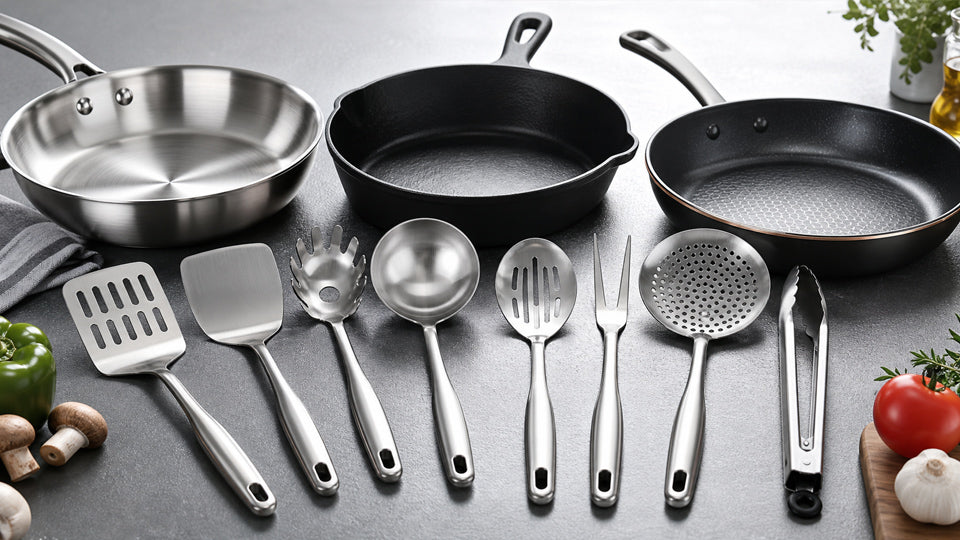
The best way to prevent accidents is to own a balanced, hybrid set of utensils for every scenario. Keeping a mix of high-quality metal turners, bamboo spoons, and silicone spatulas ensures you always have the correct tool for both your durable stainless steel pans and your coated sets.
Bamboo is an excellent "middle-ground" material. It is harder than wood but softer than ceramic, making it great for scraping without fear of damage. Having a dedicated jar of bamboo tools on your counter is the best way to ensure you always have a "safe" tool within reach for any pan type.
If you love using metal on your durable stainless steel pans, invest in a few "pan-friendly" pieces. Look for a flexible fish turner and a silicone-tipped whisk. These tools give you the strength of metal while incorporating design elements that reduce the risk of deep gouges.
A pro tip is to keep your "no-metal" tools in a separate container from your metal tools. When you pull out a delicate coated pan, you should only be looking at your silicone and wood options. This prevents the reflex of grabbing a metal spoon to stir a delicate pan during the rush of cooking.
Use Metal Tools With Confidence
Using metal utensils on stainless steel cookware is a professional and safe practice that allows for better searing. While you should avoid metal utensils on cookware that features a standard nonstick coating, they are the ideal companion for durable stainless steel pans. By choosing flexible tools, maintaining shallow angles, and utilizing a hybrid set of wood and silicone—or investing in modern hybrid composite cookware—you can protect your kitchen investment for years to come.
FAQs About Metal Utensils and Pans
Can I use a metal whisk in a stainless steel pot?
Yes, it is perfectly safe. You may hear a scraping sound and see light circular marks over time, but this is purely cosmetic and will not damage the stainless steel cookware or its heat conductivity.
Will metal utensils make my stainless steel pans rust?
No. High-quality stainless steel pans are made of an alloy that forms a self-healing protective layer. Even if you scratch the surface, the layer reforms instantly when exposed to oxygen, preventing any rust.
Why do some brands say "no metal utensils" for steel?
This is often a "catch-all" warning to prevent warranty claims for cosmetic scratches. While it keeps the pan looking new, durable stainless steel pans are designed to handle metal tools without any functional issues.
Can I fix deep scratches on my stainless steel frying pan?
Yes. You can buff out surface scratches with a non-abrasive powdered cleanser like Bar Keepers Friend. For deeper gouges, use a fine-grit scouring pad, rubbing in the direction of the metal's grain to blend the mark.
Is it safe to use a metal spatula on a ceramic pan once?
It is not recommended for standard ceramic. A single firm stroke can create a permanent fissure in the coating. However, if you are using a hybrid pan with raised stainless steel ridges, metal utensils are generally safe to use.