How to Choose Induction Cookware for an American Home Kitchen
The right induction cookware combines a magnetic, flat base with the sizes, surfaces, and shapes your household actually uses. Start by confirming compatibility with both the cookware maker and your cooktop manual, then compare construction, base diameter, care requirements, storage, and the balance between sets and individual pieces. This approach is more dependable than choosing by material name alone because stainless steel, aluminum-core, cast iron, and coated cookware can all perform differently depending on how the base and body are built.
How Does Induction Cookware Generate Heat?
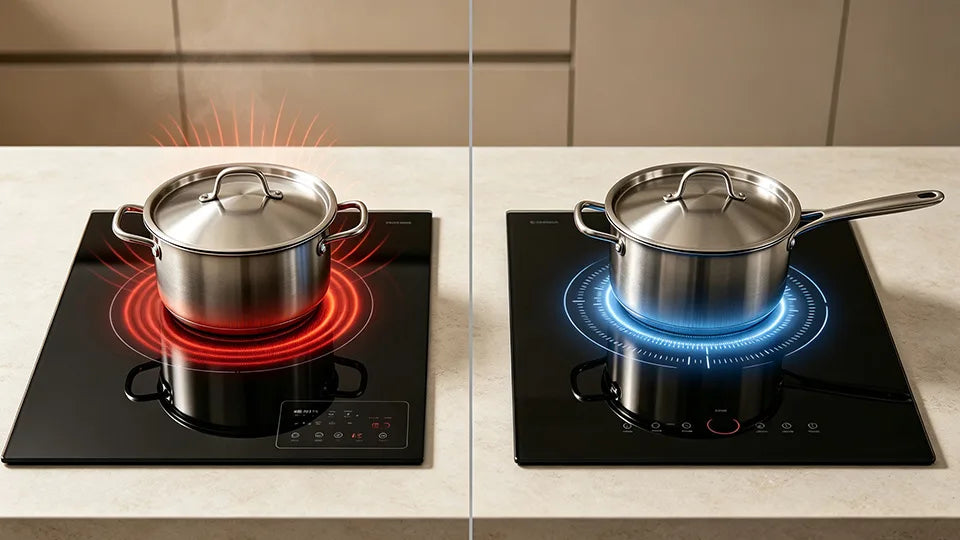
Induction cooking creates heat in compatible cookware through an electromagnetic field instead of heating a conventional electric element first. The pan becomes the active heating component, while the glass surface mainly receives residual heat from the cookware. This direct response explains why the material and construction of the base are central buying criteria.

Magnetic Bases React With the Cooktop
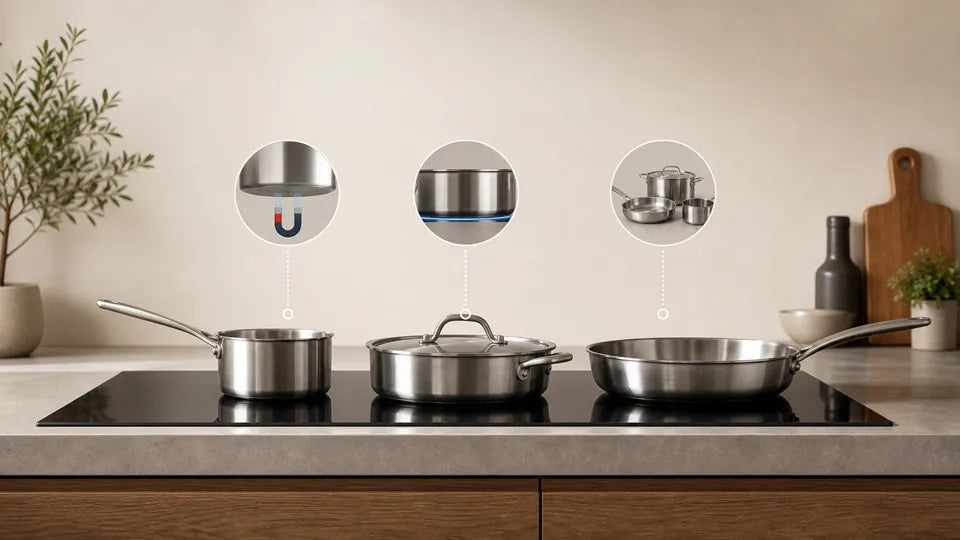
An induction element produces a changing magnetic field beneath the glass. When a compatible vessel sits over the element, that field induces electrical currents in the metal, and resistance within the cookware generates heat. The U.S. Department of Energy explanation of induction cooking describes this direct transfer and notes that cookware with a flat bottom to which a magnet sticks can work on induction.
The magnet test is useful because it checks for a ferromagnetic base, but it does not measure overall cooking quality. A pan may attract a magnet and still heat less evenly than another pan because body thickness, core materials, diameter, and manufacturing quality also affect performance.
Layered Construction Makes More Materials Compatible
Aluminum is valued in cookware because it spreads heat readily, but ordinary aluminum is not ferromagnetic. Manufacturers can make an aluminum-core pan induction-compatible by adding a magnetic stainless steel exterior or bonded base. The result should be described as layered or clad cookware, not as pure aluminum or pure stainless steel.
This distinction matters when comparing stainless steel induction cookware. One piece may be mostly stainless steel, while another may combine a stainless cooking surface, conductive aluminum core, and magnetic stainless base. Read the complete construction instead of assuming that two pans with similar exteriors will respond in the same way.
How Can You Confirm Induction Compatibility?
Use three checks before buying: inspect the markings, test the base with a magnet when possible, and verify the exact model on the manufacturer’s page. No single check should replace the cooktop manual, especially when the appliance specifies minimum pan diameters or limits for bridge and flexible zones.

Look for the Induction Symbol
Many compatible products display an induction symbol on the packaging or bottom. The mark often resembles a horizontal coil, but symbol design can vary. If the mark is unclear, do not rely on appearance alone; use the product specification and cooktop instructions to confirm compatibility.
Keep the packaging or a screenshot of the specification until you have tested the cookware. That record helps if a pan is described as compatible but is not consistently detected by your appliance.
Test the Base With a Magnet
Place an ordinary refrigerator magnet against the center and several points near the edge of the exterior base. A firm attraction indicates the ferromagnetic material an induction element generally needs. That result is a good sign, though not the whole answer. ENERGY STAR’s electric cooking guidance also identifies the magnet check as a practical compatibility test.
A weak or uneven attraction calls for further verification rather than an automatic rejection. Some layered bases may produce different attraction across the surface, and the cooktop’s detection system may respond differently from a handheld magnet.
Verify the Manufacturer’s Compatibility Information
Check the exact model number rather than a broad brand or collection statement. Confirm induction compatibility, bottom diameter, included lids, oven limits, handle restrictions, and care instructions separately. A seller’s use of phrases such as “all stovetops” should be supported by a detailed specification.
If buying online, make sure the page describes the same size and version shown in the cart. Similar cookware lines sometimes include both induction-ready and non-induction variants.
Why Do Base Size and Shape Matter?
Induction compatibility does not guarantee reliable detection on every cooking zone. The base must also be sufficiently flat and appropriately sized for the selected element. Check the appliance manual because minimum and maximum vessel dimensions vary across cooktops.

Proper Diameter Supports Cooktop Detection
An induction zone may not activate when the magnetic portion of the base is too small. The labeled pan diameter usually refers to the upper rim, not the actual bottom touching the cooktop, so compare the base measurement with the appliance specification.
Very large cookware can create the opposite problem. If the base extends far beyond the active zone, the outer area may respond more slowly, particularly when the pan has limited lateral heat distribution.
Flat Bases Maintain Consistent Contact
A flat base sits securely and keeps the vessel centered. Physical contact is not what creates induction heat, but a warped base can rock, heat unevenly, or interact poorly with pan-detection and temperature-sensing systems. Inspect older cookware before transferring it to a new cooktop.
Avoid dragging cookware across the ceramic-glass surface. Lift it when repositioning, and keep both the base and cooktop free of grit that could scratch the glass.
Large Pans May Require Flexible Zones
Some cooktops offer bridge or flexible zones for griddles, roasting pans, or large vessels. These functions are appliance-specific and should not be assumed from the cookware alone. A large pan performs best when its magnetic base aligns with the active area described in the cooktop manual.
Measure unusual cookware before purchase. A wide rim, oval body, or helper handle can also affect neighboring-zone clearance even when the base fits.
What Affects Performance on an Induction Cooktop?
Performance depends on the complete pan and appliance system, not simply the presence of magnetic steel. Base construction influences heat spread, vessel shape affects response, and normal electromagnetic or mechanical vibration can create sound. Comparing these factors helps separate a compatibility claim from everyday usability.
Base Construction Influences Heat Distribution
A conductive core can move heat beyond the area receiving the strongest induction energy. Thickness and bonding quality also matter because a pan must balance quick response with sufficient distribution across the cooking surface. More layers do not automatically mean better performance unless each layer has a clear purpose.
Look for a construction diagram and an exact description of the magnetic exterior. Avoid vague labels that name only the visible material while omitting the core and base.
Pan Design Affects Temperature Response
Thin cookware may react quickly but show larger temperature differences, while a heavier body may respond more gradually and retain heat longer. Handles, wall height, surface area, and food load also change how a pan feels in use.
Start at a moderate setting and adjust gradually. Induction can respond rapidly, so habits developed on slower electric coils may lead to unnecessary overheating.
Loose Layers May Increase Cooking Noise
Buzzing, humming, or clicking can occur as magnetic fields interact with cookware and the appliance cycles power. Lightweight lids, handles, or layered components may vibrate at particular settings. A small amount of sound is not automatically a defect, but loud or new noise should be checked against the troubleshooting guidance from both the cookware maker and the cooktop maker.
Stop using cookware that is visibly separating, severely warped, or unstable. Noise accompanied by an error code or repeated loss of detection requires appliance-specific support.
Which Construction Suits Your Cooking Style?
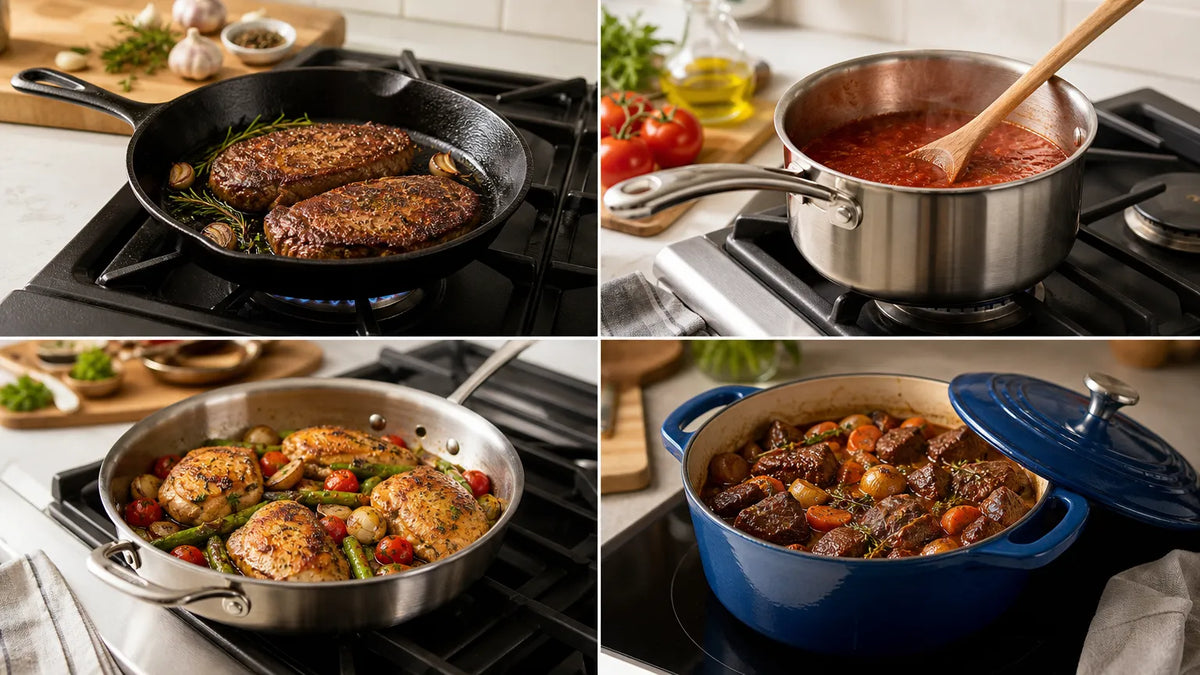
Choose construction according to the foods and techniques you use most. Bare stainless steel favors cooks who value browning and deglazing, a verified nonstick surface can simplify delicate foods, and heavier vessels support slower cooking. A hybrid design may combine several of these characteristics but still requires model-specific care.

Stainless Steel Supports Browning and Deglazing
Bare stainless steel can develop fond when proteins and sugars brown on the surface. It generally requires controlled preheating, a suitable amount of oil, and patience before turning food. Adding liquid after browning can dissolve the fond into a pan sauce.
Stainless steel is not naturally nonstick. Food release depends on temperature, moisture, fat, and technique, so it may not be the easiest first choice for eggs or delicate fish.
Nonstick Surfaces Suit Delicate Foods
Nonstick induction cookware can reduce the effort required for eggs, pancakes, and tender proteins when used according to the coating maker’s instructions. Use low to medium or moderate heat unless the exact care guide specifies otherwise, and avoid assuming that nonstick means oil-free cooking. Health Canada’s cookware use guidance also advises against empty preheating and high heat for nonstick cookware.
A small amount of suitable oil may improve cooking and help protect the surface. Avoid prolonged excessive heat because it can shorten the useful life of many coated surfaces.
Heat-Retaining Materials Support Slow Cooking
Heavier pots and Dutch ovens can smooth temperature fluctuations for soups, braises, and long simmers. Weight should still be manageable when the vessel is full, and the base must meet the cooktop’s magnetic and dimensional requirements.
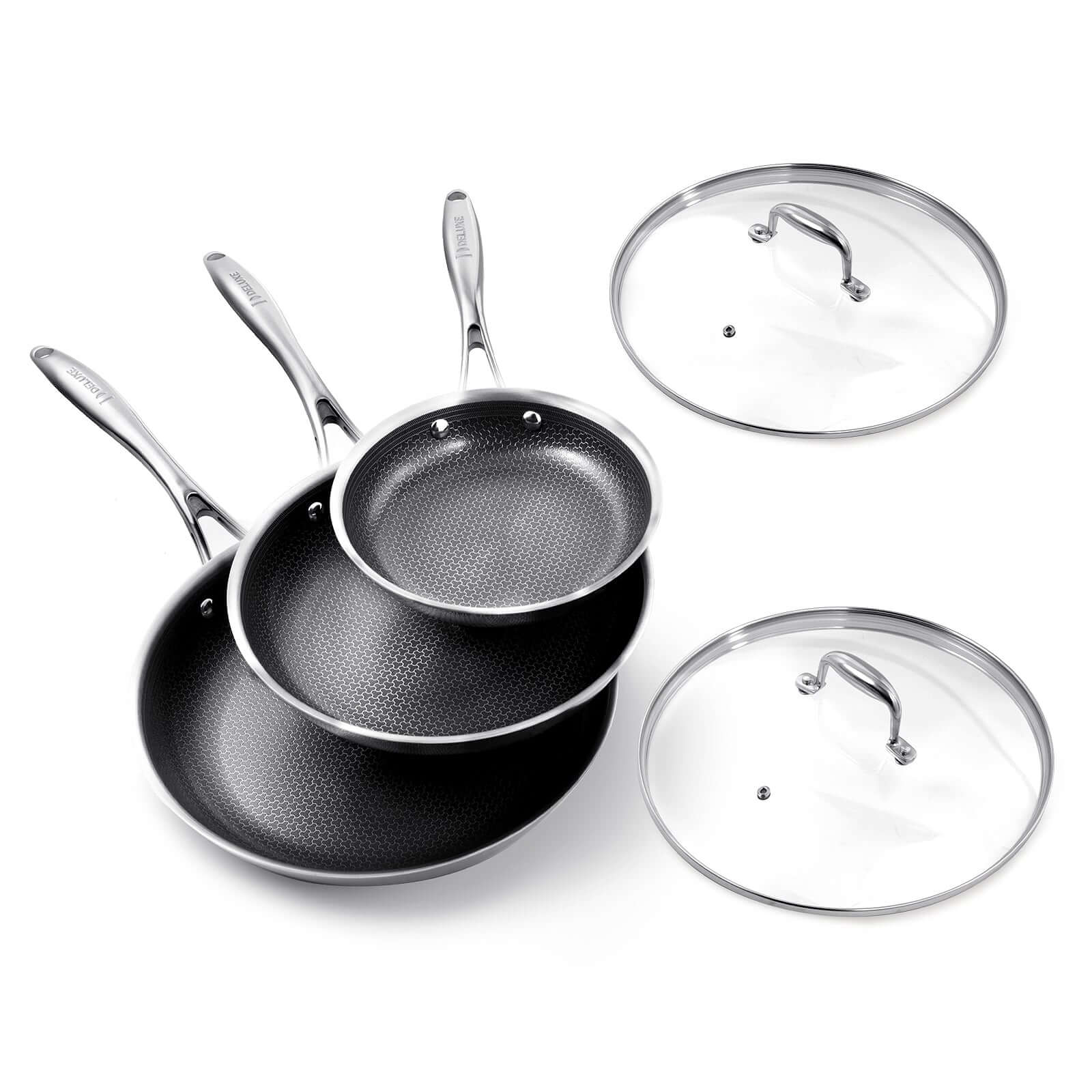
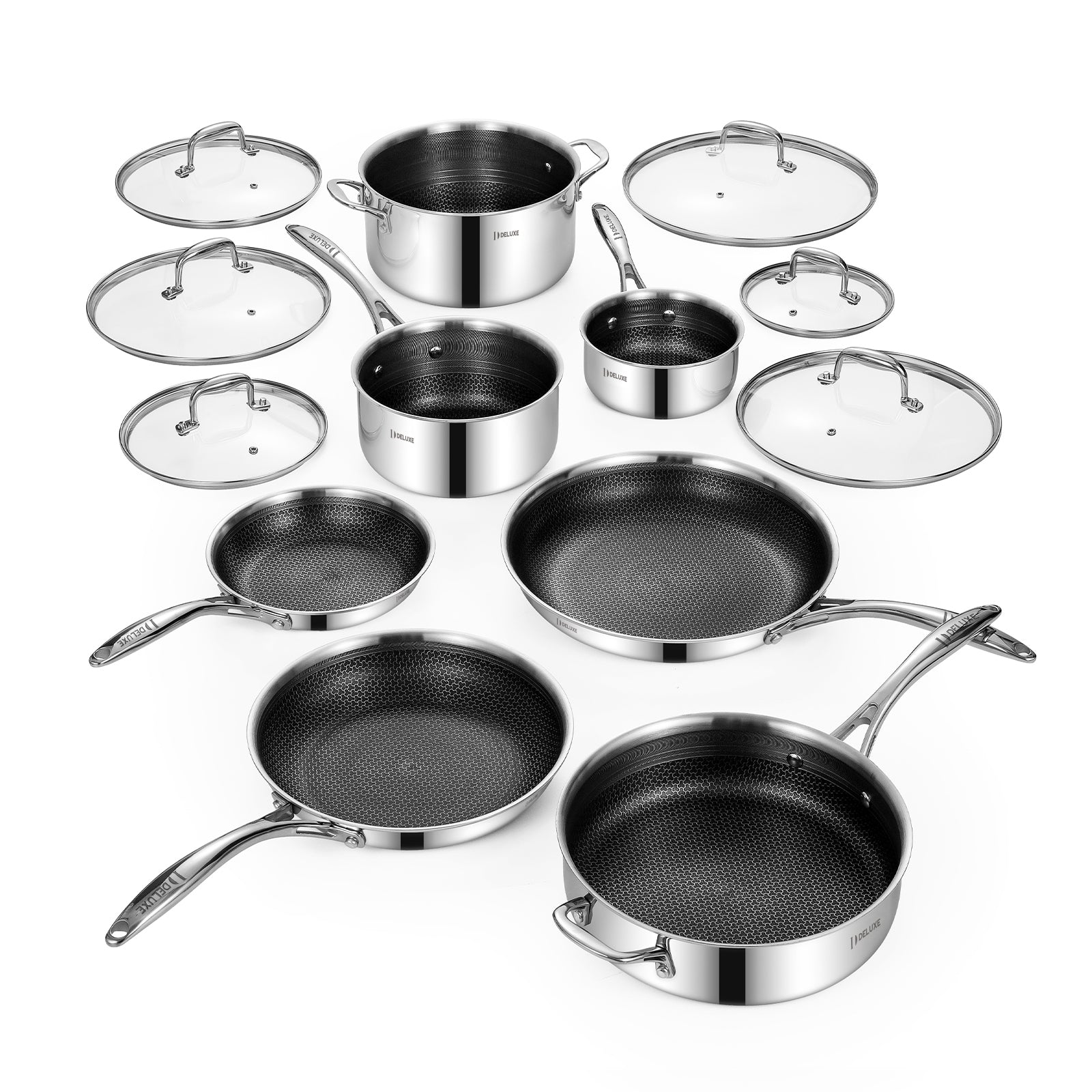
For a hybrid option, our cookware technology combines a three-layer body with 304 stainless steel, an aluminum core, and a 430 magnetic stainless steel base, paired with a structured ceramic nonstick cooking surface. This construction makes our cookware induction compatible without reducing it to pure ceramic or pure stainless steel cookware.
Should You Buy a Set or Individual Pieces?
A cookware set makes sense when you need several core shapes and will use most of the included vessels. Individual pieces are better when your kitchen already has useful cookware or when storage is limited. Count actual pots and pans rather than lids and accessories before comparing value.
The choice becomes clearer when the same practical criteria are applied to both buying paths:
| Buying Option | Best Fit | Main Advantage | Point to Check |
|---|---|---|---|
| Cookware set | Several basics need replacement | Coordinated construction and care | Number of actual vessels |
| Individual pieces | Useful cookware is already owned | Fills specific gaps | Mixed care requirements |
| Smaller focused set | Storage or budget is limited | Covers one cookware category | Duplicate sizes and functions |
Buying a cooktop and a cookware set at the same time can simplify a kitchen change, although the appliance and cookware are often sold separately. Our 13-piece hybrid cookware set is compatible with induction, gas, electric, and ceramic cooktops, so its current contents can be compared directly with the pieces already in your kitchen.
Buying separately may be more practical when only a frying pan or saucepan is missing. Cabinet height, handle clearance, lid storage, lifting comfort, and care preferences can then decide between a complete set and a smaller group of individual pieces. The best induction cookware is the combination you can store, maintain, and use regularly.
Choose Induction Cookware With Confidence
Build your selection around confirmed magnetic compatibility, a flat base, cooktop-approved diameter, and the cooking surfaces you will use most. If a coordinated hybrid collection fits your kitchen, check the listed specifications for our cookware sets against the three checks above, then compare them with the cookware you already own. The strongest choice is not necessarily the largest set; it is the group of induction cookware that matches your appliance, recipes, storage, lifting comfort, and willingness to follow the care instructions.
FAQs About Induction Cookware
Q1. Can You Use an Induction Adapter Plate With Incompatible Cookware?
It depends. An adapter may allow some nonmagnetic cookware to receive heat, but it can reduce the speed and responsiveness that make induction useful. Confirm that both the adapter and cooktop manufacturers permit the arrangement.
Q2. Do Cookware Lids Need to Be Magnetic?
No. A lid does not need to react with the induction element because it does not sit on the cooking zone. It still needs to fit the vessel securely and remain within its stated stovetop and oven limits.
Q3. Does Induction Cookware Work on Gas and Electric Stoves?
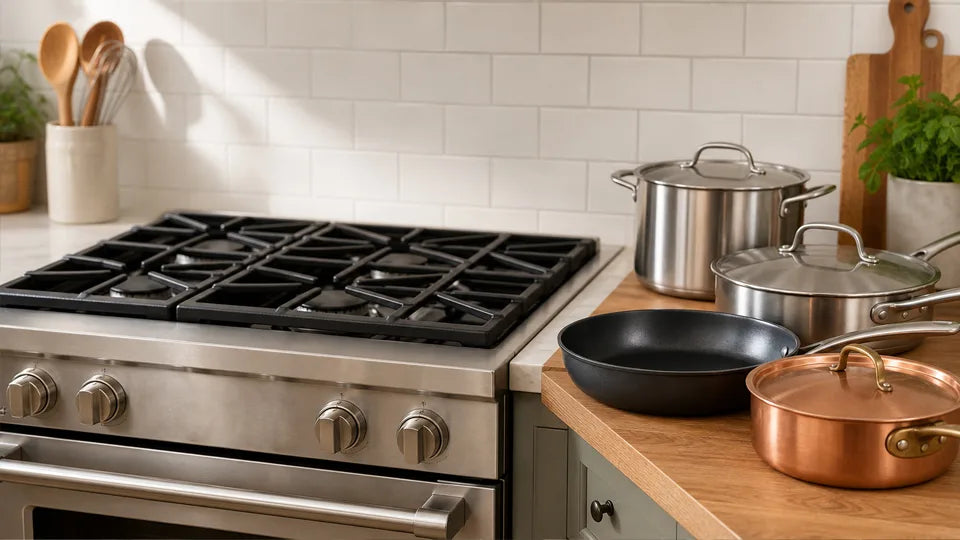
Usually, but only when the manufacturer lists those cooktops as compatible. Induction compatibility alone does not automatically confirm every other stovetop type.
Q4. Do Induction Cookware Handles Always Stay Cool?
No. Handle temperature depends on construction, burner position, cooking time, nearby heat, and oven use. Treat every handle as potentially hot and use suitable protection when the manufacturer recommends it.
Q5. Does Induction Cookware Need to Be Seasoned?
It depends on the exact cooking surface. Cast iron and some hybrid or coated products may have specific preparation instructions, while bare stainless steel generally does not require traditional seasoning. Follow the manufacturer’s care guide rather than applying one method to every pan.