How Long Should a Frying Pan Last?
The lifespan of a frying pan is rarely a fixed number; it depends heavily on the materials used and how the pan is treated daily. While traditional pans often face a trade-off between durability and convenience, modern composite designs have changed the expectations for kitchen longevity. Understanding the lifecycle of your tools helps you make better purchasing decisions and ensures your kitchen remains efficient. This guide examines how material innovation impacts durability, identifies signs of wear, and provides steps to maximize your culinary investment.
What Determines the Lifespan of a Frying Pan?
The longevity of a pan is dictated by its physical construction and the environmental stress it undergoes. Not all materials react to heat and friction in the same way, which is why engineering plays a vital role in how long a pan remains functional.
Material Selection and Structural Integrity
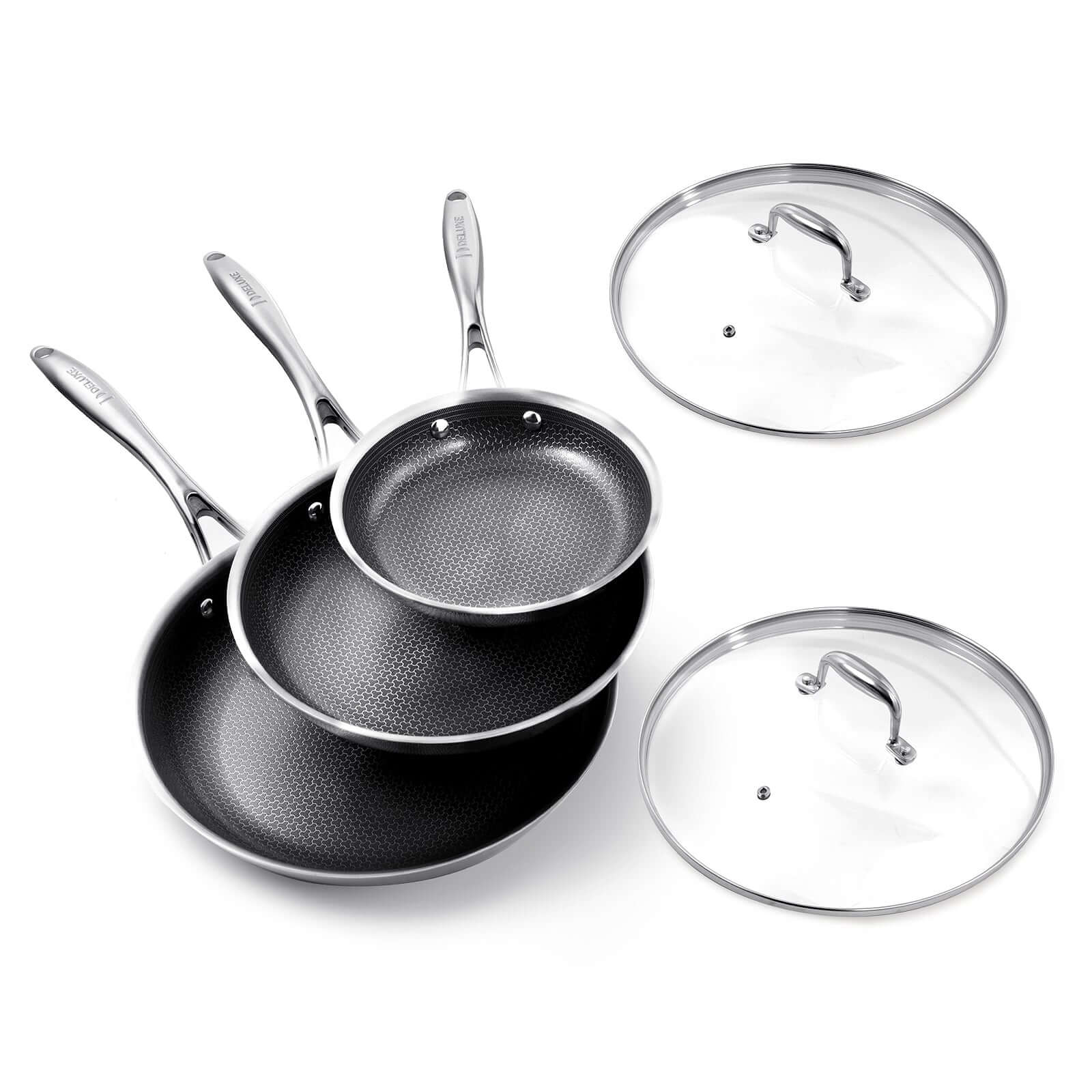
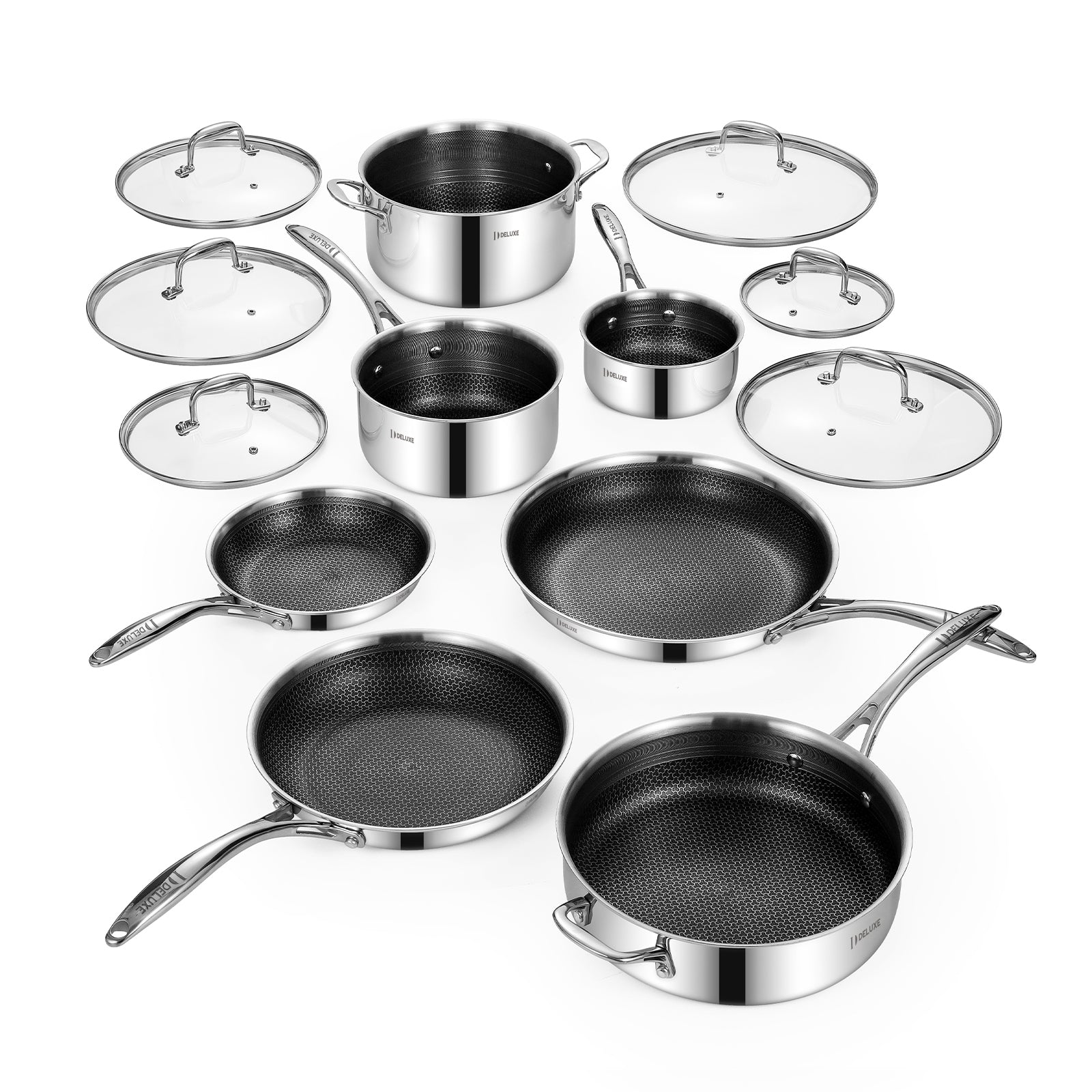
The core material is the most significant factor. When selecting the best cookware material, durability and heat conductivity must be balanced. Aluminum is common but prone to warping, while stainless steel is resilient. However, the most advanced pans today utilize a composite structure, combining the strength of stainless steel with the release properties of ceramic. This hybrid approach prevents the structural fatigue common in single-material pans.

Resistance to Friction and Surface Wear
Daily cooking involves constant contact with spatulas and cleaning tools. Traditional coatings are often soft and easily damaged. In contrast, modern high-end pans feature a raised stainless steel matrix that physically protects the recessed nonstick areas. This structural protection significantly extends the surface life compared to standard coated pans, as the metal bears the brunt of the mechanical force.
Thermal Expansion and Heat Management
How a pan handles repeated thermal expansion—heating up and cooling down—determines its structural lifespan. Low-quality pans may develop "hot spots" or lose their flatness over time. Premium composite pans are designed to expand and contract uniformly, which maintains a perfectly flat base for years, ensuring consistent contact with your stovetop and preventing the dreaded "wobble."
How Long Do Hybrid and Nonstick Pans Typically Last?
The lifespan of a pan with a release surface depends on the technology used. While basic nonstick pans are often seen as temporary, hybrid composite pans are designed for long-term service.
The Evolution of Coating Durability
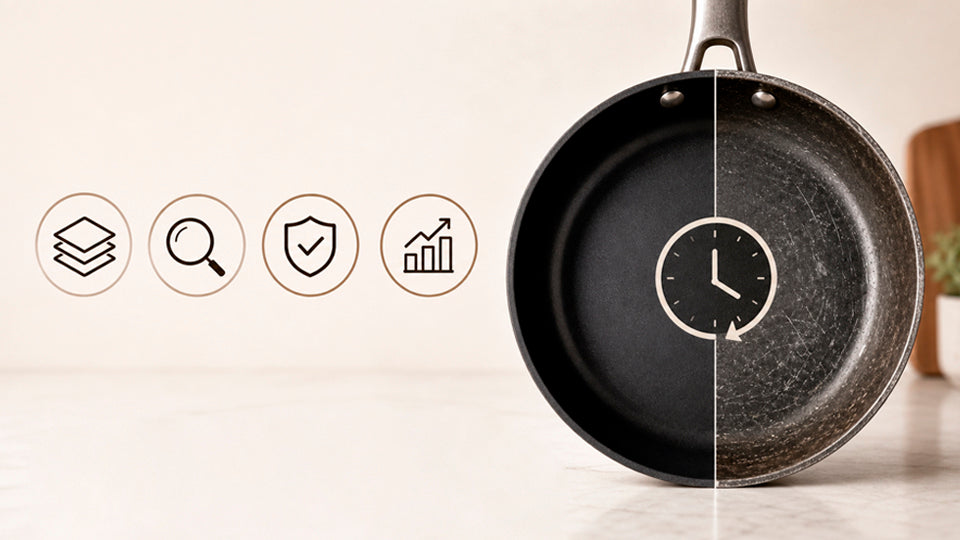
A standard, traditional nonstick pan typically lasts between one and three years before the surface degrades. However, the lifespan of a modern composite pan—featuring a raised stainless steel grid and a recessed ceramic layer—can be significantly longer. By shielding the nonstick surface within a metal "honeycomb" or grid, the pan maintains its release properties even with frequent, heavy use.
Specialized Utility: The Nonstick Pan for Cooking Eggs
One way to evaluate longevity is through specific tasks. Using a dedicated nonstick pan for cooking eggs is a common practice to preserve surface quality. In a hybrid pan, the recessed ceramic coating provides the effortless release needed for delicate omelets, while the raised stainless steel allows you to sear meats in the same vessel. This versatility means you don't have to "save" the pan for special tasks, yet it still outlasts traditional alternatives.

Ceramic vs. Chemical Coatings
Modern consumers are increasingly turning to ceramic-based hybrids because they are a cornerstone of non-toxic cookware. Ceramic is naturally harder and more heat-resistant than traditional chemical coatings. When integrated into a stainless steel composite, the ceramic doesn't just provide a slick surface; it creates a durable, heat-stable environment that resists the peeling and flaking associated with older nonstick technologies.
Why Composite Stainless Steel Designs Outlast Standard Pans?
Stainless steel has long been the gold standard for durability, but it lacks the ease of a nonstick surface. Composite designs bridge this gap, offering the "forever" feel of steel with modern convenience.
The Power of Reinforced Surfaces
A composite pan is often regarded as the safest cookware because it utilizes a raised stainless steel structure to create a barrier. This design means that even if you use metal utensils, the spatula glides over the stainless steel peaks rather than digging into the nonstick valleys. This physical reinforcement ensures the cooking surface remains intact for many years, far exceeding the life of a standard flat-coated pan.
Non-Toxic and Safe
Safety is a major component of a pan’s "useful" life. Composite pans can be considered non-toxic cookware when they are made without PFOA or PFAS and use ceramic-based surfaces with high-grade metal construction. However, like most nonstick cookware, they are not designed for prolonged cooking. A common upper heat limit is around 250°C, so daily use should avoid long periods of empty heating or high flames.
Because the pan has an aluminum core that distributes and holds heat efficiently, medium or low-to-medium heat is usually enough after preheating. This helps protect the nonstick surface, maintain cooking performance, and extend the pan’s lifespan while still supporting everyday tasks like searing, sautéing, and deglazing.
Maintenance of Flatness and Contact
A pan's life ends when it no longer makes good contact with the heat source. Stainless steel composite pans are built with multiple layers (often a 3-ply or 5-ply construction) that resist warping. This ensures the pan remains a reliable part of your cookware sets for a decade or more, whereas thinner aluminum pans would have long since bent out of shape.

How Can You Tell When a Pan Needs Replacing?
Even the most durable pans may eventually reach the end of their lifecycle. Knowing the specific signs of wear for composite and traditional pans is essential for maintaining kitchen standards.
Assessing Surface Performance
The most obvious sign that a pan needs replacing is a permanent loss of its release properties. In a hybrid pan, you should look at the recessed areas. If food is sticking stubbornly even after thorough cleaning and proper oil usage, the coating may have been compromised by carbonized grease. However, because of the stainless steel grid, these pans are often much easier to "reset" with a deep clean than traditional pans.
Structural Hazards and Handle Integrity
A pan is only as good as its connection points.
- Loose Rivets: If the handle wobbles and cannot be tightened, it poses a safety risk.
- Handle Degradation: For pans with plastic or silicone parts, look for cracking or melting. High-quality cookware sets use welded or heavy-duty riveted stainless steel handles that stay secure for life.
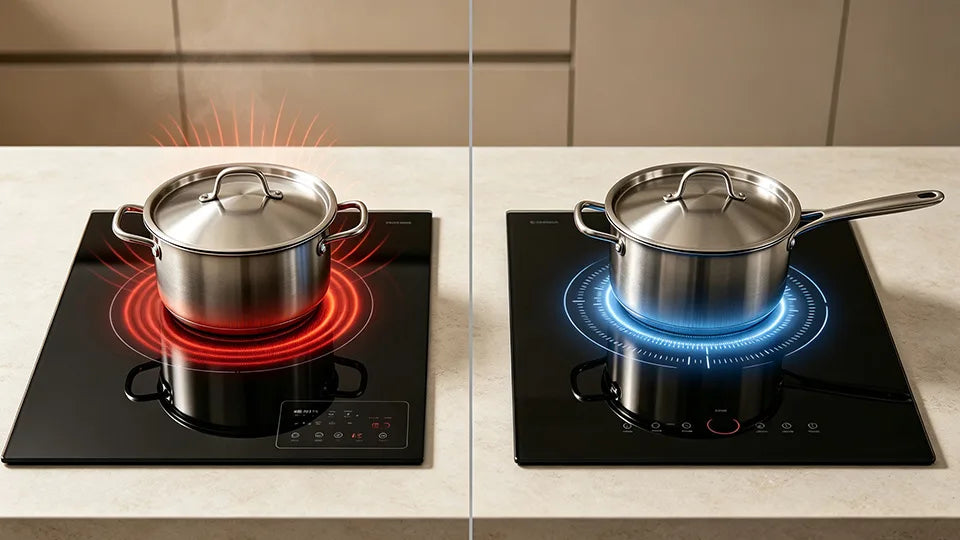
- Base Warping: Place the pan on a flat surface. If it spins or rocks, it will cook unevenly and should be replaced, especially for use on glass-top or induction stoves.

Safety and Material Health
If you are using older, traditional nonstick and see deep scratches that expose the inner metal, it is time to upgrade to a more modern, safer cookware option. In a composite pan, the stainless steel is part of the design, so visible metal is normal. However, if the pan has been subjected to extreme abuse that has dented the body or compromised the multi-layer bond, a replacement is necessary to ensure even heating.
What Habits Shorten Frying Pan Life?
Even the best-engineered pan can have its life shortened by poor kitchen habits. Avoiding these common mistakes will ensure your investment lasts for years.
Improper Use of High Heat
While composite pans handle heat better than traditional ones, "dry firing" (heating an empty pan on high for a long time) should be avoided. This can cause the internal layers to expand at different rates, potentially leading to warping. Always add a small amount of oil or butter as the pan preheats to help distribute the thermal energy evenly.
Chemical and Abrasive Stress
Using the wrong cleaning agents is a silent killer of cookware.
- Harsh Bleaches: Never use chlorine-based cleaners, as they can pit stainless steel.
- Steel Wool on Nonstick: Even in a hybrid pan, while the stainless steel is tough, you should avoid using aggressive metal scourers on the recessed ceramic areas to maintain maximum slickness.
- Dishwasher Salts: The high-salt environment of a dishwasher can eventually dull the finish of any high-end pan. Hand-washing is always the better choice for longevity.

Thermal Shock and Rapid Cooling
The fastest way to warp any metal is to subject it to thermal shock. Taking a pan directly from a 400°F stove and placing it under a cold tap causes the metal to contract violently. This can break the bond between the stainless steel and the nonstick layer or cause the base to bow. Always allow your pans to cool down naturally for a few minutes before introducing them to water.
Can Proper Cleaning Extend Pan Performance?
A disciplined cleaning routine can keep a hybrid pan performing like new for its entire lifespan. The goal is to remove "invisible" residues before they become permanent.
Removing Carbonized Grease
Over time, microscopic layers of oil can bake onto the surface, creating a sticky brown film. This is the primary reason people think their nonstick pan for cooking eggs has "failed." For a composite pan, you can use a soft sponge and a specialized stainless steel cleaner to gently buff the raised grid, while using a soft cloth for the recessed ceramic areas. This keeps the release surface clear and functional.
The Benefits of Hand-Washing
While many modern cookware sets are labeled as dishwasher safe, hand-washing is the key to getting a decade of use out of your pans. Hand-washing allows you to inspect the pan for any residue and ensures that the rivets and handles aren't exposed to the corrosive environment of a dishwasher cycle. A quick soak in warm, soapy water is usually all a high-quality hybrid pan needs.
Storage and Surface Protection
How you store your pans matters. If you must stack your pans due to limited cabinet space, place a felt protector or a simple paper towel between them. Even though a hybrid pan has a protective stainless steel grid, preventing the heavy bottom of one pan from resting directly on the surface of another prevents unnecessary pressure and potential micro-scratches over time.
Does Premium Cookware Really Last Longer?
When it comes to kitchen tools, you often get what you pay for. Investing in the best pots and pans set is a long-term strategy for both performance and value.
Premium hybrid pans are more expensive because of the complex manufacturing process required to bond stainless steel and ceramic in a structural grid. However, this investment pays off. A budget pan that needs replacing every 12 months is far more expensive over five years than a single premium composite pan that remains in perfect condition for the same period.
Top-tier brands often provide long-term warranties that cover manufacturing defects and structural failures. When you buy the best pots and pans set, you are also buying peace of mind. A company that stands behind its "hexagonal" or "composite" technology usually does so because they have tested the product to withstand thousands of cooking cycles.
Better pans use thicker internal cores (usually aluminum or copper) encapsulated in stainless steel. This doesn't just make the pan last longer; it makes the food taste better. Even heat distribution prevents the "burning in the center" that often leads to carbonization and surface failure in cheaper, thinner pans.
Choose a Pan That Lasts
A frying pan can last anywhere from a year to a lifetime, depending on its construction and care. Traditional nonstick is convenient but often lacks longevity, while stainless steel is durable but requires more skill. Composite hybrid pans offer a superior solution, combining non-toxic cookware safety with the structural protection of a stainless steel grid. By choosing high-quality materials and avoiding common mistakes like thermal shock, you can ensure your pans remain a centerpiece of your kitchen for many years to come.
FAQs About Hybrid Cookware Care and Safety
Why does my hybrid pan still get sticky over time?
Stickiness is usually caused by a buildup of carbonized oil—a thin layer of fat that has been "cooked" onto the surface. Because composite pans are so durable, you can usually fix this with a deep clean using a non-abrasive cream cleanser to restore the original release properties.
Can I use metal utensils on a composite frying pan?
Yes. One of the main benefits of the raised stainless steel grid is that it protects the recessed nonstick layer from metal spatulas and spoons. This makes it one of the safest cookware options for busy kitchens where you don't want to worry about which utensil you are grabbing.
Is ceramic coating safer than traditional nonstick?
Yes, ceramic is a key feature of non-toxic cookware because it is typically free of PFOA, PFAS, lead, and cadmium. It is made from inorganic minerals and can withstand higher temperatures without the risk of releasing harmful chemical fumes.
Is it better to buy a full set or individual pans?
Buying the best pots and pans set is usually more cost-effective and ensures that your tools have a consistent feel and heating profile. However, if you have a specific need, adding a single high-quality hybrid pan to your collection is a great way to upgrade your daily cooking experience.
How often should I replace a high-quality hybrid pan?
With proper care, a high-quality composite pan should last 5 to 10 years or even longer. Unlike traditional nonstick pans that have a "disposable" lifecycle, these pans are designed to be a long-term staple in your kitchen.