How to Choose Cookware for a Glass-Top Stove Without Scratching It
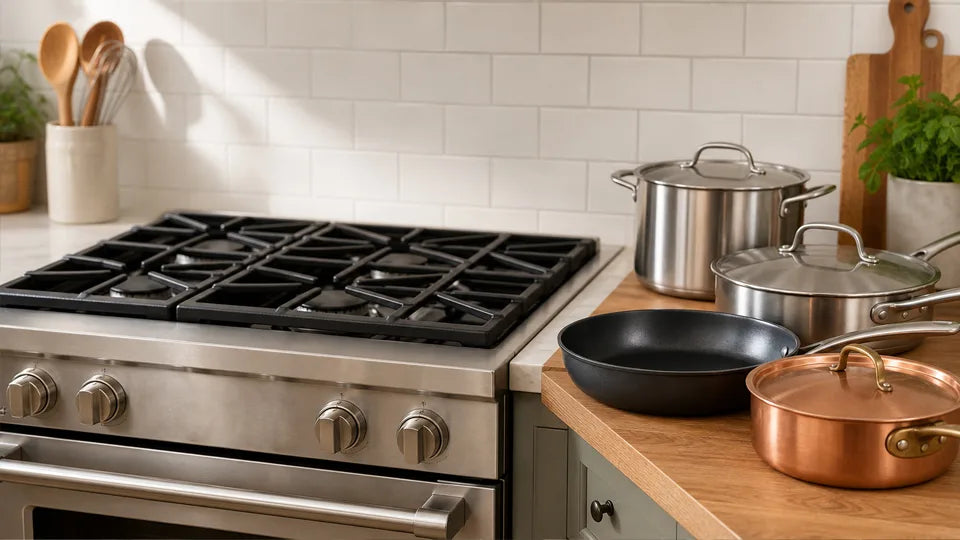
The best cookware for glass-top stoves has a smooth, flat base, manageable filled weight, and construction matched to the heating method. These qualities improve stability while reducing opportunities for grit or careless movement to mark the glass.
Glass-top appliances include radiant electric and induction models, so one pan is not automatically compatible with both. Careful lifting, clean surfaces, and sensible sizing remain important with either technology.
Which Type of Glass Cooktop Do You Have?
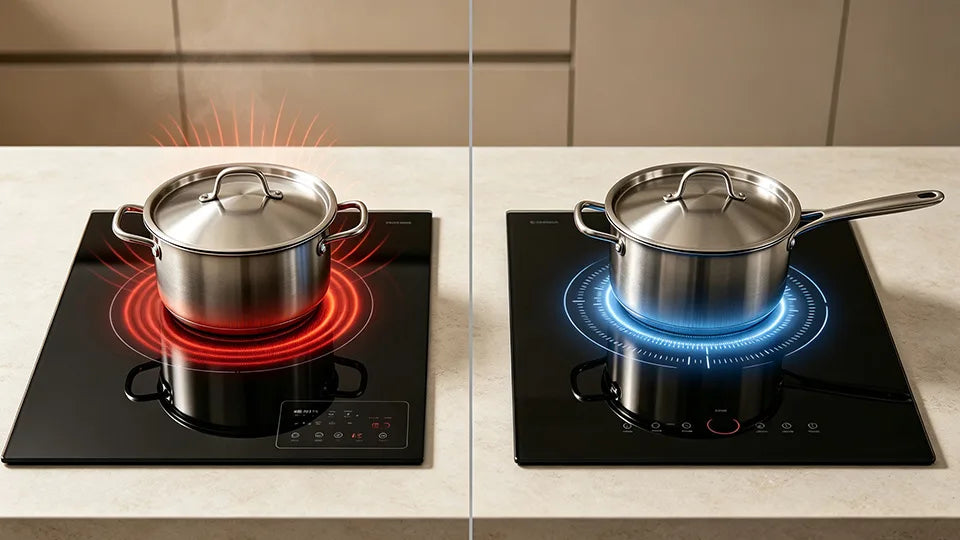
The heating system beneath the glass determines which cookware can generate or receive heat. Radiant elements heat the surface, while induction fields act on compatible magnetic cookware.
| Cooktop Type | How Heat Reaches the Pan | Primary Requirement |
|---|---|---|
| Radiant electric | Element warms glass, then the base | Smooth, flat contact area |
| Induction | Magnetic field heats cookware | Flat, magnetic base |
| Other glass design | Depends on the appliance | Follow the model manual |
Radiant Cooktops Use Electric Heating Elements
Radiant elements glow beneath the ceramic-glass surface and transfer heat through the glass into cookware. A flat base creates consistent contact, while a warped or rounded base leaves gaps that can slow or unevenly distribute heating.
Induction Cooktops Require Magnetic Cookware
Induction cookware needs a base that responds to the cooktop’s magnetic field. Iowa State University Extension explains that compatible cookware must contain ferrous iron and suggests checking whether a magnet sticks firmly to the bottom of the pan.
The Heating Method Determines Compatibility
Appearance alone cannot confirm compatibility. A stainless-looking pan may lack a magnetic base, while layered cookware may contain the necessary magnetic exterior.
- Find the appliance model and identify its cooktop technology.
- Read the manufacturer’s cookware requirements for that model.
- For induction, confirm magnetic response across the usable base.
- Check that the base diameter matches the active cooking zone.
Why Does the Cookware Base Matter?
The base is the contact point between cookware and glass, so its flatness, cleanliness, and finish influence performance and surface protection. A suitable bottom should rest steadily without sharp projections or baked-on residue.
| Base Condition | Likely Cooking Effect | Surface Concern |
|---|---|---|
| Flat and smooth | Consistent contact and stability | Lower risk when lifted |
| Warped or rounded | Wobbling and uneven contact | Movement across glass |
| Rough or dirty | Unpredictable contact | Grit may abrade glass |
Flat Bases Improve Surface Contact
Flat cookware gives radiant heat a more consistent path through the glass and helps induction cookware sit properly within the active cooking zone. Illinois Extension likewise recommends flat, smooth cookware for stability and heat distribution in its glass cooktop guidance.
Warped Bases Cause Wobbling
A warped pan can rock, spin, or make only partial contact with the heating zone. Besides reducing control, movement can drag trapped particles across the surface. A straightedge placed across a cool, clean base can reveal gaps before use.
Rough Bases Increase Scratch Risk
Raised seams, burrs, burned residue, and unfinished cast surfaces deserve inspection. Even a recommended material can become unsuitable if its underside is damaged or dirty, and sliding multiplies contact between an abrasive point and the glass.

How Heavy Should the Cookware Be?
Moderate weight usually offers a practical balance: enough mass for stability, but not so much that controlled placement becomes difficult. The meaningful measurement is the pan’s filled weight, not merely how it feels when empty.
Moderate Weight Balances Stability and Control
Light cookware may shift when stirred, while very heavy cookware requires more effort to lift. A balanced pan with a comfortable handle is easier to place gently and keep centered over the cooking zone.
Filled Weight Affects Safe Handling
Water, soup, and dense food can add several pounds. Before choosing a larger saucepan, sauté pan, or Dutch oven, consider whether it can be moved with both hands and whether a helper handle provides clearance.
Useful handling checks include:
- Lift the empty vessel using the intended grip.
- Test the weight with a safe volume of cool water.
- Confirm a helper handle is easy to reach.
- Leave counter space for a controlled landing.

Excessive Weight Increases Impact Risk
Glass is designed for cookware but remains vulnerable to impact. A heavy vessel should be lowered gently rather than dropped, and heavy items should not be stored where they could fall onto the cooktop.
Which Materials Suit a Glass Cooktop?
Several materials can work when the base is flat, smooth, and compatible. The appliance manual and exact construction should guide the choice.
| Material or Construction | Useful Quality | Main Caution |
|---|---|---|
| Clad stainless steel | Stable exterior and conductive core | Verify induction compatibility |
| Coated hybrid cookware | Easier food release | Avoid excessive heat |
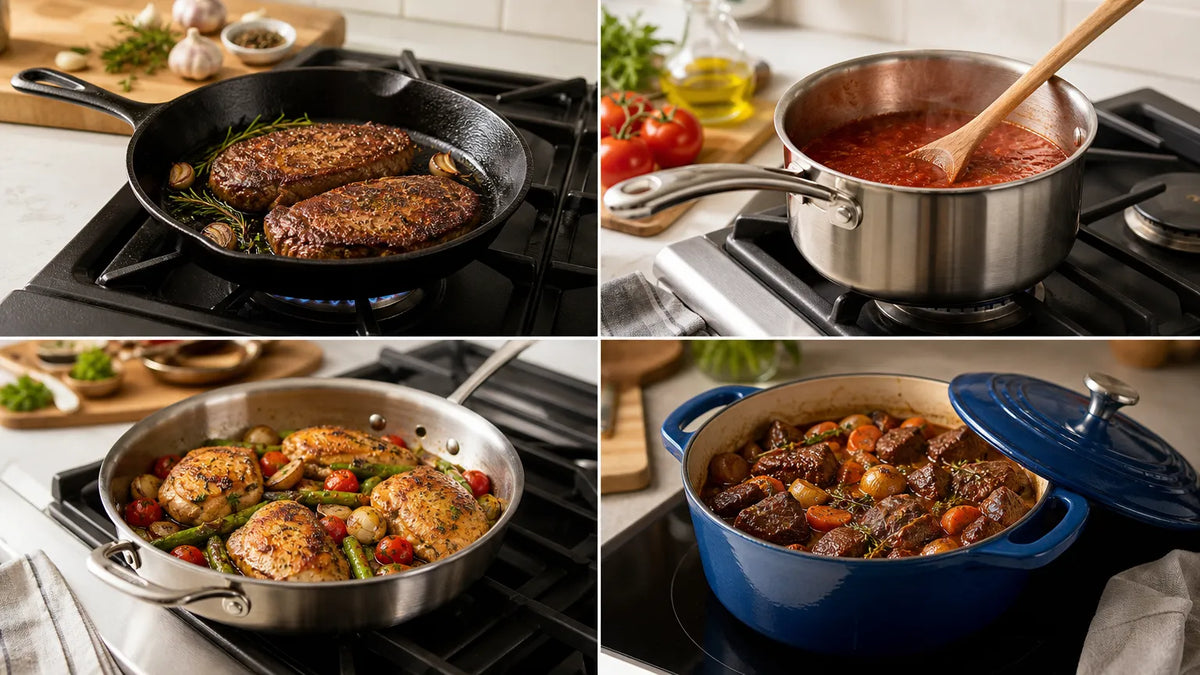
| Cast iron | Strong heat retention | Lift carefully; inspect base |
Smooth Stainless Steel Offers Stable Contact
Clad stainless steel can combine a smooth exterior with an aluminum core that spreads heat. Bare stainless cooking surfaces are not naturally nonstick, so frying generally requires suitable preheating, some oil, and more technique to limit sticking.
Nonstick Cookware Can Reduce Handling Effort
Food release can reduce forceful scraping or shaking, but a nonstick label says nothing about base flatness or induction compatibility. Coated cookware should remain within its care guidance because prolonged excessive heat can shorten coating life.
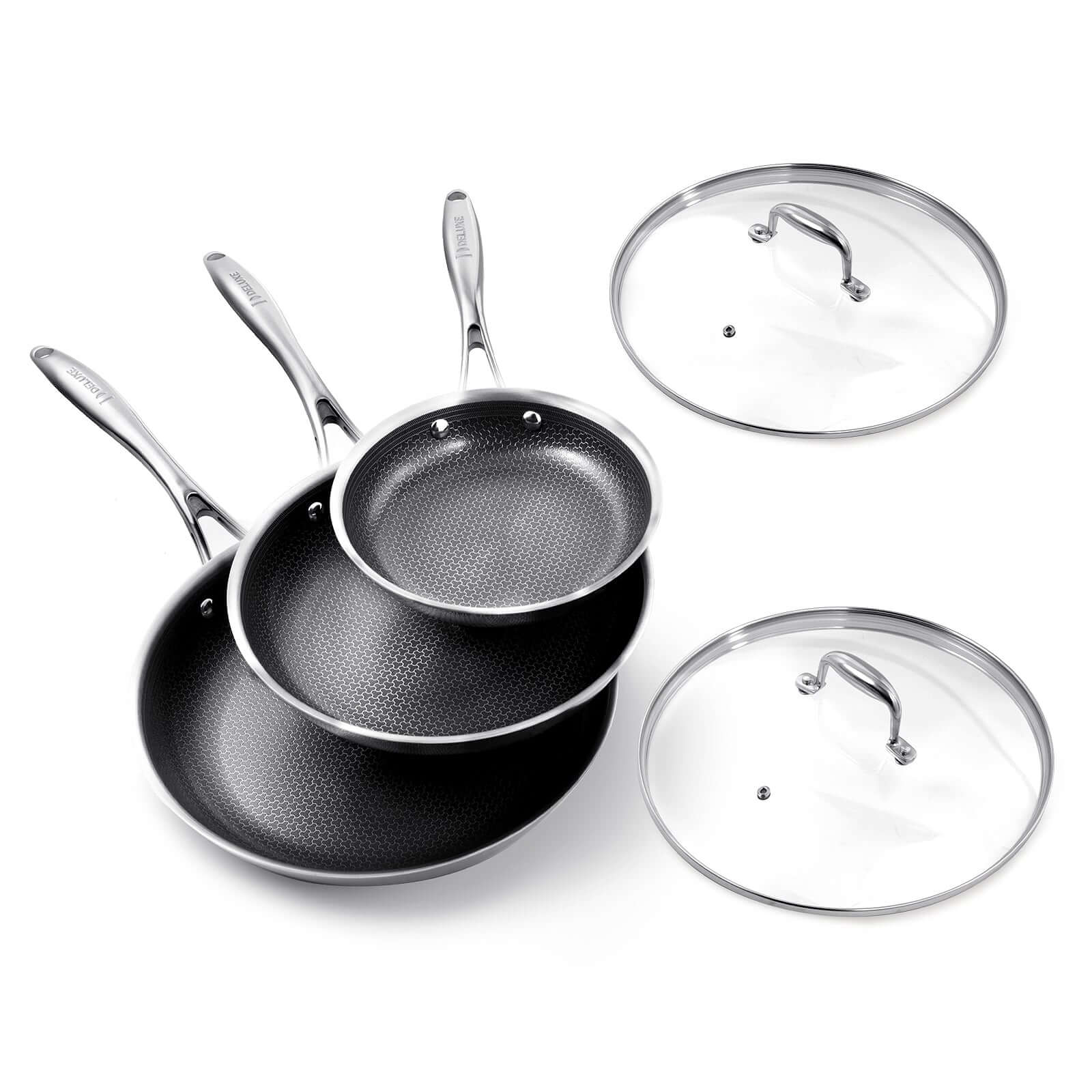
Our hybrid cookware technology combines raised 304 stainless steel, ceramic-coated valleys, a reinforcing stainless layer, an aluminum core, and a 430 magnetic stainless steel base. This layered construction is compatible with ceramic and induction cooktops; it is neither purely stainless steel nor purely ceramic cookware.
Heavy Materials Require Careful Placement
Cast iron may work when the appliance manufacturer permits it and the base is smooth, but it requires careful lifting. A rough underside, sliding motion, or hard impact creates more concern than the material name alone.
How Can You Prevent Cooktop Scratches?
Scratch prevention depends on controlling contact between the glass and the pan. Clean both surfaces, lift cookware during repositioning, and address residue before it becomes a hard abrasive layer.
- Let the cooktop reach the cleaning condition specified by its manufacturer.
- Remove crumbs, salt, and hardened residue from the zone.
- Check that the cookware base is clean, dry, and free of burrs.
- Lower the pan into position and lift it to reposition it.
Lift Cookware Instead of Sliding It
Sliding turns small particles or rough spots into abrasives. A GE glass-cooktop guide warns that the surface is scratch-resistant rather than scratch-proof and advises users not to slide pans in its surface cookware tips.
Remove Grit Before Setting Down Pans
Salt crystals, crumbs, and residue can become trapped beneath a pan. A quick check with a clean hand or soft cloth, performed only when the cooktop is safely cool, helps keep particles away from the contact area.
Clean Spills Before They Harden
Spills should be handled according to the appliance manual, since sugary residue and melted material may require time-sensitive treatment. Avoid improvised abrasive cleaners that can turn a removable mark into permanent damage.

What Should You Inspect Before Cooking?
A short pre-cooking inspection can catch compatibility, cleanliness, and stability problems before heat is applied. It also separates cookware issues from damage or residue already present on the appliance.
Check Whether the Base Sits Flat
Place the cool pan on the cool cooktop and check for rocking or spinning. If it moves easily without being pushed, inspect for warping and confirm that the cooking zone is level and free of residue.
Remove Residue From Both Surfaces
The base and glass should be clean and dry. Our use and care guide also recommends drying the cookware base before it reaches the stove and lifting rather than dragging the pan.
Match the Base to the Heating Element
The base should cover an appropriate portion of the marked zone without greatly exceeding it. Before switching on the appliance, confirm:
- The pan is centered on the intended element.
- Its base is smooth and free of debris.
- The handle avoids another hot zone.
- Induction compatibility is verified when required.

Select the Best Cookware for Glass-Top Stoves
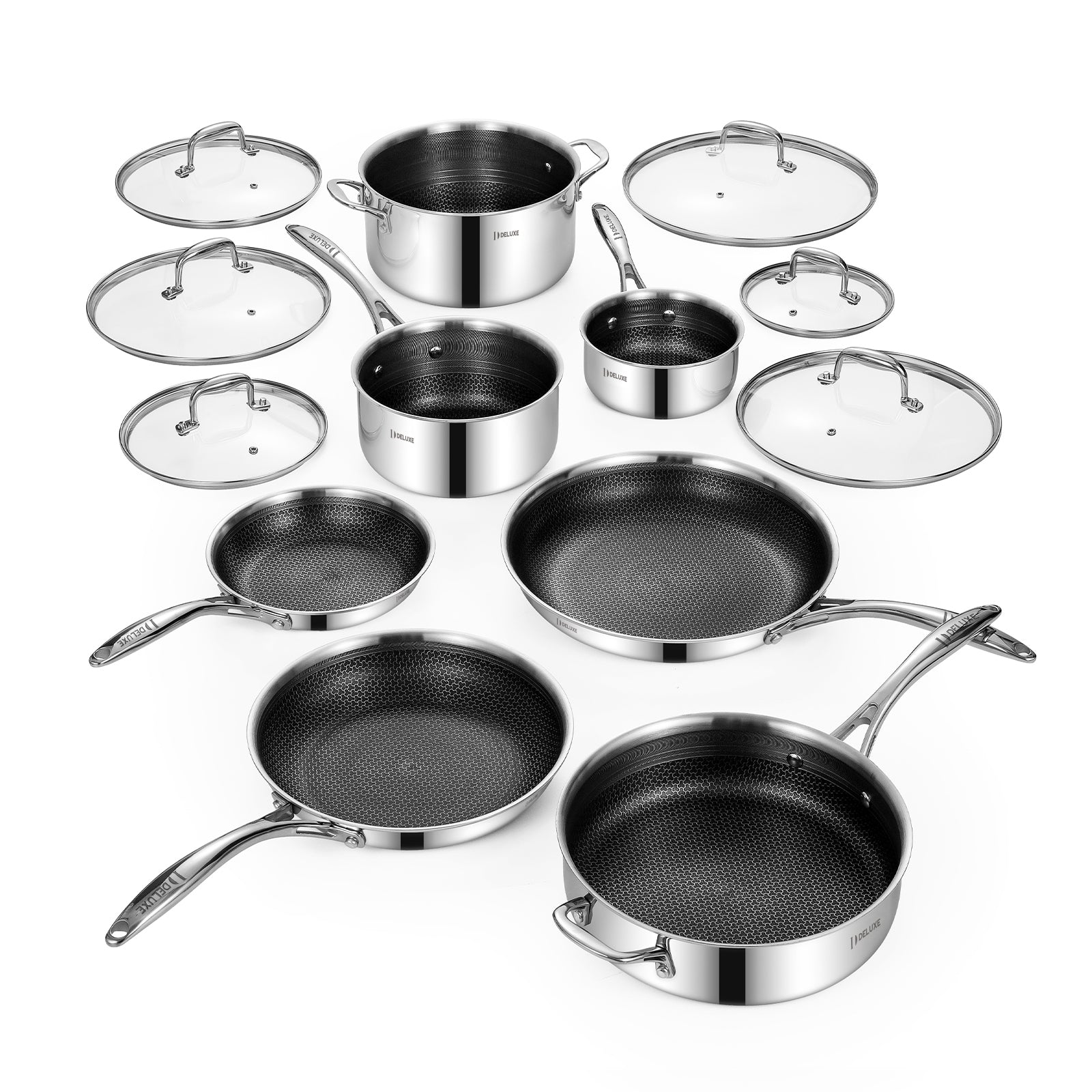
The best pots and pans for glass-top stove cooking combine smooth contact, manageable weight, compatible construction, and a routine that discourages sliding. Our 13-piece hybrid cookware set includes frying pans, saucepans, a sauté pan, a Dutch oven, and matching lids with a magnetic stainless steel base. Compare our cookware set collection, then choose sizes that fit your cooking zones and everyday meals.
FAQs About Cookware for Glass-Top Stoves
Q1. Do Glass Cooktops Require Special Cookware?
Not necessarily. Most cookware can work if its base is smooth, flat, and appropriately sized. Induction glass cooktops have an additional requirement: the cookware base must contain enough magnetic material to interact with the induction field.
Q2. Can Protective Mats Be Used Under Cookware While Cooking?
Only when the cooktop manufacturer explicitly permits them. Many mats, liners, and protective sheets are unsuitable for use on an active cooking zone because they can trap heat, melt, or interfere with induction detection. The appliance manual should determine whether an accessory is acceptable.
Q3. Is a Minor Scratch on a Glass Cooktop Dangerous?
A light surface mark is usually different from a crack, but it should still be inspected and monitored. If the glass is cracked, chipped deeply, or damaged near a heating zone, stop using the appliance and contact the manufacturer or a qualified service technician.
Q4. Why Does an Induction Pan Make a Buzzing Sound?
A soft hum or buzz can occur when the induction field interacts with layered cookware, especially at higher power settings. The sound may change with the pan, food load, or cooking zone. Unusually loud or persistent noise should be checked against the appliance manual.
Q5. Can Cookware Be Placed on a Glass Cooktop for Storage?
Temporary placement may be acceptable when the cooktop is cool, but permanent storage increases the chance of impact, trapped grit, or accidental heating. Heavy cookware and lids are generally better stored in a cabinet or on a stable rack away from the glass surface.