
Christmas Gift Guide: Cookware Gifts for Home Cooks
Every cookware gift guide you'll find in December is a list of products. This one includes the products too, but it starts with something the others skip: how to tell whether a piece of cookware is actually worth giving.
That matters more than the price. A pan that doesn't work on the recipient's stove, or that duplicates something they already own, is a wasted gift at any budget. A modest piece that fills a real gap gets used every week for years.
Below, the picks are organized by price, then by who you're buying for, then by what not to gift. Skip to whichever section you need.
How to Pick a Cookware Gift
The right cookware gift depends on three things: what stove the person cooks on, what they already own, and how much storage space they have. Getting these right matters more than the price.
Check the stove first
Gas, electric coil, ceramic glass, and induction each have different requirements. Induction is the most common miss: pans without a magnetic base simply won't heat, no matter what else is good about them.
If you don't know the recipient's stove, look for cookware that states compatibility across all cooktop types. That removes the guesswork entirely.
Know what they already own
Buying a second pan in a size someone already owns is one of the most common gift mistakes. The gaps in most kitchens fall into one of three categories: a pan they use daily, a saucepan for small jobs like sauces and oatmeal, or a larger piece for batch cooking and braises.
If you can't check their cabinet, buy a size almost everyone uses. A 10-inch frying pan, a 3-quart saucepan, or a 5.4-quart Dutch oven is the safest bet.
Match the gift to how they cook
Weeknight cooks want something they'll reach for on a Tuesday without thinking. Weekend project cooks want a larger piece built for long braises and roasts. Beginner cooks rarely need a full set. Most of what they cook in the first year is covered by a frying pan and a saucepan. Everything else can be added later, once they know what they actually reach for.
Think about storage
Measure before buying anything large. Stacking height matters more than diameter, and lids add a second layer of storage that's easy to forget. A Dutch oven that doesn't fit on the shelf becomes a problem rather than a gift.

Under $50
This range covers two things: individual pans and smaller kitchen tools.
The pans at this price sit at the entry level of the lineup. They cover the essential functions and little beyond them. The additional attributes that come with higher-quality cookware generally aren't included at this price point — thicker conductive cores and more refined finishing details, among them.
The tools are a separate category and serve their own purpose.
What works at this price
A Lodge cast iron skillet is the standard reference point in this range. Cast iron has been the everyday pan in American kitchens for generations. It works on common gas, electric, glass-top, and induction cooktops and can last for many years with proper care.
A set of OXO silicone spatulas, a fish turner, or a ThermoPop thermometer covers the small tools people don't buy for themselves but use daily. These are the easiest gifts to get right, because almost every cook needs another one.
A stainless saucepan from Cuisinart or Farberware covers sauces, oatmeal, and single portions.
What to avoid at this price
Be cautious with full cookware sets at this price. Check the construction, coating, included sizes, care requirements, and warranty before buying. A well-chosen single piece may offer better value than a set containing items the recipient will not use.

$50–$150
This is the single-piece range. One well-made pan, bought at this price, becomes someone's daily driver. It's also where hybrid construction and clad construction appear most.
What works at this price
DELUXE's full hybrid single-pan line includes several options in this price range: 8-, 10-, and 12-inch frying pans, a 3.7 Qt sauté pan with lid, 1.3, 2, and 3 Qt saucepans, a 12-inch crepe pan, and a 13-inch griddle pan. Pick the piece that matches what the recipient cooks most often. The 8-inch frying pan is a compact choice for smaller portions.
A Cuisinart Multiclad Pro stainless skillet is the mainstream clad pick. It heats evenly and holds up to decades of hard use, with no coating to wear out.
A Lodge carbon steel skillet is for someone who wants a bare metal surface. It seasons over time like cast iron but weighs less.
A Calphalon hard-anodized skillet is the nonstick option. The denser aluminum body holds its shape and its coating longer than entry-level nonstick.
Why this range costs more
The range below and this one cover the same cooking tasks. What changes is what goes into the pan and what comes with it.

Core material and thickness. Pans in this range more often use thicker aluminum cores, copper cores, or multi-layer bodies. That widens the heat spread across the base and slows the temperature drop when food goes in — useful for searing and other tasks where steady heat matters.
Build details. Tighter tolerances at the rim, smoother coating application, better-finished handles and rivets. These don't change what the pan does, but they affect how it feels in hand and how well it holds up over years.
Warranty and support. Brands selling at this price more commonly back their pans with longer warranties and dedicated customer service, which matters if something goes wrong after a few years.
Newer materials. Coating technologies developed in recent years — ceramic nonstick, reinforced hybrid surfaces, laser-etched steel patterns — tend to appear at this price level.
Environmental and safety testing. Documented chemical-safety testing, such as PFAS-free certifications and third-party lab reports, is more common here than at lower price points.
$150–$300
This range buys combinations. Two well-chosen pieces, or a small set that covers one half of the kitchen.
What works at this price
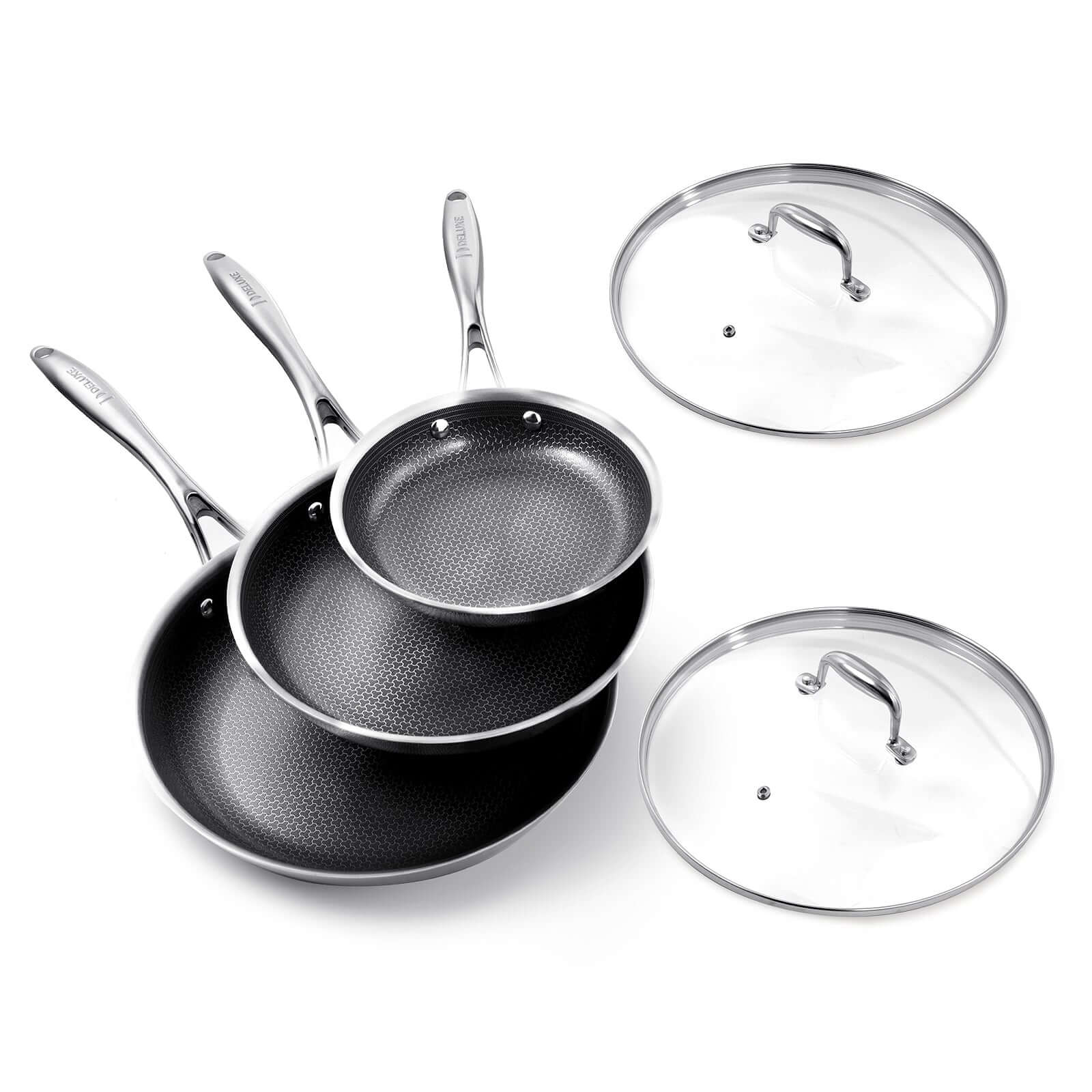
DELUXE's 3-pan hybrid frying pan set covers 8, 10, and 12 inches — the three sizes most households rotate through in a normal week. It's the most complete frying setup you can give at this price, and a good choice for someone who already owns a saucepan and a Dutch oven, since it fills the frying gap without duplicating anything.
An All-Clad clad stainless set covers the same ground from a different angle. All-Clad has been the reference for even heating and long-term durability for decades. It's the pick for someone who cooks hard and wants cookware built to last for decades.
A Lodge enameled cast iron Dutch oven is the classic braising pot. It handles roasts, soups, bread, and long simmers, and it's the piece most cooks keep for decades. It also doubles as a bread baker.
A Wüsthof or Zwilling chef's knife fills a different gap. If the recipient already owns decent cookware, a knife is a gift they'll use every day.

How to choose between the options
If the recipient's frying pans are worn out, give the 3-pan set or the All-Clad stainless set.
If their cookware is fine but they bake bread or cook long braises, the Dutch oven is the better pick.
If their cookware is already complete, the knife is the better pick. It fills a different gap than the other pieces here.
$300+
This range is mainly about sets. Full cookware collections and multi-piece packages are the primary purchase at this price. Single pieces appear here too, though they're less common — usually from premium brands or in sizes larger than most home kitchens use.
What works at this price
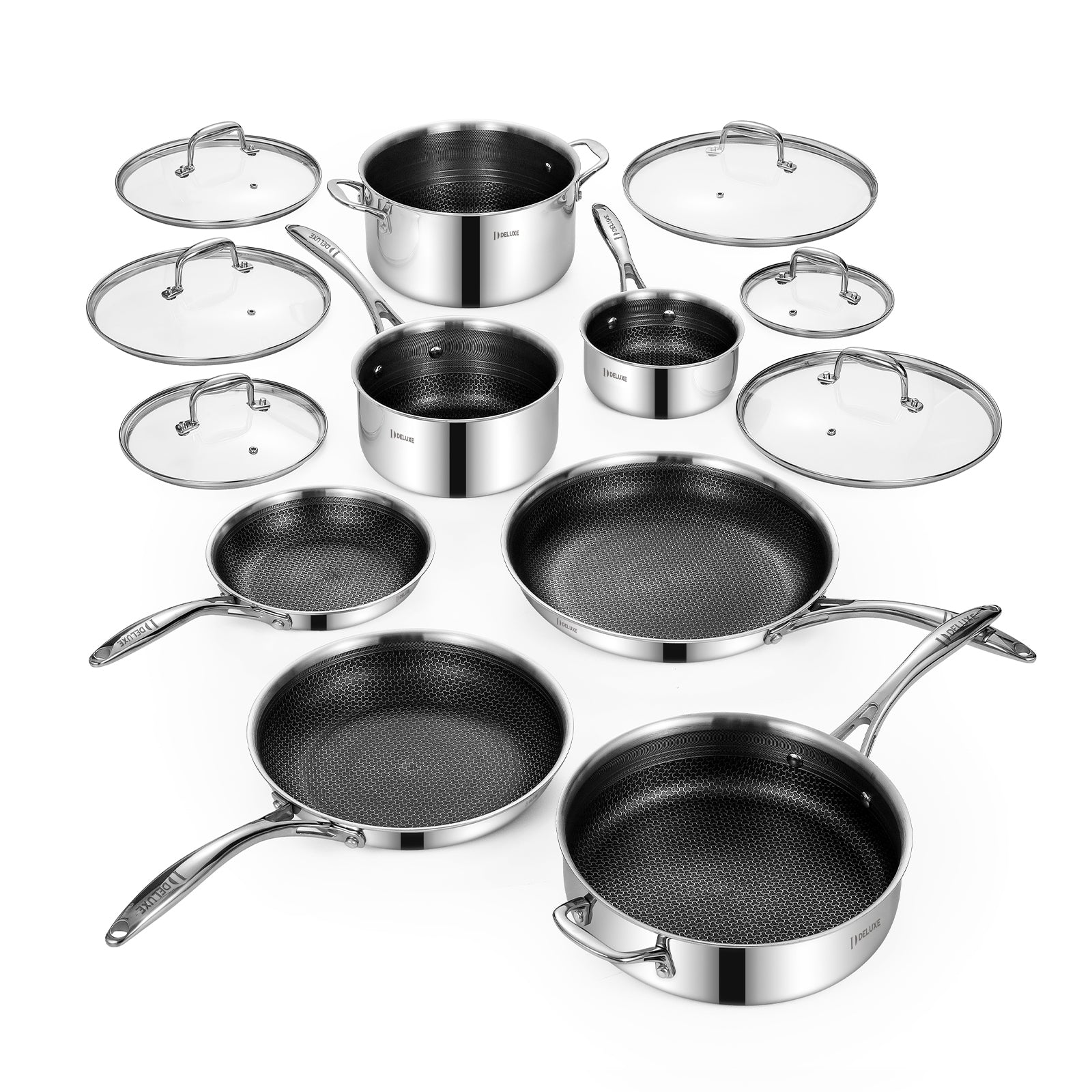
DELUXE's 13-piece hybrid cookware set covers pots, pans, and lids across the sizes most households actually use, which is what makes it work as a single gift. It's worth it only if the recipient will use most of what's inside.
Cuisinart, Calphalon, and Tramontina all make full clad stainless sets at this range. All three are widely available, easy to find on sale during the holidays, and recognized by most gift recipients. Clad stainless sets are the safer pick when you don't know the recipient's stove or cooking style.
A Le Creuset Dutch oven is the classic splurge gift. It lasts decades and gets used weekly, which is the whole point of this price range. It's also the piece most likely to stay on the counter rather than in a cabinet.

What to think about before buying a set
The value of a large set depends on how many pieces get used. A set where half the contents stay in a cabinet is not a better gift than a smaller one where all of them get used — the unused pieces still cost money even if they never leave the shelf.
Check the sizes against what the person already cooks. A set with three frying pans is wasted on someone who mostly braises. Sets tend to be the right gift for weddings, new homes, and first apartments specifically because the recipient has nothing yet; if they've been cooking in the same kitchen for a decade, a single well-chosen piece usually beats a box.
Gifts for Specific Types of Cooks
Price tells you what you can afford. Who you're buying for tells you what to buy. These four types of cooks need different pieces, and the right set for one is usually wrong for another.
Beginner cooks
One good frying pan, one saucepan, and a lid cover most of what a beginner actually cooks. A small set is the right call here, not a full collection. More pieces up front tends to mean more pieces that sit unused.
Bakers
Enameled cast iron handles bread well and doubles as a braising pot, so it does two jobs in a kitchen where storage is limited. A griddle pan works for crepes, pancakes, and flatbreads. Lodge's Dutch oven is the practical entry point; Le Creuset is the long-term choice.
Anyone cooking Chinese or Asian food
A flat-bottom wok with magnetic base works on every US stove type, including induction. Look for one with a lid, since steaming and covered simmering are part of the same cooking. A 12-inch wok handles most home portions, while a 14-inch one suits larger households or anyone cooking for a crowd.
Weeknight cooks who want fast dinners
For a weeknight cook, the limiting factor is usually time, and the biggest time sink is cleanup. A sauté pan with a lid handles one-pan meals without needing a second pot, and a 3-quart saucepan covers pasta, rice, and reheating. Fewer pans used means fewer pans washed.
What Not to Gift
Cookware is a poor gift in five specific situations. Recognizing them saves you money and a certain amount of awkwardness — regardless of which brand you buy from.
They already have a full kitchen
A cook with a complete set doesn't need a second frying pan. What they may want is something specialty: a crepe pan, a wok, a griddle, or a piece they'd never buy for themselves but would use if it were in their kitchen.
If they truly have everything, a replacement for a worn-out piece beats a new one. A gift card to a cookware retailer is also a reasonable answer here.
You don't know their stove
A pan that doesn't work on their cooktop is unusable. Induction compatibility is the most common miss, because it isn't visible from a product photo.
If you can't check, look for cookware that states compatibility with all cooktop types. Most hybrid and clad stainless pieces do; most traditional nonstick does not.
They have strong preferences about coatings
Some cooks avoid nonstick entirely, either for durability reasons or for personal preference about what touches their food. Others use nothing but nonstick and find bare stainless frustrating.
Sending a coated pan to someone who has deliberately chosen uncoated cookware is a miss, and it's not something you can fix after the fact. Ask someone in their household if you're unsure.
Their kitchen has no storage
Large Dutch ovens and full sets need cabinet or shelf space. In a small apartment, a large set can be a burden rather than a gift, and it's the reason a lot of cookware ends up regifted or donated.
Small, single pieces are the better choice when space is tight. A griddle pan, a small saucepan, or a single frying pan will find a home in almost any kitchen.
They mentioned something specific
If someone has named a piece they want, buy that. Cookware is a common impulse purchase for gift-givers, and it's easy to substitute what you think is better value for what they actually asked for.
The right gift is the one they named. This applies to everything, not just cookware.
Conclusion
The products above cover most budgets and most types of cooks. But the decisions that matter happen before you look at any of them: does it work on their stove, does it fill a gap, will they reach for it on a normal day?
Get those right and almost any piece on this list works. Get them wrong and none of them do.
FAQ
What are the best gifts for cooks who have everything?
Usually a specialty piece: something they wouldn't buy for themselves but would use if it were in their kitchen. A small frying pan, a crepe pan, or a wok all fit. If you can't identify a gap, a replacement for a worn-out piece or a gift card to a cookware retailer is the better call.
What is hybrid cookware?
DELUXE hybrid cookware combines a raised 304 stainless steel surface with ceramic nonstick material in the recessed areas. The raised steel helps protect the coated areas during everyday use. The steel takes the contact — utensils, cleaning, daily use — so the coating underneath lasts far longer than a conventional nonstick surface. DELUXE pans use this construction across the full line.
What is a useful kitchen gift?
Something the recipient will use at least once a week. The most useful gifts tend to be single pieces rather than sets: a frying pan they'll reach for daily, a saucepan for small jobs, or a Dutch oven for braises and soups. Utility comes from how often it's used, not how many features it has.
What cookware should every cook have?
A 10-inch frying pan, a 3-quart saucepan, and a piece for larger cooking like a sauté pan or a Dutch oven. Those three cover most of what a home cook does across a normal week, and they're the foundation everything else builds on.
What is a good gift for a beginner cook?
One good piece rather than a set. A 10-inch frying pan and a 3-quart saucepan with a lid cover most of what a beginner actually cooks. Adding more up front tends to result in pieces that sit unused while the cook continues to reach for the same two pans.

Leave a comment
This site is protected by hCaptcha and the hCaptcha Privacy Policy and Terms of Service apply.