How to Clean Stainless Steel Pans Without Damaging Them
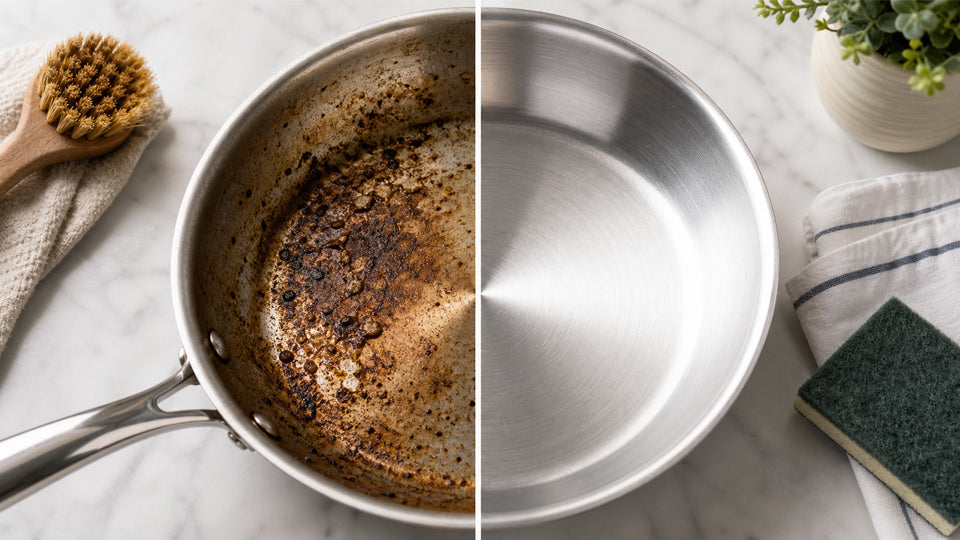
Stainless steel cookware is durable, versatile, and safe for everyday cooking when used properly. But if you cook with high heat, sear meat, fry eggs, or let oil burn onto the surface, your pan can quickly look stained or difficult to clean.
The good news: most stainless steel pans are not ruined. They usually just need the right cleaning method.
Why Stainless Steel Pans Get Dirty, Burnt, or Stained
Stainless steel pans are popular because they are strong, oven-safe, induction-compatible, and excellent for searing. Many home cooks consider stainless steel cookware one of the best cookware materials for long-term use.
But stainless steel is not naturally nonstick.
That means food, oil, and minerals can leave marks if the pan is overheated or cleaned incorrectly.
Common reasons stainless steel pans look dirty include:
- Burnt food stuck to the surface
- Brown oil stains from overheated fat
- Rainbow discoloration from high heat
- White spots from hard water or salt
- Cloudy residue from minerals
- Black marks from burnt sauces or sugar
These stains look frustrating, but most of them are easily removable.

What You Need to Clean Stainless Steel Pans
For most cleaning jobs, you do not need anything complicated.
Basic cleaning tools:
- Warm water
- Mild dish soap
- Soft sponge
- Non-scratch scrub pad
- Wooden or silicone spatula
- Clean towel
For tougher stains:
- Baking soda
- White vinegar
- Stainless steel cleaner
- Bar Keepers Friend, if suitable for your pan
- Paper towel or microfiber cloth
Avoid using anything too aggressive unless the manufacturer says it is safe.
How to Clean Stainless Steel Pans After Everyday Cooking
This is the simplest method for the daily cleaning of stainless steel pans.
Step 1: Let the Pan Cool Slightly
Do not put a very hot stainless steel pan directly under cold water.
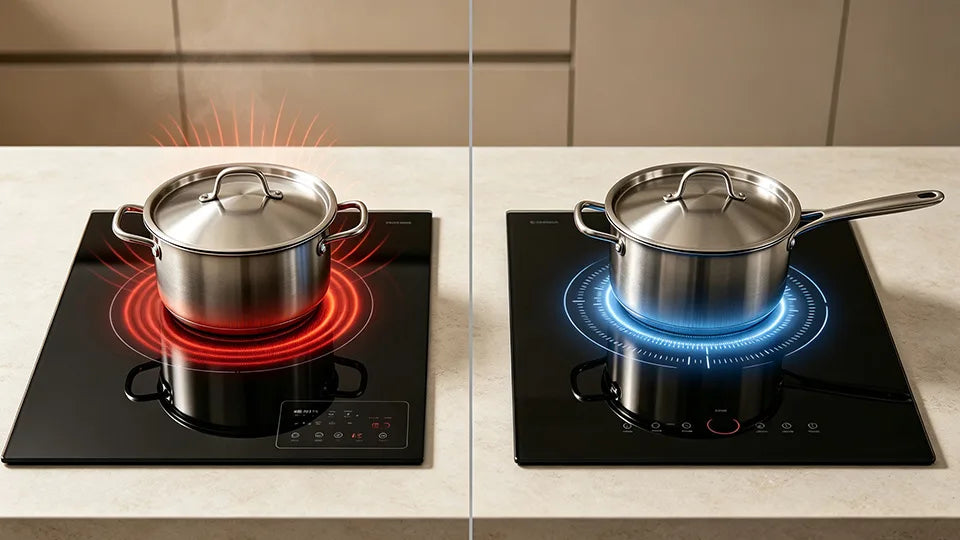
Sudden temperature changes can cause warping, especially with thinner pans. This matters even more for induction cooktop stainless steel pans because a flat base is critical for proper contact with the cooktop.
Step 2: Rinse With Warm Water
Use warm water to loosen food residue.
If there are small stuck-on bits, let warm water sit in the pan for a few minutes.
Step 3: Wash With Dish Soap
Add mild dish soap and scrub with a soft sponge.
For normal grease, this is usually enough.
Step 4: Rinse and Dry Immediately
Rinse well and dry completely with a towel.
Air drying can leave water spots, especially if you have hard water.

How to Clean Burnt Food From a Stainless Steel Pan
If food is stuck to the bottom, do not start by scraping aggressively.
Use heat and water first.
Step 1: Add Water to the Pan
Pour enough water to cover the burnt area.
You can also add a few drops of dish soap.
Step 2: Simmer the Water
Place the pan on the stove and bring the water to a gentle simmer.
Let it simmer for several minutes.
This helps loosen burnt food from the stainless steel surface.
Step 3: Scrape Gently
Use a wooden or silicone spatula to lift the softened food.
Do not use a sharp knife or metal tool that can gouge the surface.
Step 4: Use Baking Soda for Stubborn Residue
Pour out most of the water.
Sprinkle baking soda over the stained area.
Add a small amount of water to make a paste.
Scrub gently with a non-scratch pad.
Step 5: Rinse and Dry
Rinse thoroughly and dry the pan completely.
This method works well for burnt sauces, rice, eggs, and pan-fried residue.
How to Remove Brown Oil Stains From Stainless Steel Pans
Brown or amber stains usually come from overheated oil.
This often happens when you use stainless steel cookware for frying, searing, or sautéing.
Cleaning Method:
- Sprinkle baking soda over the stained area.
- Add a small amount of water.
- Rub into a paste.
- Let it sit for 10 to 15 minutes.
- Scrub with a non-scratch pad.
- Rinse and dry.
If the stain remains, use a stainless steel cleaner according to the product instructions.
Brown oil stains can occasionally take more than one cleaning round.

How to Remove Rainbow Stains From Stainless Steel Pans
Rainbow stains are very common on stainless steel pans.
They usually appear after high-heat cooking. They are caused by high temperatures reacting with the protective chromium oxide layer on the stainless steel.
The pan is still completely safe to use.
Best method for rainbow stains:
- Add a splash of white vinegar to the pan.
- Wipe the surface with a soft sponge.
- Rinse with warm water.
- Dry completely.
Do not panic if your stainless steel frying pan or saucepan has rainbow marks. In most cases, it is purely cosmetic.

How to Remove White Spots From Stainless Steel Pans
White spots usually come from hard water, salt, or minerals.
They are common in stainless steel pots, stainless steel saucepans, and large stainless steel stockpots used for boiling pasta or soup.
How to clean white spots:
- Add diluted white vinegar to the pan.
- Let it sit for a few minutes.
- Wipe with a soft sponge.
- Rinse well.
- Dry with a towel.
To prevent white spots, avoid adding salt to cold water. Wait until the water is boiling rapidly, then stir immediately after adding salt.

How to Wash a Stainless Steel Pan After Frying
Frying can leave oil residue, browned bits, and stuck-on food.
This is especially common when using a stainless steel frying pan, skillet, sauté pan, or deep frying pan.
Best cleaning process after frying:
- Let the pan cool slightly.
- Pour out the excess oil.
- Add warm water.
- Deglaze stuck-on bits while the pan is still warm.
- Wash with dish soap.
- Use a baking soda paste if needed.
- Rinse and dry.
If you cook with stainless steel pans often, deglazing is your best friend.
Add a little water, broth, or wine while the pan is warm. This lifts browned bits easily and can also create a quick, delicious pan sauce.
What Not to Use on Stainless Steel Pans
Avoid these cleaning mistakes:
- Do not use bleach.
- Do not soak the pan overnight.
- Do not use a harsh oven cleaner.
- Do not use steel wool unless the brand says it is specifically safe.
- Do not pour cold water into a very hot pan.
- Do not leave salty water sitting in the pan.
- Do not scrape with knives or sharp metal tools.
These common mistakes can cause scratches, pitting, discoloration, or permanent warping.
How to Keep Stainless Steel Pans From Getting So Dirty
The easiest pan to clean is the one you do not burn in the first place.
Here are practical ways to prevent stuck food and stubborn stains.
Preheat Properly
Heat the pan fully before adding oil.
A properly heated stainless steel pan can significantly help reduce sticking.
Use Enough Oil
Stainless steel is not the same as nonstick cookware.
If you cook eggs, fish, or delicate foods, ensure you use enough fat or choose the right pan for the job.
Do Not Cook Everything on High Heat
High heat is useful for searing steak, but not for every meal.
Medium heat is plenty for many foods.
Let Food Release Naturally
When cooking meat, do not force it to move too early.
Food naturally releases much more easily after a solid crust forms.
Clean Soon After Cooking
Old oil and dried food are much harder to remove.
Clean the pan shortly after it cools down.
Stainless Steel vs. Ceramic Cookware: Which Is Easier to Clean?
Stainless steel pans are highly durable and excellent for browning, but they require good cooking technique.
Ceramic cookware and hybrid nonstick cookware are often easier for low-oil cooking and quick cleanup, especially for eggs, omelets, and delicate foods.
That is why many kitchens use more than one type of pan.
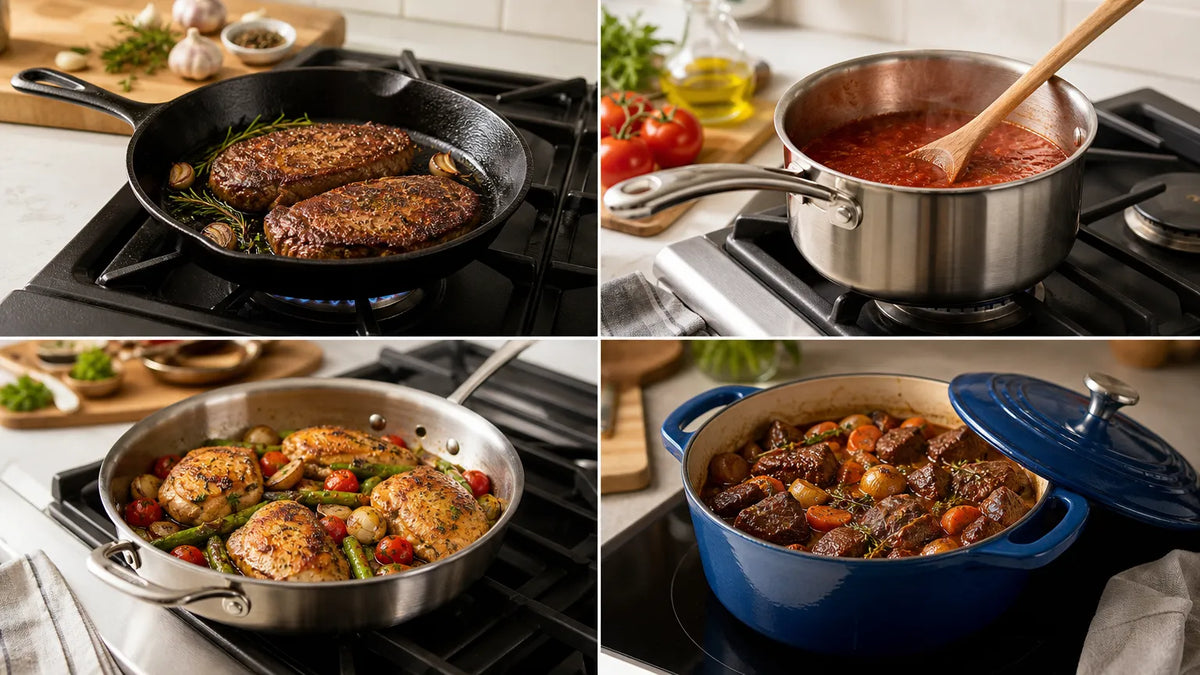
Stainless steel cookware is ideal for:
- Searing steak
- Browning chicken
- Making pan sauces
- Boiling and simmering
- Oven-safe cooking
- Long-term durability
Ceramic-coated cookware is ideal for:
- Eggs
- Omelets
- Pancakes
- Low-oil cooking
- Quick cleanup
- Delicate foods
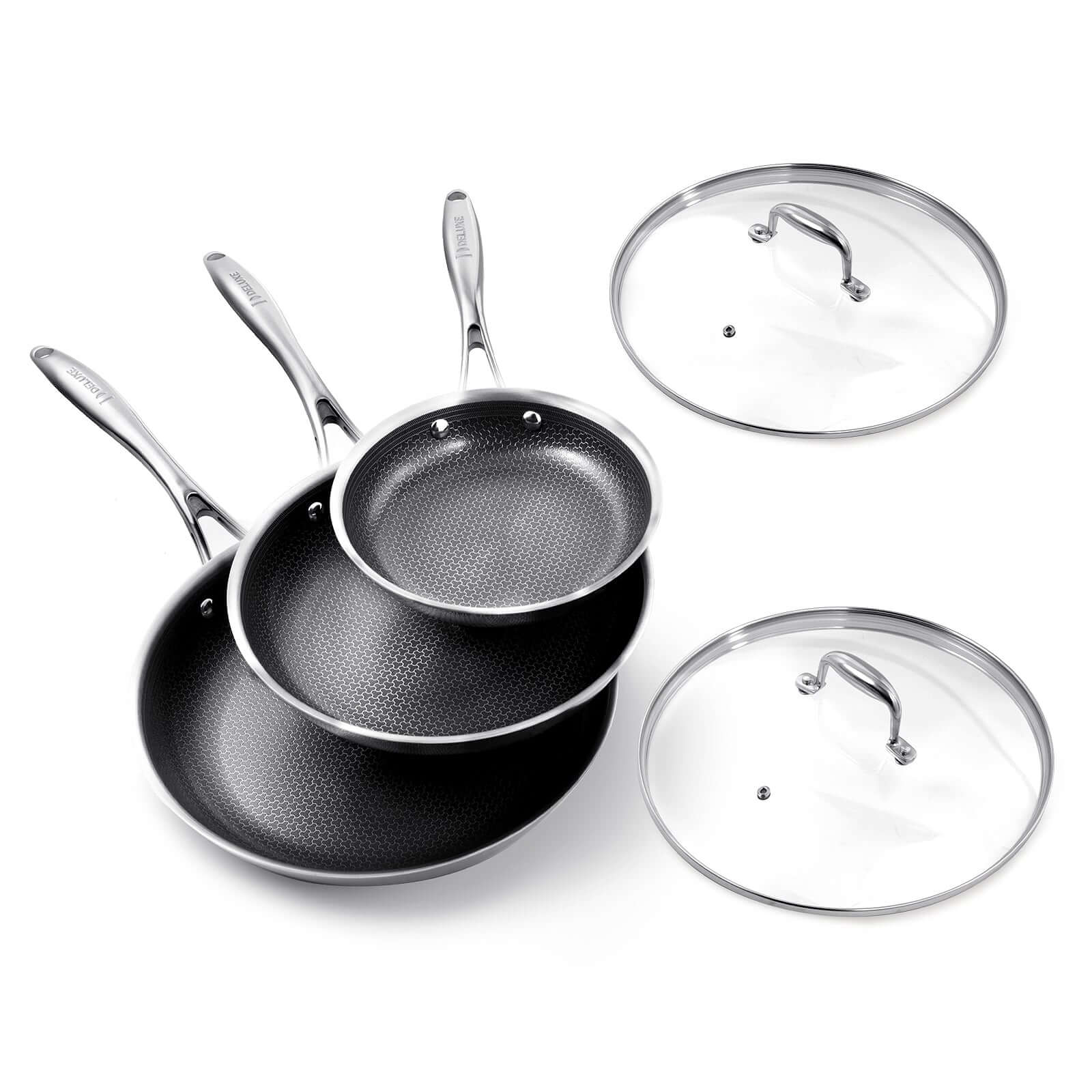
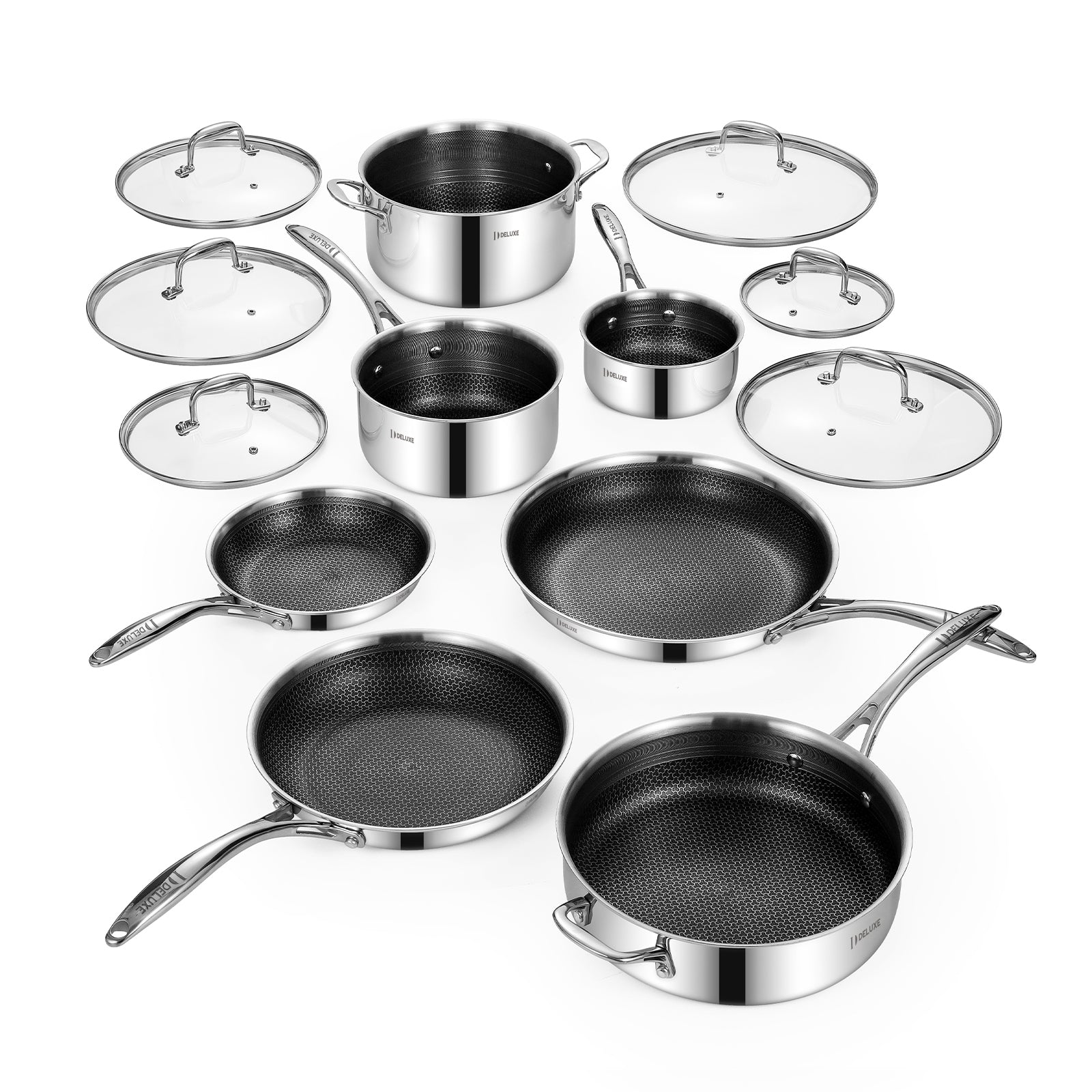
If you often cook scrambled eggs, a Hybrid Ceramic Nonstick Frying Pan or a dedicated ceramic frying pan may be more convenient than stainless steel.
If you want one pan that effortlessly balances durability and easier food release, hybrid cookware can also be an incredibly practical option.
When Should You Replace a Stainless Steel Pan?
Most high-quality stainless steel pans last for years.
But there are times when replacing a pan simply makes sense.
Consider replacing your pan if:
- The base is badly warped.
- The handle is loose or unsafe.
- There are deep pits on the cooking surface.
- Layers are separating on multi-ply cookware.
- The pan no longer sits flat on an induction cooktop.
For induction cookware, a flat and perfectly stable base is especially important.
If your pan spins, rocks, or heats unevenly, it may not perform well on an induction cooktop.

Clean Stainless Steel Pans Right
Cleaning stainless steel pans is exceptionally easy when you match the method to the mess.
Use soap and warm water for daily cleaning, baking soda for burnt food and oil stains, and vinegar for rainbow marks or white spots. Avoid harsh chemicals, long soaking, and thermal shock.
With the right care, stainless steel cookware can stay beautiful, durable, and highly useful for years to come.
FAQ About Stainless Steel Pans
Are Stainless Steel Pans Safe?
Yes, stainless steel pans are generally considered safe for everyday cooking when used properly. Many people choose stainless steel cookware because it is durable, non-reactive for many cooking tasks, and does not use a delicate nonstick coating.
Why Does Food Stick to Stainless Steel Pans?
Food usually sticks because the pan was not preheated properly, there was not enough oil, the heat was either too high or too low, or the food was moved before it was ready.
Are Stainless Steel Pans Good for Induction Cooktops?
Many stainless steel pans work exceptionally well on induction, but not all stainless steel pans are induction compatible. Always check whether the base is magnetic and specifically labeled for induction use.
Can Stainless Steel Pans Go in the Oven?
Many stainless steel pans are considered oven-safe cookware, but it depends heavily on the handle, the lid, and the manufacturer’s specific temperature limit. Always check the product instructions.
Should I Buy Stainless Steel or Nonstick Pans?
It depends heavily on how you cook. Stainless steel pans are far better for searing, browning, and building pan sauces. Nonstick pans, ceramic nonstick pans, and ceramic nonstick cookware are much better for eggs, pancakes, and delicate foods.