What Size Frying Pan Do You Need?
Selecting the right cookware for frying is a fundamental decision that dictates the quality of every meal you prepare. Whether you are searing a thick steak or folding a delicate omelet, the diameter of your pan influences heat retention, moisture evaporation, and ease of use. Choosing between an 8-inch, 10-inch, or 12-inch model requires understanding your specific culinary habits and household dynamics. This comprehensive frying pan size guide will help you select the ideal tools for a more efficient and professional kitchen experience.
Why Does Frying Pan Size Matter for Cooking Results?
The dimensions of your pan directly impact the physics of the cooking process. Using a pan that is mismatched to the volume of food can lead to poor textures, uneven results, and frustration during cleanup.
The primary reason size matters is moisture management. When ingredients are packed too tightly, the moisture they release cannot evaporate quickly enough. Instead of frying, the food effectively boils in its own juices. Having the correct pan size ensures there is enough surface area for steam to escape, which is critical for achieving a crisp finish on vegetables and proteins.
A larger pan generally possesses more thermal mass. When you place cold food into specialized cookware for frying, the surface temperature drops. A larger, heavier pan maintains its heat more effectively, allowing for a consistent, high-heat sear. However, if the pan is too large for the burner, the exposed edges can overheat, causing fats and oils to smoke and burn while the center remains cool.

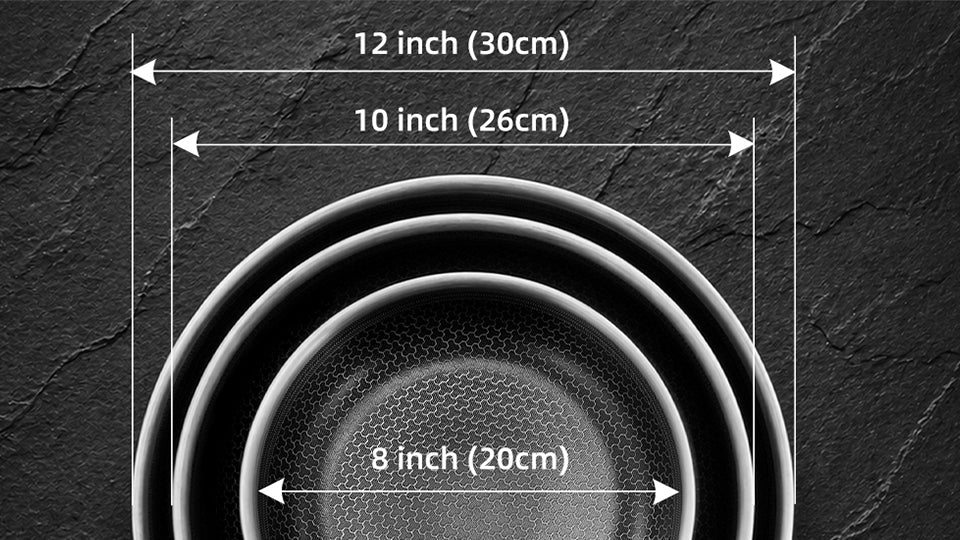
The Definitive Frying Pan Size Guide: 8, 10, and 12 Inches
The most important part of selecting a pan is knowing exactly what each size can and cannot do. Standardizing your kitchen with these three sizes covers almost every culinary scenario.
The 8-Inch Pan: Precision and Specialty Tasks
The 8-inch pan is an indispensable piece of equipment for precision tasks and solo dining. This size is particularly popular when using nonstick pans for delicate foods that require careful handling and quick release.
- The Breakfast Specialist: This is the gold standard for eggs. Whether you are making a single sunny-side-up egg or a two-egg omelet, the small circumference keeps ingredients contained, preventing them from spreading too thin.
- Toasting and Small Batches: It is the ideal size for toasting a handful of nuts, seeds, or spices. It heats up rapidly and offers excellent control over the browning process without wasting energy.
- Single-Serving Efficiency: For individuals living alone, this pan handles single portions of protein, such as one chicken breast or a small fish fillet, with minimal cleanup required afterward.

The 10-Inch Pan: The Universal Kitchen Workhorse
If you could only own one frying pan, most professional chefs would agree that the 10-inch model is the best choice for general versatility. It bridges the gap between the small specialty pan and the heavy-duty skillet.
- Standard Recipe Calibration: Most published recipes involving a "large skillet" are actually calibrated for a 10-inch pan. This includes frittatas and pan-seared dishes intended for two people.
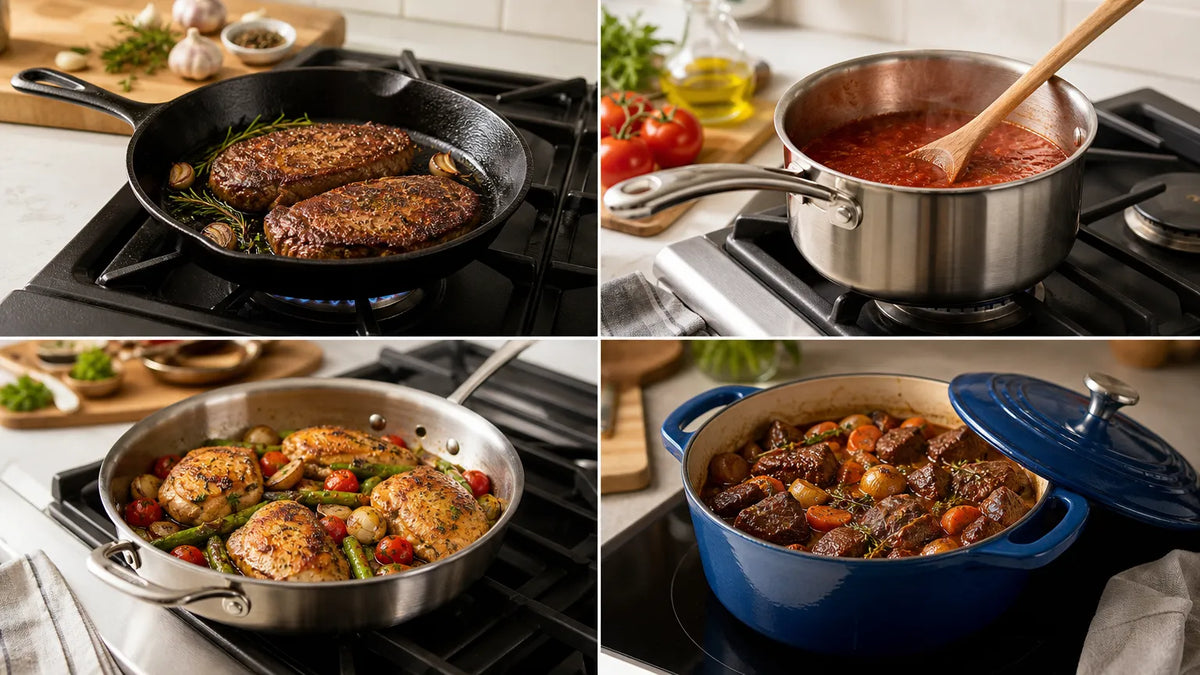
- Perfect Balance of Space: It provides roughly 80 square inches of cooking surface, which is enough to sear two pork chops or sauté a medium-sized bunch of asparagus without overcrowding.
- Burner Compatibility: A 10-inch pan fits comfortably on almost any standard residential stove burner. This ensures that heat reaches the edges without creating significant cold spots or interfering with other pots on the stove.

The 12-Inch Pan: Volume, Searing, and Family Meals
The 12-inch pan is designed for volume and high-heat performance. It is the essential choice for families or those who enjoy entertaining guests, as it handles quantities that would otherwise require multiple batches.
- High-Volume Searing: The primary advantage is the ability to cook four burger patties or three large steaks at once. Because there is more space between items, you get a much better, professional-grade sear.
- Managing Bulk Ingredients: When sautéing large amounts of leafy greens like spinach or kale, a 12-inch pan is necessary to handle the initial volume before the greens wilt down.
- One-Pan Dinner Mastery: This is the best size for "skillet dinners" where you cook proteins, starches, and vegetables together, providing enough room for everything to brown simultaneously.

Technical Performance: Heat Management and Stove Compatibility
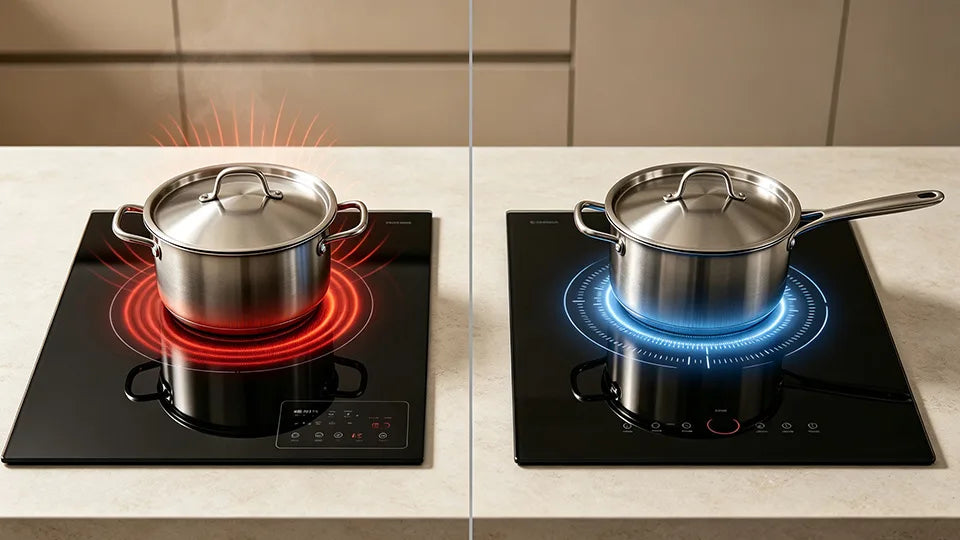
How your pan interacts with your stove is just as important as its diameter. This is a critical consideration when shopping for the best cookware for glass top stoves, where the relationship between the burner and the pan base is vital.
Matching Pan Base to Burner Diameter
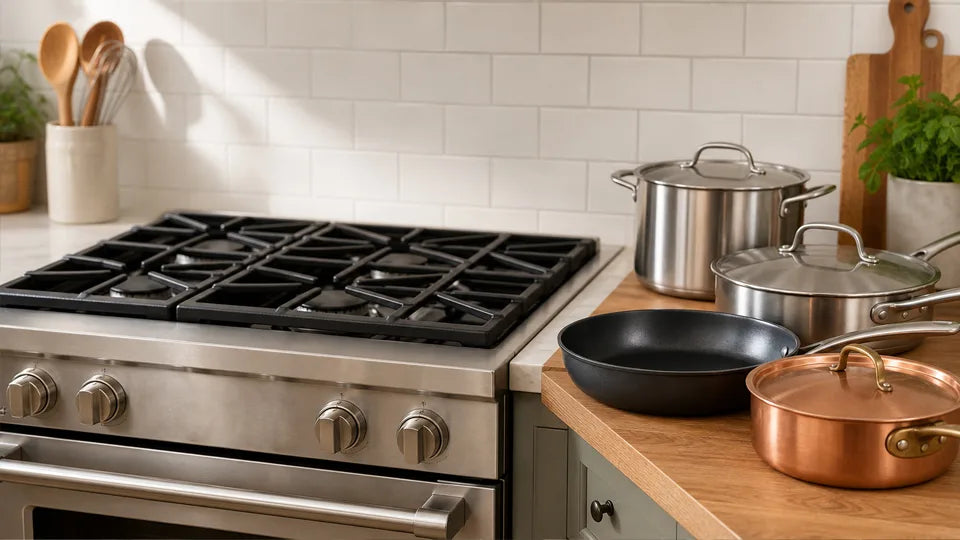
Most home stoves have a primary burner between 8 and 9 inches in diameter. If you use a 12-inch pan on a small 6-inch burner, the outer edges will be much cooler than the center. This results in unevenly cooked food—burned in the middle and raw on the outside. For the best performance, try to match the base of your pan to the size of your burner within an inch to ensure consistent heat distribution.

Stability and Flatness on Glass Top Surfaces
When selecting the best cookware for glass top stoves, you must ensure that the pan has a perfectly flat bottom. Any warping in a large pan will cause it to wobble on the glass, leading to poor heat transfer and potential scratching. High-quality stainless steel or hard-anodized aluminum is usually preferred for these surfaces to ensure the base stays flat over years of high-heat use.
Choosing the Right Material for Each Size
Material choice should complement the size of the pan. For smaller 8-inch and 10-inch pans, nonstick pans are often preferred for their convenience with eggs and fish. However, for a 12-inch pan, stainless steel or cast iron is often better because these materials handle the extremely high temperatures required for searing large amounts of meat without damaging the coating.
Strategic Selection: Household Size and Cooking Habits
Your household dynamics and what you typically cook should dictate which sizes you prioritize in your cabinets.
Single and Two-Person Households
For individuals or couples, an 8-inch and a 10-inch pan are the primary tools. You will likely find yourself using the 8-inch for breakfast and the 10-inch for nearly every dinner. At this scale, you rarely need the bulk and weight of a 12-inch pan unless you are meal-prepping for the week or frequently hosting guests.
Large Families and High-Volume Cooks
Once you are cooking for four or more people, the 12-inch pan becomes the primary workhorse. However, even in a large family, you still need the smaller sizes for side dishes. For example, you might use the 12-inch pan for the main protein while using an 8-inch pan to sauté a garnish or fry a single egg for a child.
Solving the Dilemma with a Complete Set
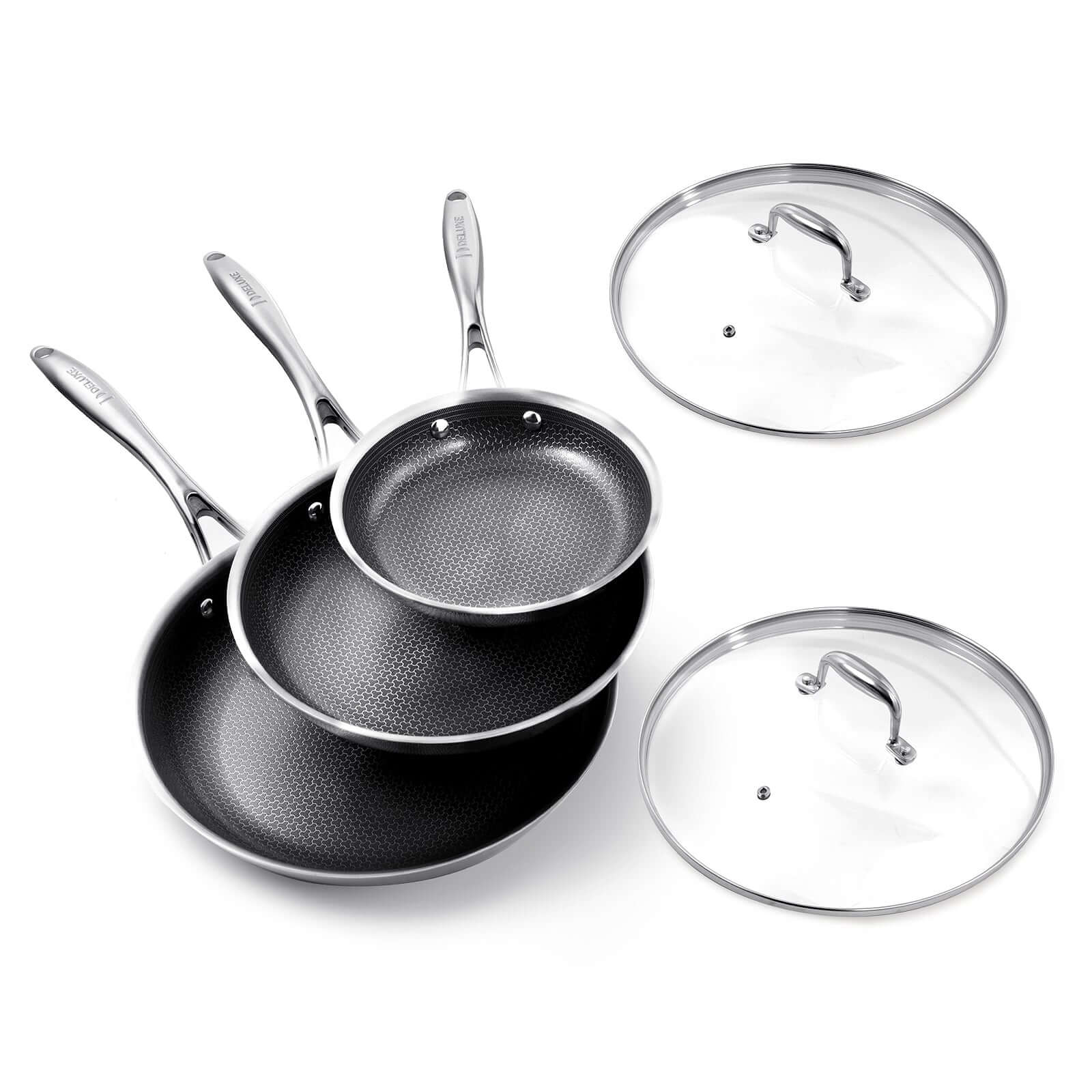
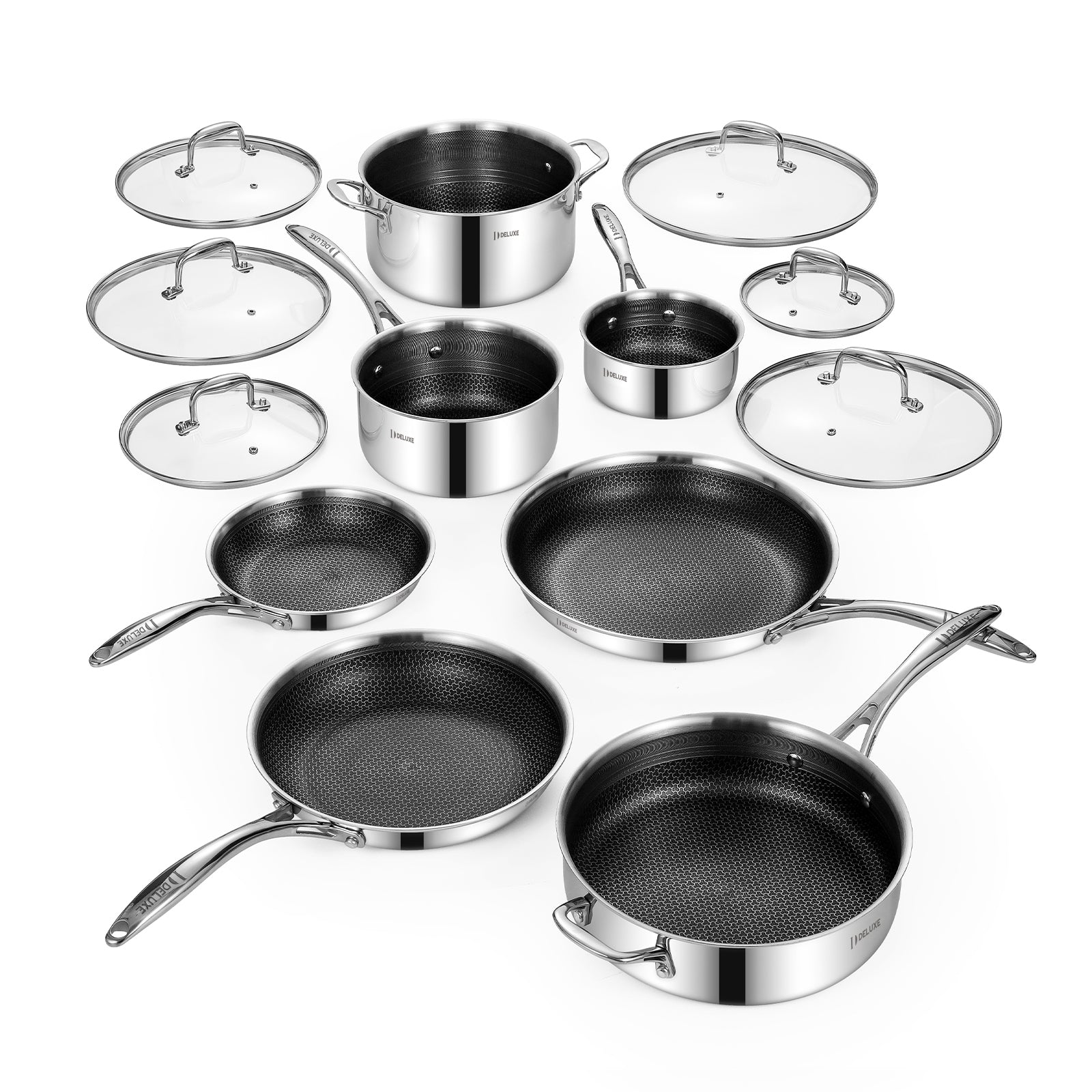
Most home cooks eventually find that having only one or two sizes leads to compromises. Using a pan that is too small results in steaming, while a pan that is too large can lead to burnt oil. To provide a complete solution, DELUXE offers a 3-piece cookware set that includes the 8-inch, 10-inch, and 12-inch sizes in one discounted bundle. This ensures you always have the perfectly sized tool for the job, effectively solving all your sizing dilemmas in a single purchase.

How Does a Frying Pan Compare to a Large Pot?
While a frying pan is versatile, it is not a "magic bullet" for all types of cooking. A complete kitchen requires a variety of depths to handle different culinary techniques efficiently.
A frying pan is designed for dry-heat methods like searing and sautéing. It cannot replace a large stainless steel pot when it comes to boiling pasta, making soups, or blanching vegetables. The low sides of a frying pan are great for moisture evaporation but terrible for containing large volumes of liquid. Attempting to simmer a large batch of stew in a frying pan often results in splatters and uneven flavors.
The best cookware strategy involves having a balanced set of both flat and deep vessels. While your frying pans handle the browning and crisping, a large stainless steel pot handles the bulk liquid tasks. Each serves a specific thermodynamic purpose. If you find yourself frequently trying to "make do" with a pan that is too shallow for the task, you are likely sacrificing the final quality of your food.

Choose the Right Frying Pan
Finding the perfect frying pan size is about matching your kitchen’s hardware to your lifestyle and household needs. By utilizing an 8-inch pan for precision, a 10-inch pan for general versatility, and a 12-inch pan for high-volume meals, you can master any recipe with professional results. Always consider your stove type, especially if you need the best cookware for glass top stoves, and ensure you have a large stainless steel pot for liquid-based cooking. With the right set of tools, you can enjoy a more efficient and rewarding cooking experience every day.
FAQs About Frying Pan Selection and Use
What is the most versatile frying pan size for a beginner?
The 10-inch frying pan is the most common and versatile choice. It provides enough room for most standard meals for two people without taking up too much cabinet space or being too heavy to handle.
Why does my food stick to my stainless steel frying pan?
Sticking usually happens if the pan is not hot enough before adding oil, or if the food is moved before a proper crust has formed. For delicate foods like eggs, many people prefer using nonstick pans to avoid this issue entirely.
Can I use a 12-inch pan on a small burner?
You can, but it is not recommended. The edges of the pan will remain significantly cooler than the center, leading to uneven browning. It is better to use a pan that matches your burner size for more consistent results.
Is it better to buy a cookware set or individual pans?
Buying a set, such as the DELUXE 3-piece bundle, is often more cost-effective and ensures that the pans are designed to work together and stack efficiently. However, buying individual pans allows you to mix materials based on your specific needs.
How do I know if my pan is too small for my meal?
If the ingredients are overlapping or if you see liquid pooling at the bottom of the pan instead of evaporating, your pan is too small. This will cause your food to steam rather than fry.