Frying Pan Heat Management: Why You Should Never Use High Heat on Non-Stick
Maintaining the performance of high-quality kitchen tools requires an understanding of thermal limits and material science. While modern manufacturing has improved surface durability, proper heat management remains the most critical factor in cookware longevity. This guide explains why excessive heat destroys non-stick surfaces and how to utilize advanced hybrid cookware correctly to achieve professional results without degrading your pan.
How Non-Stick Coatings React to Heat
Non-stick surfaces are engineered to deliver effortless food release, but they remain sensitive to extreme temperatures. Even in premium multilayer cookware, the bond between the coating and the base metal experiences severe stress during rapid thermal expansion. Understanding these physical reactions is the first step in preserving your investment.
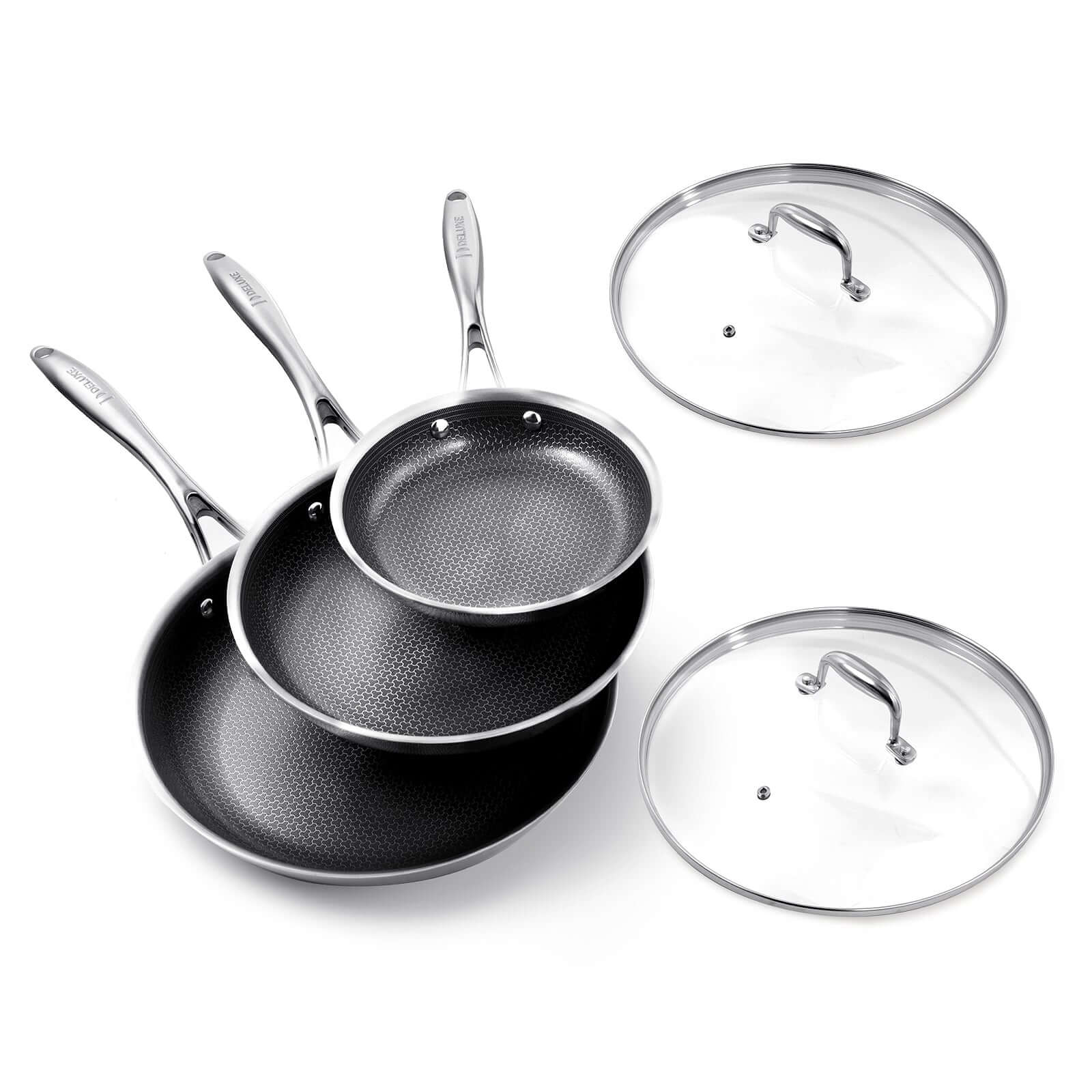
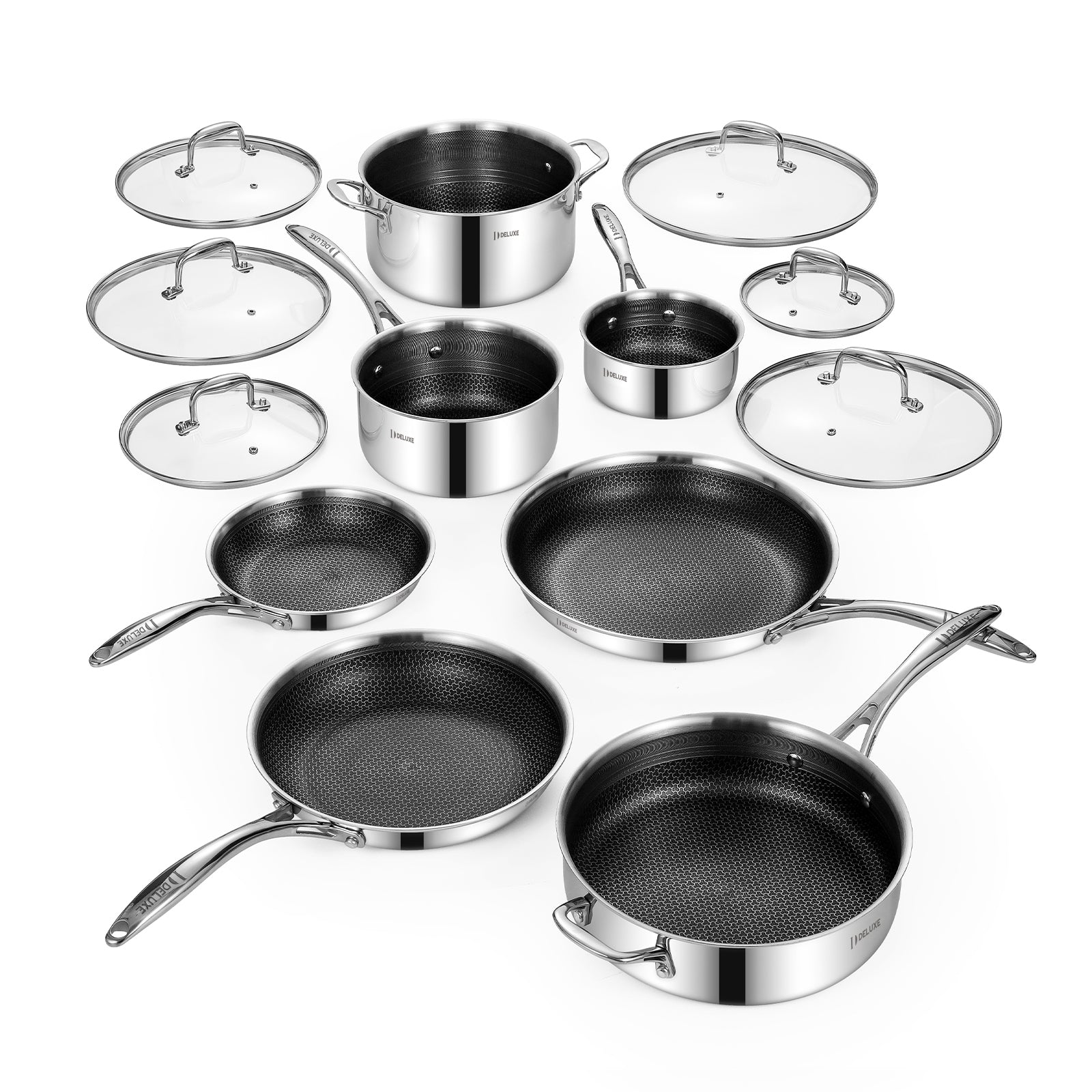
Modern hybrid skillets utilize a composite surface structure to mitigate mechanical wear. Raised stainless steel peaks endure spatula contact and provide a crisp sear, while the ceramic nonstick coating resides safely in the recessed valleys. While this architecture shields the surface from utensil scratches, ceramic materials still respond to intense heat at a molecular level.

Molecular Breakdown of the Surface
When cooking surfaces exceed their rated thermal limits, polymers and ceramic binders lose their cohesive strength. This leads to increased surface porosity where microscopic food fibers and burnt oils become trapped, permanently neutralizing the non-stick effect.
Thermal Expansion and Delamination
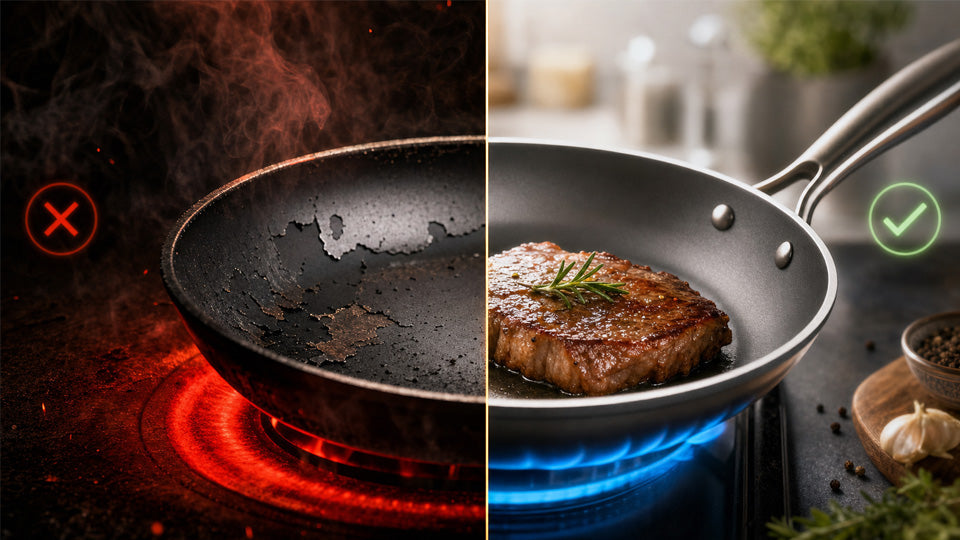
Different metals expand at varying rates when heated. In a multi-ply pan, stainless steel, aluminum cores, and ceramic layers expand at unequal speeds under high heat, creating shear stress that leads to microscopic cracking, bubbling, or peeling.
The Role of the Aluminum Core
Professional pans feature an aluminum core because aluminum conducts heat rapidly and evenly. This conductive layer eliminates the need for maximum burner settings; once preheated, the core sustains ample searing energy on medium heat alone.
Surface Carbonization Issues
Excessive burner heat causes culinary oils to surpass their smoke point rapidly. Overheated fats undergo carbonization, leaving a sticky polymer residue that chemically bonds to the non-stick valleys, requiring abrasive cleaning that further ruins the pan.

What Is the "Smoke Point" of Your Coating?
Every non-stick frying pan has a critical temperature ceiling, typically around 250°C (480°F). Operating past this threshold causes structural instability. Highly conductive composite cookware reaches these limits far faster than traditional cast iron.
The 250°C Safety Threshold
The 250°C limit represents the industry standard for non-stick integrity. While stainless steel ridges tolerate higher heat, the recessed ceramic matrix loses its hydrophobic properties when overheated, permanently eliminating smooth food release.
The Dangers of Empty Preheating
Preheating an empty pan over high heat causes temperatures to surge past safe limits in under 60 seconds. Always preheat cookware on medium-low to allow the aluminum core to disperse thermal energy evenly across the base.
Identifying Thermal Stress
Overheated non-stick coatings develop a dull, matte finish or brownish discoloration. This visible change indicates thermal fatigue, signifying that the coating's low-friction capabilities have been permanently compromised.
Heat Retention vs. Heat Intensity
A great sear comes from heat retention rather than aggressive flame output. A heavy-gauge core stores ample thermal mass to crust proteins upon contact without requiring destructive high-flame settings.
Prevent the Release of Toxic Fumes
Safe kitchen practices demand precise temperature control. While modern ceramic coatings are formulated without PFOA or PTFE, overheating any composite cookware degrades organic fats into airborne particulates, making moderate heat essential for a clean home environment.
Understanding Off-Gassing
When synthetic coatings reach breakdown temperatures, they undergo off-gassing. Operating below 250°C ensures that all coating compounds remain completely inert and food-safe throughout cooking.
Preserving Household Air Quality
Excessive heat scorches cooking oils, releasing acrid aerosols and degrading indoor air quality. Maintaining medium-low burner levels minimizes particulate emissions and keeps your kitchen fresh.
Protecting Sensitive Pets
Avian pets possess delicate respiratory systems that are highly susceptible to airborne combustion products and overheated cooking vapors. Cooking strictly on moderate heat eliminates accidental off-gassing risks entirely.

Ventilation Best Practices
Always operate your range hood during meal preparation. If a pan is accidentally overheated, remove it from the burner immediately, open kitchen windows, and let the airframe cool naturally.
Does High Heat Void Your Cookware Warranty?
Most premium non-stick cookware includes manufacturer warranties against structural defects. However, warranty evaluators readily identify the difference between material flaws and thermal abuse, which voids coverage under standard warranty terms.
Identifying Thermal Abuse
Inspectors identify excessive heat through discolored base plates, baked-on carbonization, and base warping. Damage resulting from high heat settings constitutes user error rather than a manufacturing defect.
Thermal Impact on Hybrid Structures
In hybrid pans, extreme heat causes outer steel peaks to expand aggressively against the ceramic matrix. Flaking caused by exceeding thermal expansion thresholds is classified as improper care under warranty guidelines.
Protecting Your Investment
Cookware user manuals explicitly advise against high burner settings. Adhering to moderate temperatures protects both your pan's coating and your long-term warranty protection.
Use the "Water Droplet Test" to Gauge Heat
The water droplet test provides a reliable method to confirm when your skillet is ready for searing without allowing surface temperatures to drift toward dangerous thresholds.
How to Perform the Test
After preheating your skillet on medium for approximately two minutes, flick several drops of water onto the surface. If the water beads into dancing spheres, the skillet has achieved the Leidenfrost effect (roughly 160°C to 180°C) and is perfectly preheated for cooking.

Interpreting the Results
If water droplets vaporize violently and fracture into fine mist on impact, the pan is nearing the critical limit. Reduce burner output immediately to protect the non-stick surface before adding cooking oil.
Adding Oil Safely
Add oil only after the pan passes the droplet test. Oil serves as a thermal conductor; introducing fats to an overheated skillet degrades the oil instantly and creates sticky carbon deposits.
Adding Ingredients
Add ingredients promptly after your cooking oil shimmers. Ingredients absorb thermal energy from the core, stabilizing surface temperature and maintaining a steady cooking climate.
Match the Burner Size to the Pan Base
Efficient thermal control requires matching pan dimensions to cooktop elements. Misaligned burners generate thermal gradients that damage sidewall coatings on even the best frying pans.

Preventing Sidewall Overheating
When gas flames extend beyond the base, heat climbs the outer walls. Slanted sidewall coatings are not engineered for direct flame contact, resulting in discoloration and perimeter coating breakdown.
Maximizing Core Efficiency
Aligning cookware with burner elements allows the aluminum core to distribute heat evenly from center to edge, eliminating localized hotspots during delicate cooking tasks.
Protecting Handles and Ergonomics
Flames lapping around pan sides scorch exterior finishes and degrade heat-resistant handle mounts, compromising kitchen handling safety.
Induction and Glass-Top Alignment
On induction and glass cooktops, matched sizing ensures optimal magnetic coupling and prevents energy waste, eliminating the temptation to use high settings.
Optimal Cooking Temperatures for Non-Stick
Mastering temperature control relies on utilizing your cookware's inherent conductivity. Stable medium and medium-low settings deliver superior browning while preserving delicate coatings.
The Efficiency of Medium-Low Heat
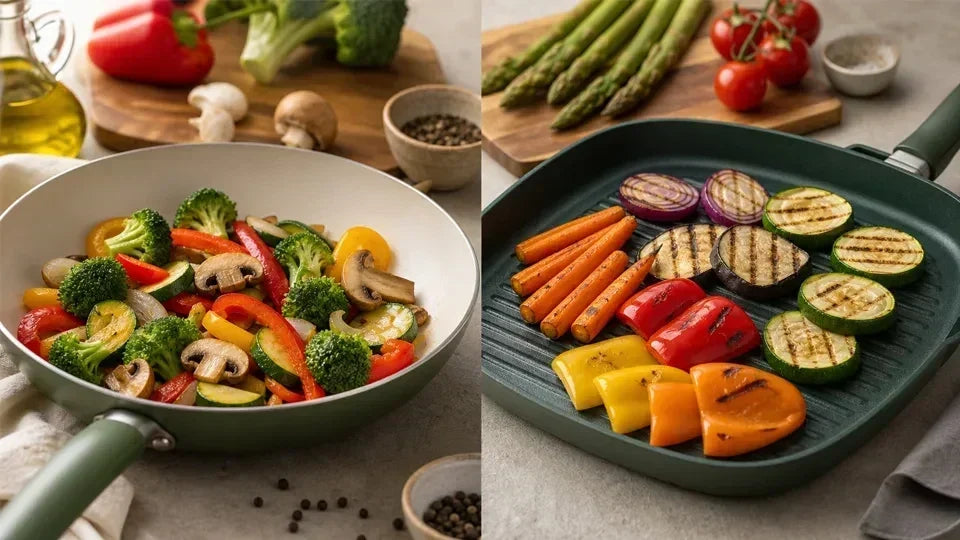
Medium-low heat is ideal for 90% of daily cooking, including eggs, seafood, and vegetables. Conductive inner cores maintain steady heat even when cold ingredients enter the pan.
Searing with Confidence
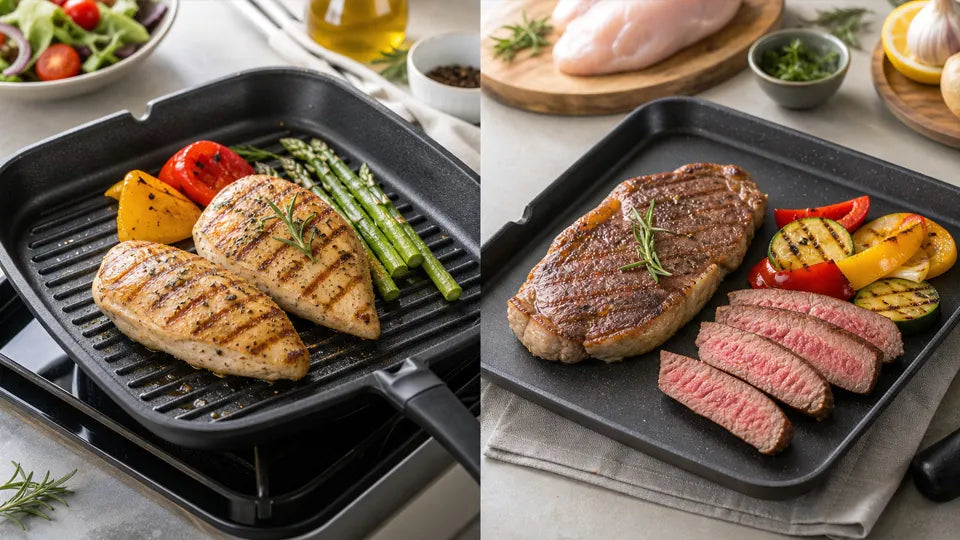
For searing steaks or poultry, a medium setting is sufficient. Raised stainless steel peaks trigger the Maillard reaction effortlessly, delivering a golden crust without scorching the coating.
Understanding Thermal Lag
All layered cookware exhibits thermal lag, meaning surface temperatures adjust gradually to burner changes. Cooking on moderate settings provides greater control without temperature spikes.
Temperature Management by Food Type
Delicate proteins like fish and eggs require gentle, low heat, while meats thrive under steady medium heat. Staying within these parameters avoids the degradation point of your non-stick surface.
Protect Your Pan With Smart Heat
Proper heat management determines how many years your cookware will perform like new. By respecting the 250°C ceiling and letting conductive aluminum cores do the heavy lifting, you achieve exceptional culinary results while preserving non-stick integrity.
FAQs About Pan Heat and Sticking
Should I avoid the "High" setting on my stove entirely?
Yes. High settings should be avoided on all non-stick and hybrid cookware. The aluminum core provides ample thermal conductivity on medium and medium-low settings for searing, frying, and sautéing.
What is the maximum safe temperature for non-stick pans?
Cookware should not exceed 250°C (480°F). Cooking between 150°C and 200°C delivers optimal browning while protecting coating longevity.
Why does food stick to my non-stick pan even with oil?
Persistent sticking indicates that prior overheating has made the surface porous, trapping polymerized grease and permanently degrading the non-stick matrix.
Can I use high heat to boil water in a non-stick pan?
It is not recommended. High heat can generate dry hot spots on base edges before the liquid can absorb the heat, risking localized coating damage.
How do I confirm if my burner is too hot?
Perform the water droplet test. If water drops shatter and evaporate violently, the surface is too hot. Lower the burner until droplets glide smoothly across the pan.