Why Is My Nonstick Pan Sticky? (And How to Fix It)
If you're asking yourself, "Why is my nonstick pan sticky all of a sudden?", you are far from alone. Millions of home cooks face this exact frustration when their favorite skillet suddenly turns into a food magnet.
In this guide, we’ll uncover the top reasons why nonstick coatings lose their slickness, how to safely clean away microscopic buildup, and what you can do to break the endless cycle of replacing ruined pans every year.
4 Reasons Why Your Nonstick Pan Is Sticking
Even if you treat your cookware carefully, nonstick surfaces are surprisingly delicate. Here is what is happening behind the scenes on your stove.
- Carbonized Oil (Baked-on grease)
- Excessive Heat (Thermal breakdown)
- Dishwasher Detergents (Coating wear)
- Metal Utensils (Micro-scratches)
1. Invisible Carbonized Oil Buildup
Oil residue is one of the most common causes of a sticky cooking surface. When cooking fats are heated past their smoke point—or when a pan isn't thoroughly cleaned with soap—a microscopic film of oil remains on the surface.
The next time you heat the pan, that leftover oil bakes directly into the coating's microscopic pores. This process, called carbonization, turns slick oil into a tacky, resin-like layer that grabs onto food proteins instead of letting them slide.
2. Overheating Beyond the "Fine Print" Limit
Many manufacturers advertise their non stick pans as indestructible, but buried in the fine print is a warning: never use high heat.
Whether you are using traditional coatings or modern ceramic coated pans, exposing nonstick surfaces to high temperatures breaks down the chemical structure of the coating. Once overheated, the surface matrix turns rough and discolored, permanently losing its release capability.
3. The Ceramic "Negative Feedback Loop"
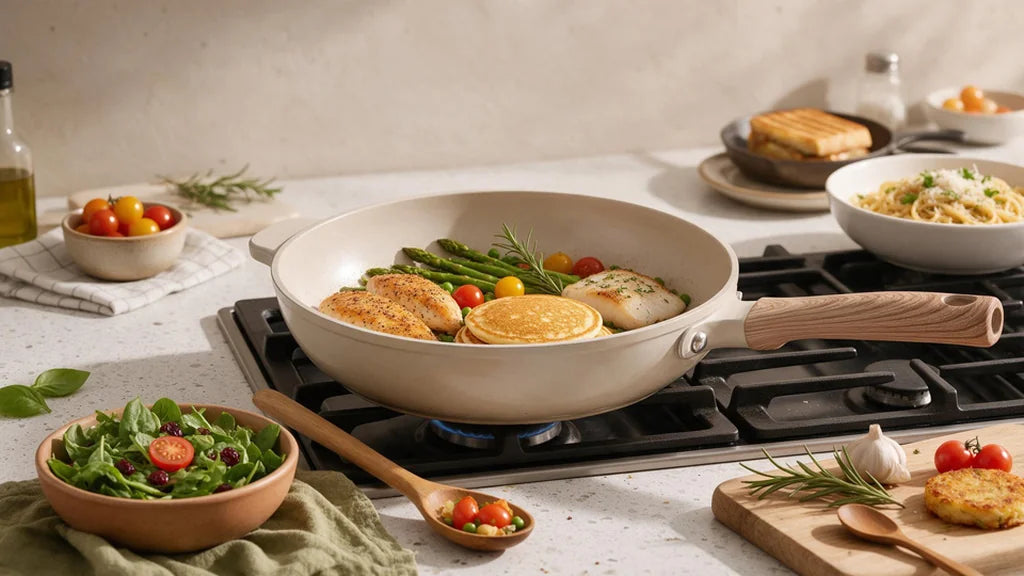
Many home cooks turn to ceramic nonstick cookware looking for a healthy, pfas free cookware option. While ceramic coatings have improved, mineral-based coatings naturally degrade faster under daily stress.
Ceramic coatings often enter a negative feedback loop:
Once food sticks for the first time, it may leave tiny spots of burnt residue on the cooking surface. Cleaning that residue wears down the delicate ceramic layer further, causing the pan to become even less nonstick next time—accelerating the breakdown.

4. Dishwasher Abuse and Metal Utensils
Frequent dishwasher use may dull some finishes or shorten coating life, depending on the detergent and the manufacturer's care instructions.
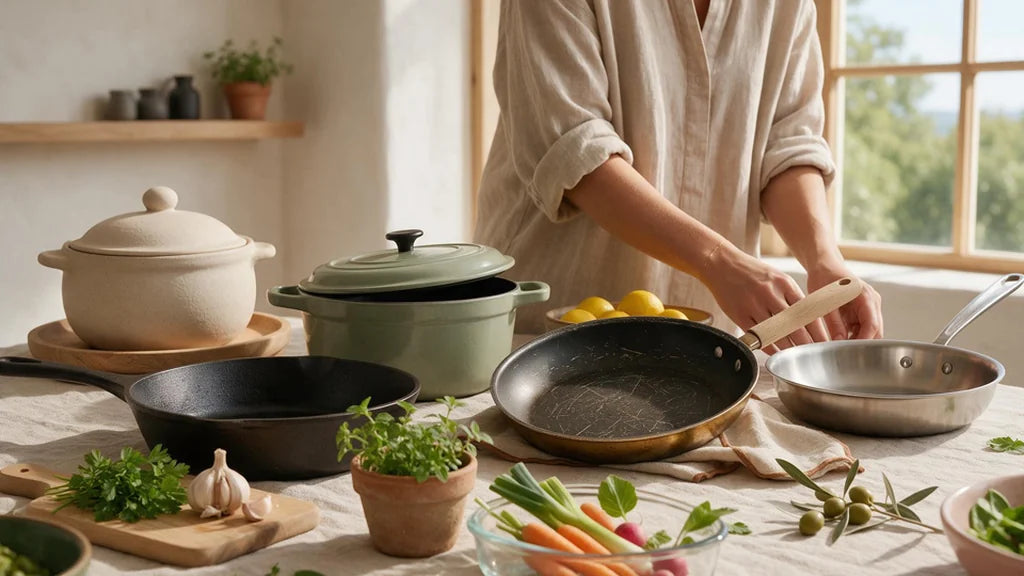
Furthermore, if someone in your household uses a metal fork or knife in the pan, it creates tiny micro-grooves. These micro-scratches trap food and tear apart delicate egg whites.
Can You Fix a Sticky Nonstick Pan?
The honest truth depends on what is causing the stickiness:
- If it's carbonized oil: YES. You can often restore the pan by stripping away the baked-on grease layer.
- If the coating is scratched, peeling, or scorched: NO. Once the physical coating is scratched off or burnt away, the nonstick properties are permanently gone. You cannot "re-coat" a damaged consumer pan at home.

How to Clean a Sticky Nonstick Pan (Safe Method)
Avoid using steel wool or harsh abrasive scouring pads, as they will destroy what is left of your coating. Instead, try this gentle deep-cleaning method:
- Pour 1 cup of water + 2 tbsp baking soda into the pan.
- Simmer gently on medium-low heat for 10 minutes.
- Turn off heat, let it cool completely.
- Wipe gently with a soft sponge and mild dish soap.
The mild alkaline reaction of baking soda helps soften and lift carbonized grease without scratching the underlying nonstick layer
4 Rules to Prolong the Life of Your Nonstick Pan
If your pan has lost some of its original slipperiness but isn't peeling, you can still use it safely by adjusting your cooking habits:
- Keep Heat on Medium-Low: Never dry-preheat a nonstick pan empty on high heat. Lower temperatures protect the delicate finish.
- Use Extra Fat: As a coating degrades, compensate by adding a little extra butter or high-smoke-point oil before adding food.
- Use Wood or Silicone Utensils Only: Never allow metal spatulas, knives, or tongs to touch the cooking surface.
- Hand-Wash When Recommended: Follow the manufacturer's instructions. When hand-washing is recommended, allow the pan to cool and use warm water, mild dish soap, and a soft sponge.

Tired of Replacing Nonstick Pans Every 12 Months?
Some home cooks fall into a frustrating cycle of replacing nonstick pans after their cooking surfaces become scratched, worn, or difficult to clean.
If you want the convenience of nonstick release without the delicate, easily scratched surface, consider hybrid cookware.
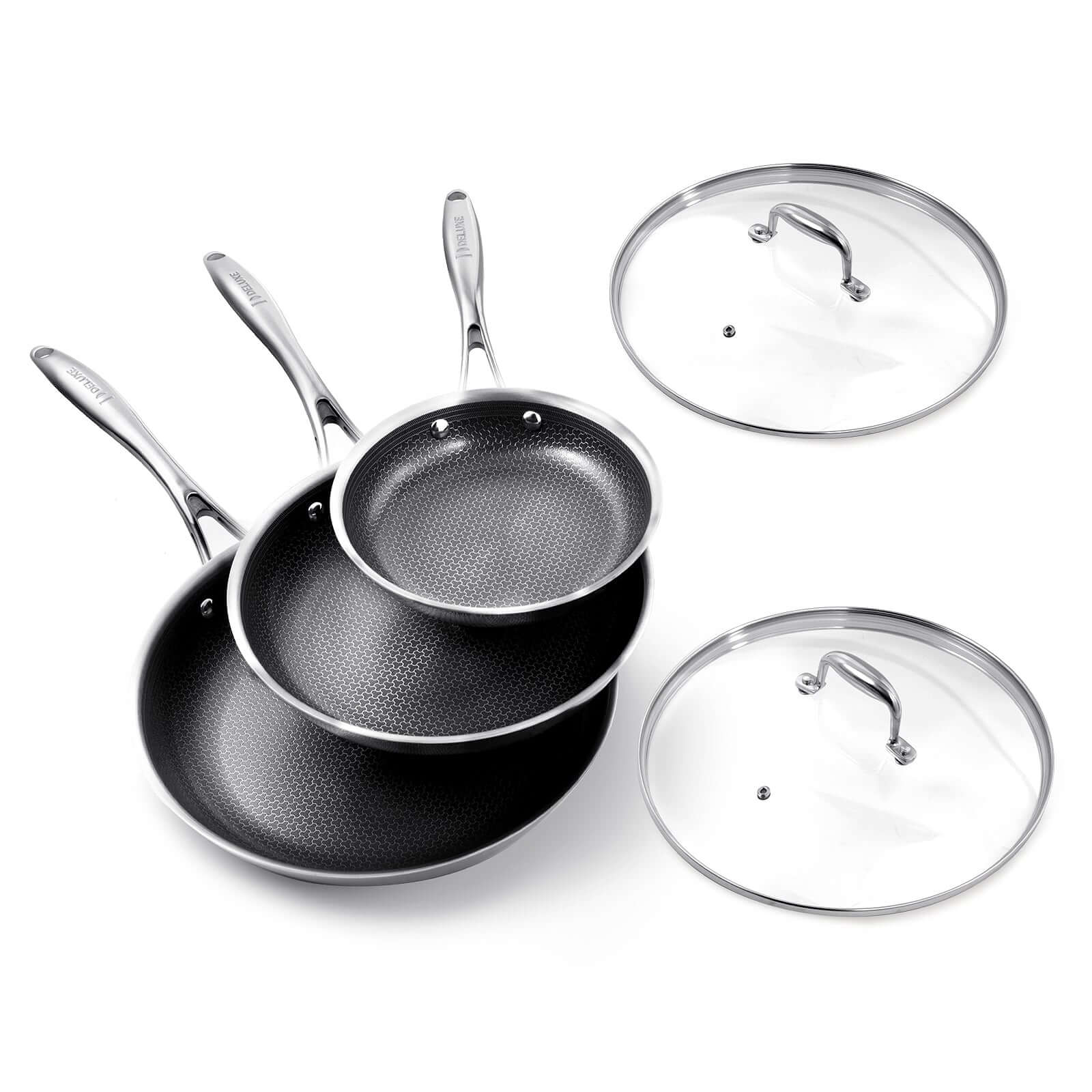
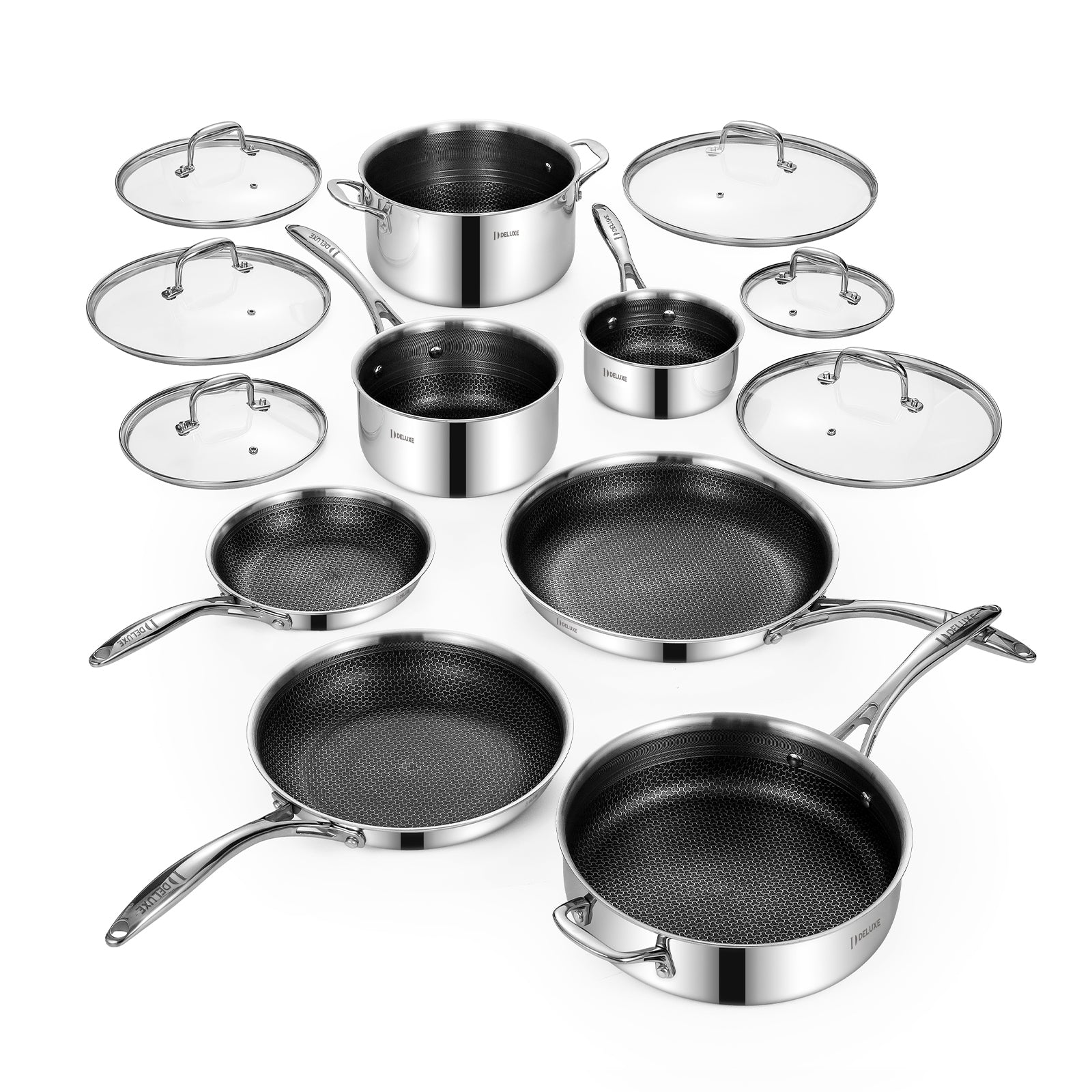
Next-generation options like DELUXE Hybrid Cookware bridge the gap between durable stainless steel pans and non stick cookware.
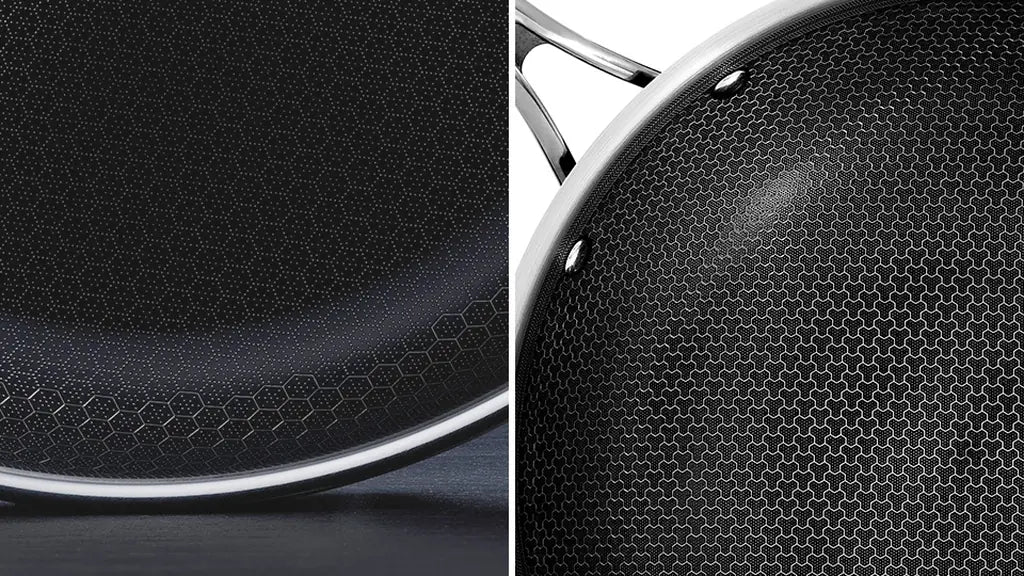
- Raised Stainless Steel Grid: Laser-etched hexagonal ridges absorb the wear and tear from utensils, keeping spatulas from touching the sunken nonstick layer beneath.
- PFAS-Free Ceramic Nonstick Layer: Positioned between the raised stainless steel sections, the ceramic nonstick material supports easier food release and is free from PFAS, including PFOA, according to DELUXE’s current product information.
- 5-Ply Construction: Uses a heavy-duty aluminum core encapsulated in stainless steel, providing the high-heat durability of professional stainless steel cookware with the easy cleaning of a nonstick skillet.

Conclusion
A sticky nonstick pan is usually the result of microscopic oil carbonization, high cooking heat, or natural coating wear over time. By managing your stove temperature, avoiding the dishwasher, and cleaning gently with baking soda, you can extend the life of your everyday pans.
If you're ready to break the disposable pan cycle for good, explore DELUXE 5-Ply Hybrid Cookware—engineered to deliver the searing performance of stainless steel with the hassle-free release of nonstick cooking.
FAQs About Nonstick Pan
Is it safe to cook on a discolored or sticky nonstick pan?
It depends on the coating and the cause of the discoloration. Stop using the pan if the coating is peeling, deeply scratched, warped, or damaged by severe overheating, and follow the manufacturer’s replacement guidance.
Why does ceramic nonstick lose its release properties faster than PTFE?
Ceramic coatings rely on a thin, glass-like silica layer applied via a sol-gel process. While naturally non-toxic, this mineral layer is inherently more brittle and sensitive to thermal shock than synthetic fluoropolymers.
Should I season my nonstick pan with oil?
While traditional cast iron requires seasoning, standard nonstick pans do not have open metallic pores to hold seasoning. However, rubbing a drop of neutral cooking oil onto a clean nonstick pan before cooking can help fill microscopic surface imperfections and improve performance.